Related Issues

Related Issues

ICYMI: Senators Coons, Young highlight bipartisan bill to defend allies from economic coercion in new op-ed in The Messenger

WASHINGTON – In case you missed it, U.S. Senators Chris Coons (D-Del.) and Todd Young (R-Ind.) published an op-ed in The Messenger today highlighting their bipartisan Countering Economic Coercion Act that would help the U.S. support partners and allies facing economic bullying by foreign adversaries. The bill would equip the president with new tools to reduce the impact of economic coercion by strengthening trade and commercial ties with allies on an expedited basis. In the op-ed, Senators Coons and Young point out the punitive and manipulative economic measures that Russia and China have taken against American partners and discuss how their legislation safeguards our national security, deepens our economic ties with trading partners, and protects U.S. interests.


The Messenger: Time To Fight Russia and China’s Economic Coercion

Around the world, autocratic states like China and Russia are using heavy-handed economic coercion to intimidate smaller countries and economies to get their way. As senators from both parties, we think we need to act to strengthen our nation’s ability to step up to this challenge.

There are many examples of economic coercion just in the past few years. To punish Lithuania for allowing Taiwan to open a representative office in Vilnius, China unleashed an economic broadside against the Baltic state, blocking bilateral trade and blacklisting Lithuanian products in international markets. Russia weaponized its integration in European energy markets to try to force Western governments to back down from their support of Ukraine. And China responded to Australia’s call for an independent inquiry into the origins of COVID-19 by disrupting valuable Australian exports. China is Australia’s top export market, and the pain imposed on a wide range of Australian businesses, farmers and miners was real, as China blocked billions in exports of barley, beef, wine and coal.

The United States has stood by its allies when they have come under economic attack, but we need to update our policy toolkit so that we can respond more forcefully and more quickly. That is why we introduced our bipartisan and bicameral Countering Economic Coercion Act, which would give the executive branch more tools to support our allies when they are subject to economic bullying — and to punish the countries carrying out this malign behavior.

Our bill would allow the president to act quickly by temporarily decreasing duties on certain imports from targeted countries and offering the U.S. market as an alternative when China shuts down trade. The bill also allows the executive branch to speed up regulatory processes to facilitate rapid export financing, import approvals, and other trade, aid and investment assistance.

The full op-ed is available here

Senator Coons is the Chair of the Senate Appropriations Subcommittee on State and Foreign Operations (SFOPS).

Senators Coons, Risch, Cardin, Tillis, colleagues write open letter of support for imprisoned reporter Evan Gershkovich

WASHINGTON – U.S. Senators Chris Coons (D-Del.), Jim Risch (R-Idaho), Ranking Member of the Senate Foreign Relations Committee, Ben Cardin (D-Md.), and Thom Tillis (R-N.C.) led 28 of their colleagues in writing an open letter to wrongfully detained Wall Street Journal reporter Evan Gershkovich. The letter condemns his unjust detention by the Russian government and shows him their support during his wrongful imprisonment.

The lawmakers write, “We write to express our profound anger and concern over your unjust and wrongful detention in Russia. We hope you are doing as well as possible under the current circumstances and understand the enormous burden you may feel as the Russian government uses you as a political tool. We hope this letter makes clear our support and solidarity on your behalf and our desire that you and fellow detainee Paul Whelan are immediately and unconditionally released. Since your arrest, we have advocated for your release publicly and privately. We will not stop until you are safely home. We believe that a free press is crucial to the foundation and support of human rights everywhere.”

They continue, “We are fully committed to bringing you, Paul, and every wrongfully detained American home at the earliest opportunity. Every day you spend in Russia is a day too long. Please know that the support for you and Paul go well beyond the walls of the United States Senate, and that the American people are with us in demanding your release.”

In addition to Senators Coons, Risch, Cardin, and Tillis, the letter is signed by Jeanne Shaheen (D-N.H.), Dr. Bill Cassidy (R-La.), Chris Van Hollen (D-Md.), Jerry Moran (R-Kan.), Dianne Feinstein (D-Calif.), Shelley Moore Capito (R-W.Va.), Edward J. Markey (D-Mass.), Rick Scott (R-Fla.), Peter Welch (D-Vt.), Roger Wicker (R-Miss.), John Hickenlooper (D-Colo.), Tim Scott (R-S.C.), Angus King (I-Maine), Pete Ricketts (R-Neb.), Sherrod Brown (D-Ohio), Lindsey Graham (R-S.C.), Tammy Baldwin (D-Wis.), Bill Hagerty (R-Tenn.), Mark Warner (D-Va.), James Lankford (R-Okla.), Amy Klobuchar (D-Minn.), John Cornyn (R-Texas), Brian Schatz (D-Hawaii), Chuck Grassley (R-Iowa), Tim Kaine (D-Va.), Susan Collins (R-Maine), Chris Murphy (D-Conn.), and Mike Crapo (R-Idaho).

You can read the full letter here.

Senator Coons previously introduced legislation to prevent hostages and wrongfully detained Americans from incurring tax penalties, and to establish a National Hostage and Wrongful Detainee Day and flag, which passed the Senate unanimously last month. He is Co-Chair of the Senate Human Rights Caucus and a member of the Senate Foreign Relations Committee.

PHOTOS: Senator Coons hosts Chemistry Caucus event on the chemistry of olive oil at Capitol with foreign dignitaries, Nobel laureate, House and Senate colleagues

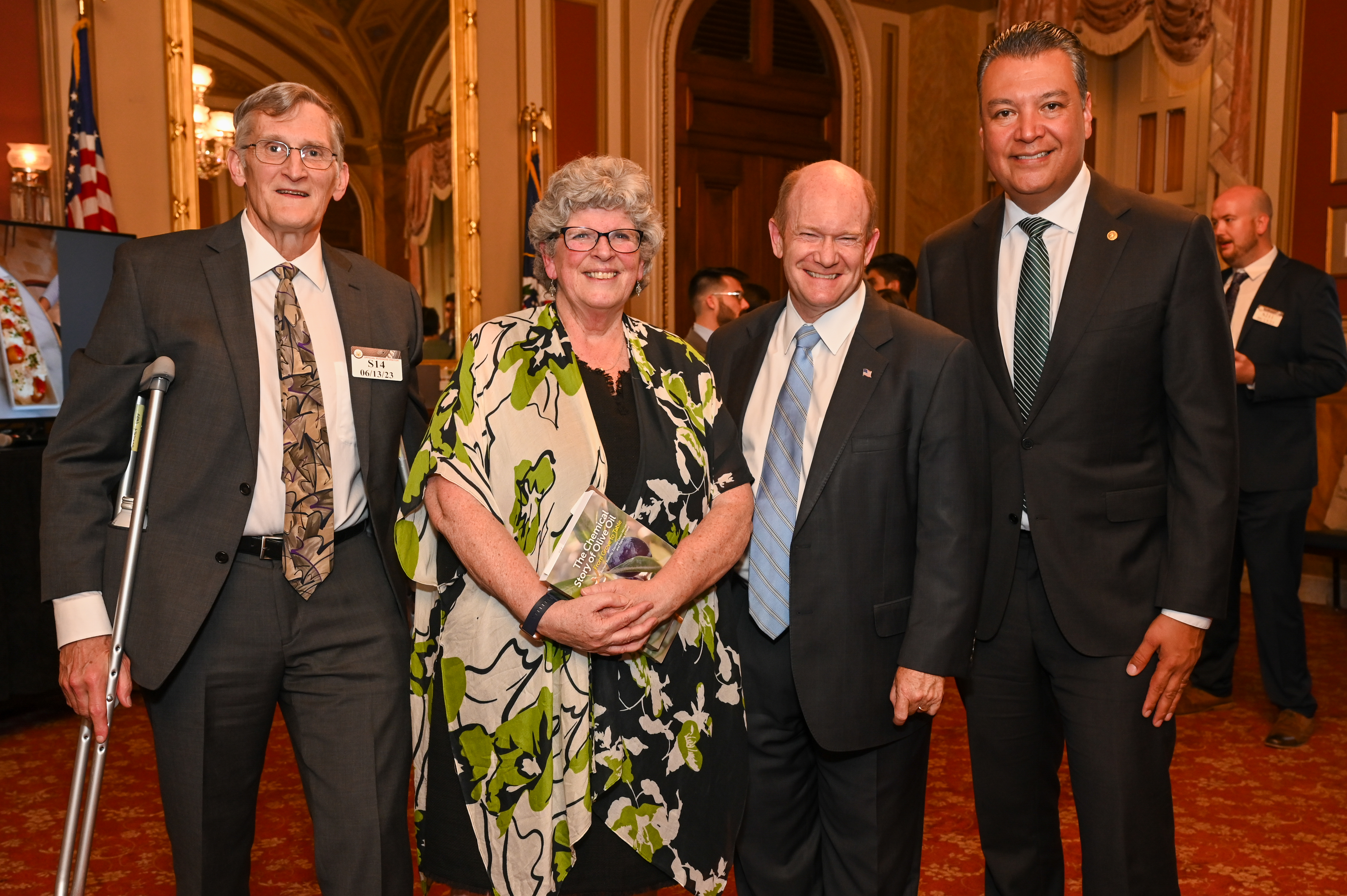
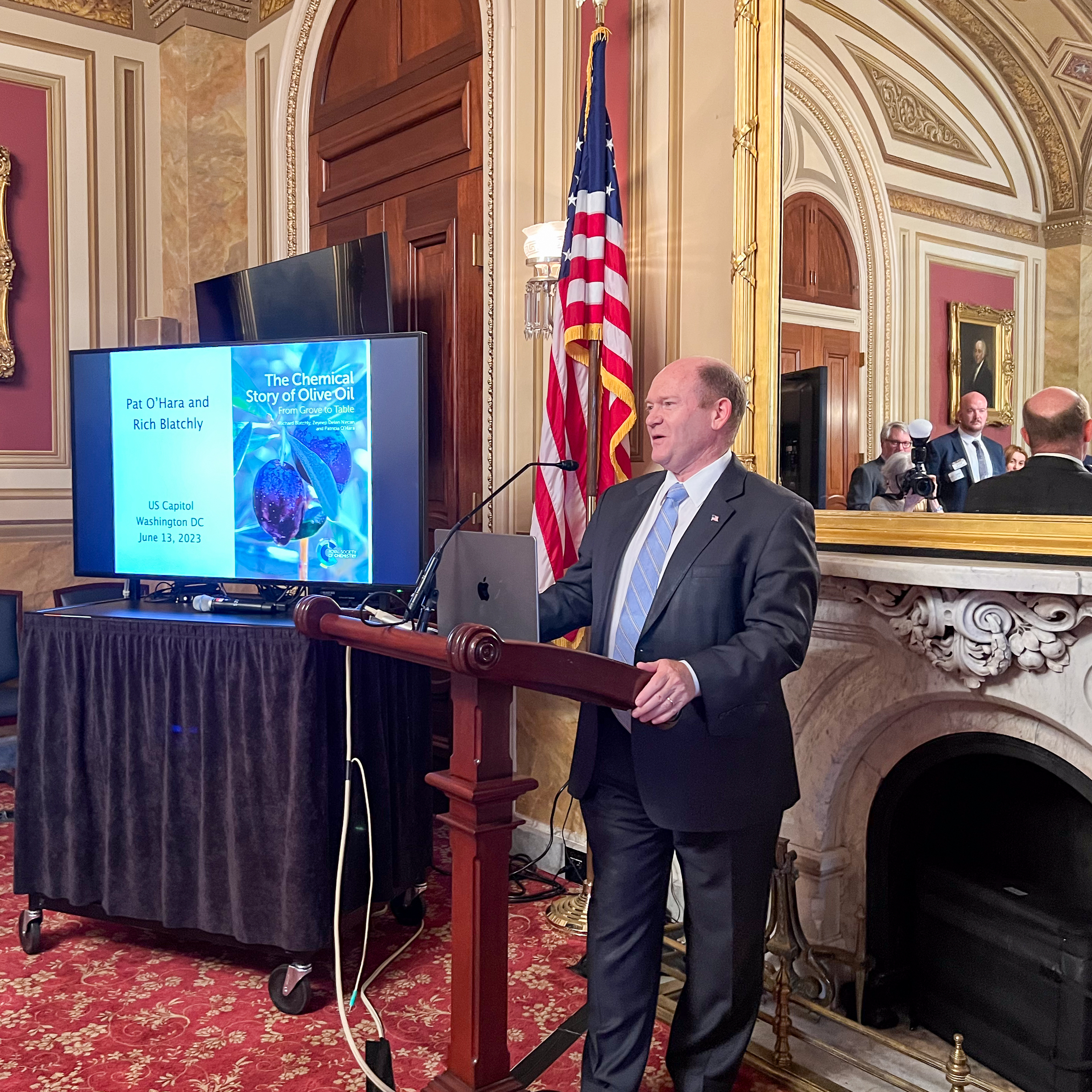
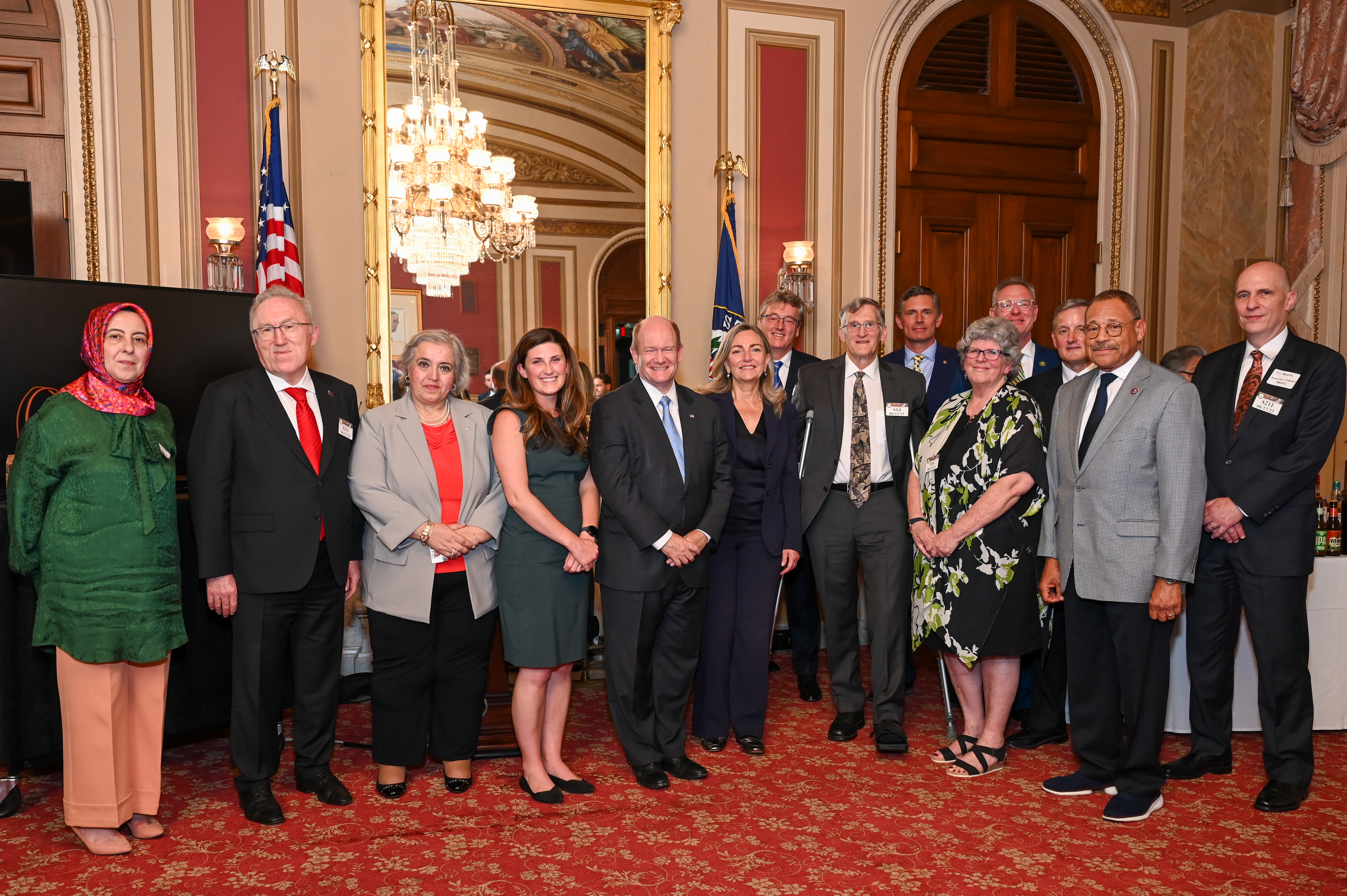
WASHINGTON — U.S. Senator Chris Coons (D-Del.), Co-Chair of the Congressional Chemistry Caucus, hosted a bipartisan and bicameral caucus event on the chemistry of olive oil in the Lyndon B. Johnson Room at the U.S. Capitol, featuring a presentation by Pat O’Hara, the Amanda and Lisa Cross Professor of Chemistry at Amherst College, and her husband, Rich Blatchly, Professor Emeritus at Keene State College. The event featured a presentation by O’Hara and Blatchly on the chemistry behind the taste and health benefits of olive oil, followed by a tasting of various olive oils from around the world. The Chemistry Caucus hosts events and briefings to educate members and staff on the importance of chemistry to our economy and society.

O’Hara and Blatchly’s book, The Chemical Story of Olive Oil, has been translated into multiple languages. O’Hara also teaches an undergraduate course on the chemistry of olive oil at Amherst.

Also in attendance were Chemistry Caucus Co-Chair Congressman Sanford Bishop (D-Ga.), Congressman Scott Peters (D-Calif.), Congressman Bruce Westerman (R-Ark.), Senator Tom Carper (D-Del.), Senator Alex Padilla (D-Calif.), Senator Martin Heinrich (D-N.M.), Senator Lisa Murkowski (R-Alaska), Senator Joe Manchin (D-W.Va.), Senator John Fetterman (D-Pa.), Senator Elizabeth Warren (D-Mass.), 2021 Chemistry Nobel Laureate Dave MacMillan, Greek Ambassador to the United States Alexandra Papadopoulou, Italian Ambassador to the United States Mariangela Zappia, French Ambassador to the United States Laurent Bili, Spanish Ambassador to the United States Santiago Cabanas, Turkish Ambassador to the United States Hasan Murat Mercan, Ambassador of the European Union to the United States Stavros Lambrinidis, and American Chemical Society CEO Al Horvath.

“It’s a pleasure to bring Professor O’Hara, a renowned expert and my former professor, along with her husband, Dr. Rich Blatchly, also a chemist, to the Capitol complex today to share their expertise on a crucial staple that unites cultures from across the Atlantic and Mediterranean and has a rich historic and economic significance,” said Senator Coons. “As Co-Chair of the Congressional Chemistry Caucus, I’m committed to bringing together Senate and House colleagues from both sides of the aisle to learn about the chemistry underpinning our everyday life and promote science-based policymaking.” 

Senator Coons is Chair of the Senate State and Foreign Operations Appropriations Subcommittee (SFOPS) and a member of the Senate Foreign Relations Committee. He is an alumnus of Amherst College, where he studied chemistry and political science.

In addition to Senator Coons and Congressman Bishop, Co-Chairs of the Congressional Chemistry Caucus include Senator Shelley Moore Capito (R-W.Va.), Senator Gary Peters (D-Mich.), Senator Steve Daines (R-Mont.), and Congressman John Moolenaar (R-Mich.). The Congressional Chemistry Caucus is supported by the American Chemical Society, American Chemistry Council, National Association of Chemical Distributors, and the American Cleaning Institute.


group pic


olive oil table


padilla and amherst


20230613_202509264_iOS


Click here for photos from the event.


Senator Coons statement on federal indictment of former President Trump

WILMINGTON, Del. – U.S. Senator Chris Coons (D-Del.), a member of the Senate Judiciary Committee, released the following statement after the indictment of former President Donald Trump by a federal grand jury in Miami:

“No one is above the law, and these federal charges arising from an investigation led by an independent special counsel remind us of that bedrock principle. As with anybody facing criminal charges, the former president is entitled to the presumption of innocence, the opportunity to defend himself, and appropriate due process.”

Senator Coons is a member of the Senate Judiciary Committee and Chair of the Senate Select Committee on Ethics.

ICYMI: Senators Coons and Cramer introduce bill to measure global emissions intensity and hold countries with dirty production accountable

WASHINGTON — In case you missed it, Senators Chris Coons (D-Del.) and Kevin Cramer (R-N.D.) introduced the bipartisan Providing Reliable, Objective, Verifiable Emissions Intensity and Transparency (PROVE IT) Act this week, legislation to direct the U.S. Department of Energy to conduct a comprehensive study comparing the emissions intensity of certain goods produced in the United States to the emissions of those same goods produced in other countries. U.S. Senators Angus King (I-Maine), Lisa Murkowski (R-Alaska), Martin Heinrich (D-N.M.), Lindsey Graham (R-S.C.), Sheldon Whitehouse (D-R.I.), Dr. Bill Cassidy (R-La.), and John Hickenlooper (D-Colo.) also joined as co-sponsors. 

See coverage of the introduction below: 

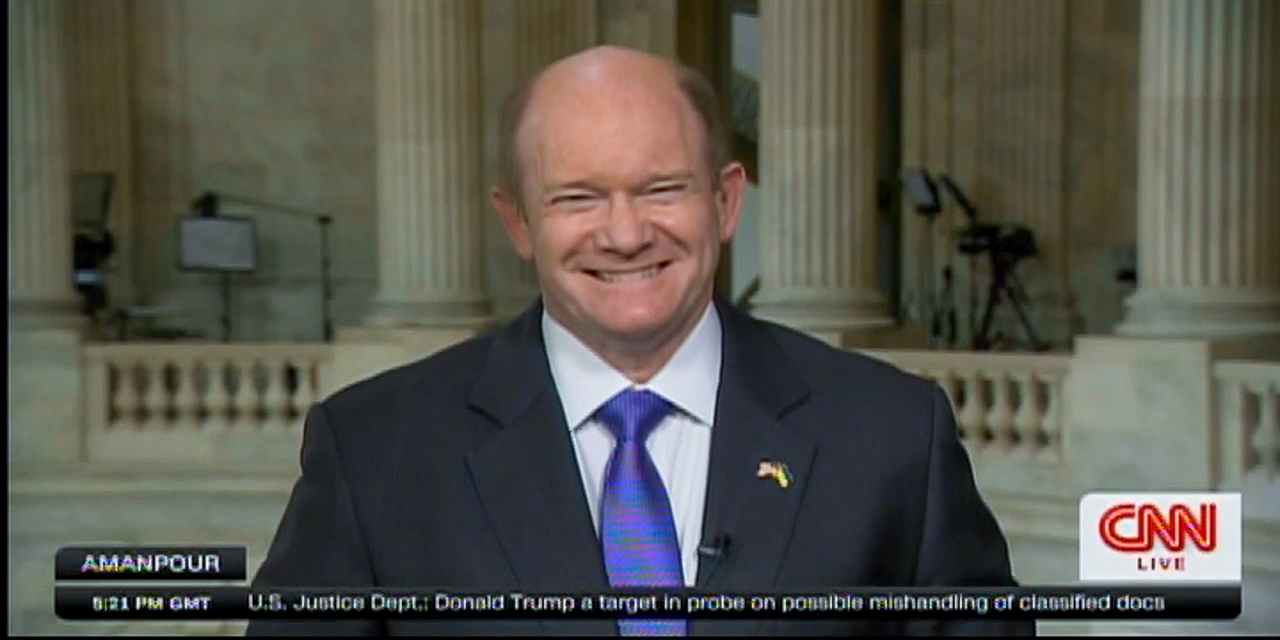
WATCH: Senator Coons discusses the PROVE IT act with CNN’s Christiane Amanpour 

sanscaption cnn international june 8

“That’s part of the beauty of an approach that says, ‘if you want to access the American market, you have to prove that you have low-emissions heavy industrial products.’ The thing that is most likely to bend the curve of emissions in China and India is market forces through trade. … Let’s just imagine for a moment, if the EU, U.K., U.S., Canada, South Korea, and Australia [are] all aligned around low-emissions approaches to how we manufacture steel, aluminum, glass, and cement — heavy industrial products. To access our markets, China and India would have to demonstrate, and Russia, that they are reducing their industrial emissions. That will drive them to change their emissions profiles and to slow down the rate at which they’re currently building a record number of coal-fired power plants.”

The Washington Post: “In a rare example of a bipartisan climate policy, momentum is growing on Capitol Hill for a plan to tax imports from China and other countries with looser environmental standards.” 

Senators Coons and Cramer op-ed in The Hill: “Working together with partner nations, we can reduce our reliance on those countries that not only inflame geopolitical tensions but dump dirty products onto the global market. We can also level the playing field for American manufacturers by giving them credit for the cleaner production standards they abide by. First, though, we need data.” 


Washington Post Columnist Catherine Rampell:An unassuming but remarkable piece of legislation was introduced in the Senate this week: a bipartisan carbon emissions bill. The bill, introduced by Christopher A. Coons (D-Del.) and Kevin Cramer (R-N.D.) and co-sponsored by seven other senators, would require the U.S. government to start calculating the emissions intensity of industrial materials made in the United States and some other countries around the world.”

The Dispatch: “‘It’s heartening that policymakers realize that we can’t rely on country industry-level emissions anymore,’ Shuting Pomerleau, a research manager at the Niskanen Center, tells The Dispatch. ‘We need to get down to the product level if we want to address climate and trade across borders.’”

E&E News: “Senators from both parties have signed on to legislation that would calculate the emissions intensity of industrial materials produced in the United States.

“It’s a necessary step, advocates say, toward a carbon border adjustment mechanism, or CBAM, that would slap tariffs on carbon-intensive imports.

“‘We need our own math,’ said George David Banks, a conservative climate adviser and former climate official in the Trump administration. ‘The Europeans are moving forward with their own CBAM … and [they] will come up with our own math for us.’”


Senator Coons, colleagues introduce legislation to increase transparency around social media platforms

WASHINGTON —U.S. Senator Chris Coons (D-Del.) introduced the bipartisan Platform Accountability and Transparency Act (PATA) alongside Senate colleagues Dr. Bill Cassidy, M.D. (R-La.), Amy Klobuchar (D-Minn.), John Cornyn (R-Texas), Richard Blumenthal (D-Conn.), and Mitt Romney (R-Utah) today, a bill that would require social media companies to share more data with the public and researchers.

“Social media platforms shape the information that billions of people across the globe consume, but we still know far too little about how they operate and the impact they have on each of us and our society. Right now, Congress and the public have no way to verify whether or how safe these products really are,” said Senator Coons. “We cannot continue to let platforms grade their own homework. That’s why I’m introducing the Platform Accountability and Transparency Act, which will give the public a data-driven understanding of the effects that these platforms have on our children, families, democracy, and national security. This bipartisan bill is a crucial step that will help ensure social media regulation addresses the problems facing our communities today.”

“It’s clear Big Tech companies will abuse their power when allowed to operate in the dark. Congress needs the tools to hold these companies accountable. Our bill gives us transparency into data collection by social media companies,” said Senator Cassidy.

“Social media companies have said: ‘just trust us,’ while putting profits ahead of users’ safety, privacy, and well-being for too long. It’s time to start holding these platforms accountable for the dangerous lack of transparency behind their algorithms,” said Senator Klobuchar. “Our bipartisan legislation will do just that, ensuring independent researchers can access platform data and better understand how their algorithms operate.”

“Social media platforms have given rise to new threats to our national security, our mental health, and our children, and we must better understand how these companies operate and their effect on society,” said Senator Cornyn. “This legislation would strengthen independent researchers’ access to data from social media companies, and I urge my colleagues in the House and Senate to support it.”  

“Social media platforms and their black box algorithms have fueled a mental health crisis in our country. By operating under a cloak of secrecy, Big Tech has been able to profit off the toxic content and addictive features it drives at users,” said Senator Blumenthal. “Sunlight is the best disinfectant, which is why the public and independent researchers deserve access to companies’ data and practices. I’m proud to join my colleagues in this effort to strengthen transparency online.”

“The threat social media has on the well-being of our young people and our national security is becoming more and more evident,” said Senator Romney. “By increasing data access and transparency, this legislation will help parents, policymakers, and researchers better understand the impacts social media has on society, and allow Congress to craft policies that create a healthier online experience for children and all Americans.”

In January 2022, The Washington Post editorial board endorsed PATA – then in a discussion draft form – as a “step toward solving our social media woes” that would provide “safe harbor not only to participating academics but also compliant companies and [mandate] the creation of privacy and cybersecurity standards for the process.”

Background:

PATA is a multipronged bill that creates new mechanisms to increase transparency around social media companies’ internal data:

  • Under PATA, independent researchers would be able to submit proposals to the National Science Foundation, an independent agency that approves research and development proposals across the sciences. If the requests are approved, social media companies would be required to provide the necessary data to the researchers subject to strict privacy protections.
  • Additionally, the bill would require that platforms proactively make certain information available to researchers and the public on an ongoing basis, such as:
    • A comprehensive ad library;
    • Statistics about content moderation;
    • Real-time data about viral content; and
    • Descriptions of a platform’s ranking and recommendation algorithms.
  • The proposal would also protect researchers from legal liability that may arise from automatically collecting public-facing platform information if they comply with various privacy safeguards. 

This bill has been endorsed by the Council for Responsible Social Media, American Psychological Association, Mozilla, Children and Screens: Institute of Digital Media and Child Development, Fairplay, and Common Sense Media. This bill was previously introduced in December 2022.

“Transparency is a crucial goal in the push for responsible and accountable social media,” said Dick Gephardt, former U.S. House Majority Leader (D-Mo.) and Co-Chair of the Council for Responsible Social Media. “How can we truly address the challenges posed by social media without knowing the nature, scope, and scale of these problems? How can we safeguard our children, our communities, and our national security from online harms without fully knowing what we’re up against? PATA is the key to unlocking the black box of social media, and a necessary component of any social media reform.”

“Every day, Big Tech companies make decisions that affect our children, our communities, and ultimately, our democracy,” said Kerry Healey, former Lieutenant Governor of Massachusetts (R) and Co-Chair of the Council for Responsible Social Media. “Social media is deeply embedded in our society, and yet, we know almost nothing about the policies and design choices of these platforms. The American public deserves to know how their personal data is being used and what impacts it has on their lives. PATA will ensure that these companies can no longer operate in secrecy.”

“The Platform and Accountability Act takes important steps to increase the ability of psychological scientists studying the impact of social media to gain access to data held by social media platforms,” said Mitch Prinstein, PhD, Chief Science Officer of the American Psychological Association. “This bipartisan legislation will increase our scientific understanding of this complex issue and enable caregivers, young people, and policymakers to mitigate the harmful impacts of social media use.”

The text of the bill is available here. A one-pager on the bill is available here. A section-by-section summary of the bill is available here.
 

VIDEO: Senator Coons chairs Judiciary IP Subcommittee hearing on artificial intelligence

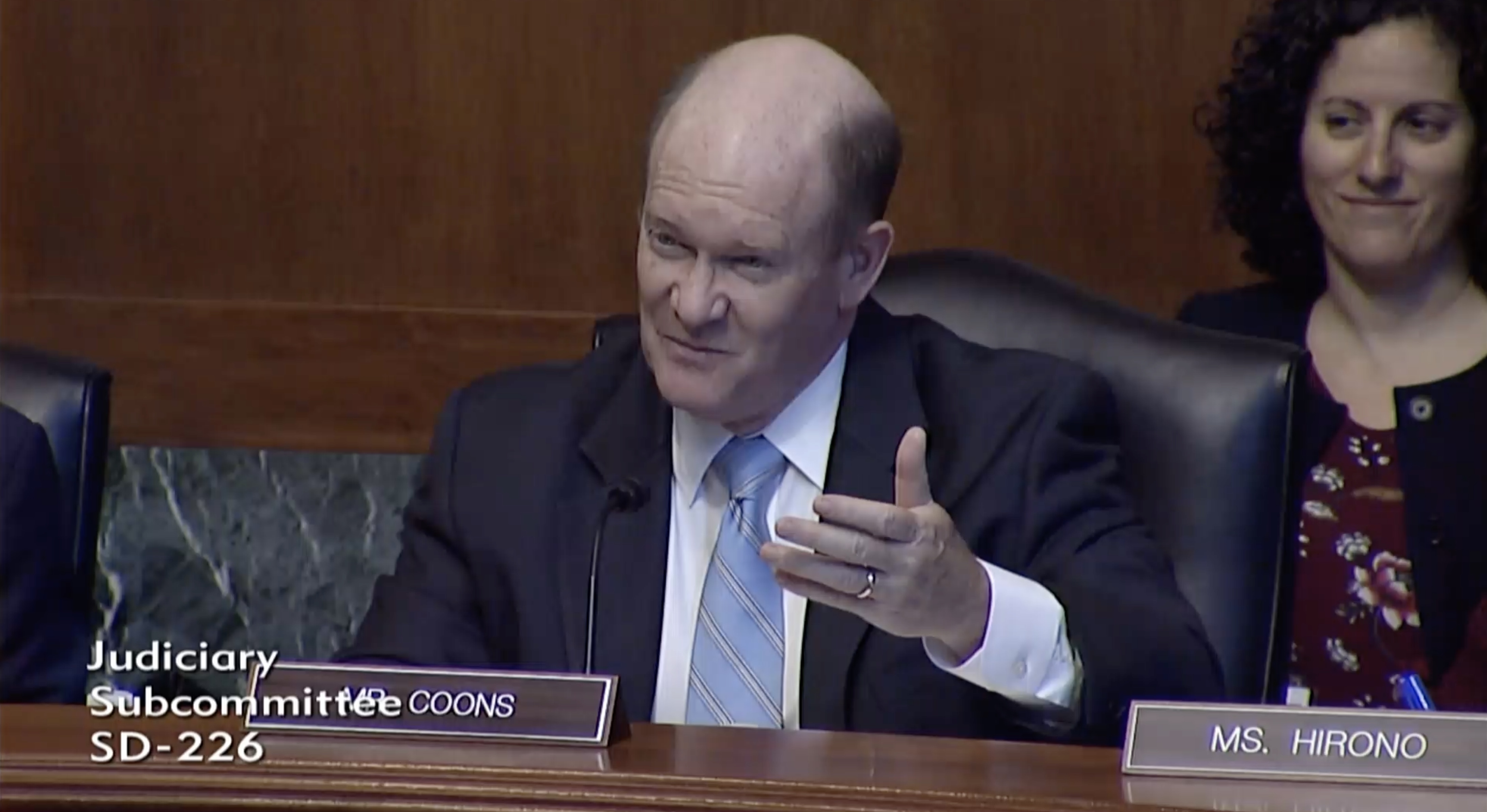
WASHINGTON – U.S. Senator and Chair of the Senate Judiciary Subcommittee on Intellectual Property Chris Coons(D-Del.) chaired a hearing yesterday focused on exploring the impact of artificial intelligence (AI) on innovation and how to regulate AI in a way that promotes innovation so that the United States maintains its competitive edge.

The hearing, entitled “Artificial Intelligence and Intellectual Property — Part I: Patents, Innovation, and Competition,” welcomed intellectual property (IP) experts from business and academia to discuss how companies are using AI to drive innovation; patent law questions around AI inventions, and how the laws might need to adapt to account for AI technology; and steps the United States could take to position itself as a global leader on AI and IP rights. At the hearing, Senator Coons discussed AI’s major benefits for innovation; the importance of establishing the United States’ leadership in AI; and the need for policies that consider data rights to protect AI systems and bring clarity to patent eligibility law.

The subcommittee intends to hold hearings on the intersection of AI and copyright law later in the year.

A video and transcript of Senator Coons’ opening remarks are available below.

Screen Shot 2023-06-07 at 3


WATCH HERE.

Senator Coons: I’d like to call this hearing to order. Thank you to all of our witnesses for participating today. I’d like to thank Ranking Member [Thom] Tillis [R-N.C.] and your staff for working so well and closely with mine to put together this hearing on a consensus basis. As you can tell from the attendance, this is a topic of wide interest, and so, to my colleague and friend, Senator [Mazie] Hirono [D-Hawaii], I am looking forward to a robust hearing on the topic of artificial intelligence and intellectual property. 

We’re going to explore some of the recent developments in AI, and in particular, patents; and the impact of AI, innovation, and U.S. competitiveness. Make no mistake: AI presents novel questions across a wide range of areas of IP policy, and today’s the first in a series of hearings that this subcommittee will have looking at the intersection of artificial intelligence and intellectual property law and policy. We’ve all heard about different tools like ChatGPT or DALL-E; impressive new generative AI tools that have opened up so many creative avenues and raised many concerns. These tools are just a few of many popular uses, but generative AI has already been put to work to help solve a wide range of very serious and substantive problems.

Drug development is just one particularly compelling example. Over the last few decades, antibiotic discovery developments have become increasingly difficult and expensive. Many researchers have given up because new antibiotic drugs have not been able to overcome the threat of antibiotic disease. In fact, no antibiotic classes have been introduced since the 1980s. Enter AI. Researchers at MIT [Massachusetts Institute of Technology] recently trained an AI model using a large collection of diverse molecules and then used the model to make a new and potent antibiotic that is effective against antibiotic-resistant bacteria. This discovery didn’t take years; it didn’t take weeks; it took a few days. I share the story because many of the conversations around AI focus on the potentially harmful uses of the technology: threats of misinformation and bias. Highlighting these uses is important, but I believe we also have to act thoughtfully to set critical safeguards. It’s important to shine a light on how AI is being used to innovate. Drug development is one compelling example; others include its role in efforts to combat climate change, to address our computer chips shortage, to create renewable energy sources. These innovations raise new, interesting, and complex patent law issues, including whether innovations facilitated by AI are or should be patentable, and if so, who should be listed as the inventor? Currently, in the U.S., many AI-generated inventions are not patentable, because the Supreme Court has determined the law does not permit including a non-human inventor on a patent application. 

The decisions we make in Congress about whether and how to protect AI-related innovations will also have significant consequences for U.S. innovation and competitiveness. We need to ensure we establish a rights regime that encourages AI-generated innovation to stay here in the United States, instead of incentivizing innovators to turn to other countries with more favorable laws to protect their AI-generated inventions and other emerging technologies. Despite the critical role of IP in AI innovation, IP considerations have largely been missing from proposed AI regulation frameworks. Neglecting IP, in an effort to regulate AI, would have serious unintended consequences for [our] innovation ecosystem, our national security, and our economic competitiveness. In contrast, competitors like China recognize IP policy is an important tool in national strategies for AI and other emerging technologies. China has elevated the role of its patent and trademark office and has even been exploring data rights as a new form of IP protection for AI. 

So, what can we do? There are some initial steps we can take to ensure U.S. leadership on AI policies. I think it’s critical that we include IP considerations in ongoing AI regulatory frameworks and make certain the U.S. Patent and Trademark Office has a seat at the table. We should change our patent eligibility laws — and I suspect my colleague agrees — so that we can protect critical AI innovations. And last, we should consider whether other changes to our patent laws, or new and unique protections, may be necessary to encourage innovation in AI and emerging technologies. 

I’m excited to explore these issues with you today with Senator Tillis’ cooperation. We have a superb panel with a diversity of views and perspectives. You will — I suspect — find five minutes a bracingly short period in which to explain them. We are grateful for your lengthy submitted written testimony and look forward to your individual summaries.

Senator Coons statement on vote to prevent default

WASHINGTON ­– U.S. Senator Chris Coons (D-Del.) released the following statement after voting for the Fiscal Responsibility Act, which prevented the United States from defaulting on its debts:

“I am relieved that the Senate has come together to avert default and pull the United States back from the brink of economic disaster. President Biden and his negotiating team produced a deal that will put reasonable constraints on spending while defending his key accomplishments and the programs on which so many Delawareans rely. It’s proof of what can happen when you have a president willing to reach across the aisle and deliver results for the American people.

“While I am happy to have this crisis behind us, the fact remains that the House majority never should have put us at risk of a disastrous, self-inflicted default in the first place. We should prevent the debt ceiling from being used as a political hostage and stop allowing our country to be taken up to the edge of default.”
 

Senator Coons statement on bill to avoid default

WILMINGTON, Del. ­– U.S. Senator Chris Coons (D-Del.) released the following statement about the Fiscal Responsibility Act and the agreement between President Biden and Speaker McCarthy to avoid default:

“The budget agreement reached by President Biden and Speaker McCarthy is the only way forward to avoid a disastrous default in a week that would spark a recession, destroy Delawareans’ retirement accounts, and cost our state countless jobs. I have faith in President Biden and his negotiating team, and I believe that this is the best deal that could be reached, given the damaging demands of House Republicans. It protects critical accomplishments of the Biden Presidency and key programs on which Delawareans rely.

“To my colleagues who have serious misgivings about this deal, I say this is far better than defaulting. We must come together to pass this deal and avert a self-destructive default. After that, let’s work together to end the risk of these self-inflicted debt ceiling crises.”


###

Senator Coons statement on the Dignity Act

WASHINGTON ­– U.S. Senator Chris Coons (D-Del.) released the following statement after Representatives Maria Elvira Salazar (R-Fla.) and Veronica Escobar (D-Texas) introduced the Dignity Act:

“Our immigration system is deeply broken and congressional action is long overdue. That’s why I applaud Reps. Salazar and Escobar for their leadership in introducing the bipartisan Dignity Act. Their legislation is an important step forward as we work towards a more fair, humane, orderly, and legal immigration system. I look forward to working with my colleagues to introduce legislation in the Senate that can move us forward.”


###