Related Issues

Related Issues

Senator Coons statement on Brian P. McKeon retirement

WASHINGTON – U.S. Senator Chris Coons (D-Del.) released the following statement today on the retirement of Brian P. McKeon, Deputy Secretary of State for Management and Resources:

“Brian is a dedicated public servant – and a proud Notre Dame alumnus – whose career has spanned the White House, the Department of Defense, the Department of State, and the Senate Committee on Foreign Relations, where he served for 12 years as chief counsel under then-Senator Joe Biden (D-Del.). In each of these roles, Brian has set an example of bipartisanship, integrity, and work ethic that has made an impression on each of his colleagues.

“I have greatly enjoyed working with Brian and I will miss serving with him. I wish Brian and his wife, Liz, well in this next chapter of their lives.”

Senator Coons is Chairman of the Appropriations Subcommittee on State and Foreign Operations and a member of the Senate Committee on Foreign Relations.


Senator Coons, colleagues urge U.S. International Development Finance Corporation to support advanced nuclear energy projects

WASHINGTON – Today, U.S. Senators Chris Coons (D-Del.), co-chair of the bipartisan Climate Solutions Caucus; Joe Manchin (D-W.Va.); John Barrasso (R-Wyo.); Ben Cardin (D-Md.); Shelley Moore Capito (R-W.Va.); Cory Booker (D-N.J.); Kevin Cramer (R-N.D.); Jim Risch (R-Idaho); and Lisa Murkowski (R-Alaska) sent a letter to Scott Nathan, Chief Executive Officer of the U.S. International Development Finance Corporation (DFC), urging the DFC to begin financing nuclear energy projects and support the continued development and deployment of advanced nuclear technology.

“Bipartisan support for advanced nuclear is based not only on its promise to reduce emissions and potential to deliver global clean energy at scale to support economic development but also on the understanding that U.S. global leadership in this field is vital to our core national security interests. International demand for U.S. advanced nuclear technology has only intensified in the wake of Russia’s invasion of Ukraine and Europe’s severe energy crisis. Numerous countries, including some with 123 Agreements for peaceful cooperation firmly in place, are interested in partnering with the U.S. on advanced nuclear projects that could qualify for DFC support. Exporting new and advanced nuclear technologies like small modular and micro-reactors would support our allies’ growing energy security needs and allow DFC to meet its mandate to facilitate growth in lower-income countries. Further, prioritizing and deploying U.S. nuclear technologies complements our broader foreign policy objectives to counter Russian and Chinese efforts to use civil nuclear exports for their own political and economic ends,” wrote the Senators.


The full letter is available below or here.

Dear Mr. Nathan:

In 2019, a bipartisan group of Senators urged the U.S. International Development Finance Corporation (DFC) to eliminate its “categorical prohibition” against supporting civil nuclear energy projects.

We were pleased that in 2020, the DFC announced the modernization of its nuclear energy policy. The announcement officially lifted the agency’s prohibition on financing nuclear energy projects, enabling it to support civil nuclear projects according to the United States’ broader commercial, development, environmental, energy, geopolitical, and national security interests. Given the current war between Russia and Ukraine, and the threat that conflict poses to the global nuclear fuel supply, we urge the DFC to begin financing nuclear energy projects.

The DFC is capable of playing a key role in supporting the continued development and future deployment of U.S. advanced nuclear technology abroad. Advanced nuclear energy technologies have received clear bipartisan congressional support, including through the passage of the Energy Act of 2020. The passage of recent legislation has directed billions of dollars to advanced nuclear demonstration projects that are scheduled to be built in the U.S. and commence operation by the end of the decade.

Bipartisan support for advanced nuclear is based not only on its promise to reduce emissions and potential to deliver global clean energy at scale to support economic development but also on the understanding that U.S. global leadership in this field is vital to our core national security interests. International demand for U.S. advanced nuclear technology has only intensified in the wake of Russia’s invasion of Ukraine and Europe’s severe energy crisis. Numerous countries, including some with 123 Agreements for peaceful cooperation firmly in place, are interested in partnering with the U.S. on advanced nuclear projects that could qualify for DFC support. Exporting new and advanced nuclear technologies like small modular and micro-reactors would support our allies’ growing energy security needs and allow DFC to meet its mandate to facilitate growth in lower-income countries. Further, prioritizing and deploying U.S. nuclear technologies complements our broader foreign policy objectives to counter Russian and Chinese efforts to use civil nuclear exports for their own political and economic ends.

Russian and Chinese nuclear export bids are backed by state financing and government-to-government concessions. Thus, the DFC’s involvement in U.S. nuclear export projects is crucial to the viability and competitiveness of U.S. nuclear technologies, support of long-term diplomatic partnerships, and our continuing stewardship over the highest international standards for nuclear safety, security, and nonproliferation. Given the greater national priorities at stake, we urge the DFC to pursue opportunities to implement this critical authority by financing nuclear projects and seeking additional opportunities to attract new nuclear energy applicants.


###

Senators Coons, Portman celebrate inclusion of END Wildlife Trafficking Act in NDAA

WASHINGTON – U.S. Senators Chris Coons (D-Del.) and Rob Portman (R-Ohio) applauded the inclusion of their bipartisan legislation to combat international wildlife trafficking and to strengthen interagency efforts to tackle the issue in this week’s National Defense Authorization Act (NDAA). Senators Coons and Portman are members of the Senate Foreign Relations Committee and co-chairs of the International Conservation Caucus. Representatives Buddy Carter (R-Ga.) and Grace Meng (D-N.Y.) led the House companion of the bill.

Wildlife poaching and trafficking remains a serious transnational crime that threatens the conservation of vulnerable wildlife, security, and economic opportunity. It has also been linked to other organized criminal activities, including trafficking in narcotics, weapons, and people. The Eliminate, Neutralize, and Disrupt (END) Wildlife Trafficking Reauthorization and Improvements Act would reauthorize legislation that was signed into law in 2016 and expand the responsibilities of the Presidential Task Force on Wildlife Trafficking.

“The Presidential Task Force on Wildlife Trafficking has done outstanding work, but the threats posed by wildlife poaching and trafficking are constantly evolving. Reauthorizing the END Wildlife Trafficking Act will empower the task force with improved tools to help combat this crime. I am proud to see this bipartisan bill move forward with inclusion in the NDAA,” said Senator Coons.

“I am pleased that this critical legislation to help combat wildlife trafficking is included in the FY 2023 NDAA,” said Senator Portman. “Wildlife trafficking is not only a matter of conservation but also one of national security and international stability, as billions in profits from the illegal wildlife trade are used to finance other illicit and terrorist activity. My legislation with Senator Coons to reauthorize and strengthen the Presidential Task Force on Wildlife Trafficking will enhance the tools the U.S. government has to help combat wildlife trafficking around the globe.”

“From drug deals to human trafficking, the internet is a new front to fight some of the worst crimes we know. By reauthorizing the END Wildlife Trafficking Act, we will be better positioned to stop these bad actors and combat wildlife trafficking not just in the U.S., but globally. I’m proud to cosponsor this bill and take a firm step towards ending this heinous crime for good,” said Representative Carter. 

“I am thrilled that our END Wildlife Trafficking Reauthorization Act has passed the House as part of the annual defense funding bill,” said Representative Meng, Vice Chair of the House Appropriations Subcommittee on State and Foreign Operations. “The trafficking of wildlife is a cruel and dangerous practice that has the potential to cause catastrophic economic damage and can lead to the spread of disease. This interagency solution will help combat the issue on a global scale, and I am proud to help champion this effort.”

Since it was enacted in 2016, the END Wildlife Trafficking Act has aided in the arrest of members of wildlife trafficking networks and supported interagency efforts to tackle the issue globally through country-specific and regional initiatives. The END Wildlife Reauthorization and Improvements Act reauthorizes the duties of the Presidential Task Force on Wildlife Trafficking and related reports on major wildlife trafficking countries and expands the role of technology in anti-trafficking efforts.

The text of this legislation can be found in section 5943 of the NDAA, available here.

Senators Coons and Graham, congressional international conservation leaders call for creation of new U.S. Foundation for International Conservation

WASHINGTON – U.S. Senators Chris Coons (D-Del.) and Lindsey Graham (R-S.C.) introduced bicameral legislation to create a United States Foundation for International Conservation along with the Co-Chairs of the International Conservation Caucus in the House of Representatives – Representatives David Joyce (R-Ohio), Betty McCollum (D-Minn.), Chris Stewart (R-Utah), and Henry Cuellar (D-Texas). The legislation would fund public-private partnerships to support local communities around the world in effectively managing protected and conserved areas. Senators Coons and Graham are the Chair and Ranking Member, respectively, of the Senate State, Foreign Operations, and Related Programs (SFOPS) Appropriations Subcommittee.


“When conservation efforts prioritize human development, are supported by local stewards, and leverage private funding, they have the opportunity to provide long-term benefits for our planet, our health, and our security,” said Senator Coons, Co-Chair of the International Conservation Caucus. “We are at a critical moment for financing conservation and preventing the loss of crucial natural habitats, and I look forward to working with my colleagues to advance this bipartisan legislation.”


“The creation of the Foundation for International Conservation is a win-win in that the bill leverages private capital while supporting the long-term protection of critical landscapes around the world,” said Senator Graham. “Investments in conservation lead to food security and regional stability. I am proud to work with my colleagues and stakeholders to position the United States as a leader in international conservation.”


According to the World Wildlife Fund (WWF), the world faces significant risks because of global biodiversity loss, with a nearly 70% average decline in monitored wildlife populations between 1970 and 2018. Protected and conserved areas play an important role in protecting wildlife and vital ecosystems, but are often underfunded. The United States Foundation for International Conservation Act (S. 5134/H.R. 9340) would address this issue by leveraging capital from the private and philanthropic sectors to fund as much as $2 billion for protected areas and the communities surrounding them over the next decade. The new foundation would make awards for conservation efforts that are cost-matched, have support and engagement from host countries and local populations, create economic opportunities, and demonstrate plans to transfer management skills to local institutions. 


The bill is cosponsored by Senators John Boozman (R-Ark.), Sheldon Whitehouse (D-R.I.), Martin Heinrich (D-N.M.), Richard Burr (R-N.C.), Thom Tillis (R-N.C.), and Rob Portman (R-Ohio). Senators Whitehouse, Burr, and Portman are also Co-Chairs of the International Conservation Caucus.

The text of the bill is available here.

“Conserving nature requires sustained investment. Currently, only three percent of all available global climate finance is aimed at protecting nature, and billions of dollars in private capital for nature-based investments are sidelined by uncertainty and risk. Public-private partnerships can unlock needed finance for conservation projects around the world, bolstering climate security, food and water security, economic and national security. Passing this legislation would be a major win for wildlife, human development, climate and the United States — and will inspire other countries to take action as the world convenes to negotiate the post-2020 global biodiversity framework,” said Dr. M. Sanjayan, CEO, Conservation International.

“Protecting nature on the scale required means mobilizing significant resources from both governments and the private sector. Establishing a United States Foundation for International Conservation would help by forging new public-private partnerships to conserve critical landscapes and seascapes. In doing so it would enhance America’s efforts to halt and reverse nature loss and protect resources that millions of people rely upon for their lives and livelihoods. WWF commends the bipartisan group of lawmakers who introduced this legislation, and we will continue to work with Congress and the Administration to grow and strengthen U.S. government partnerships with countries, communities, and the private sector in support of global conservation,” said Carter Roberts, President and CEO, World Wildlife Fund.

“The U.S. Foundation for International Conservation Act is a critical U.S. instrument in solving the conservation financing puzzle in developing countries. This legislation will help galvanize the required investment that enhances governance and management effectiveness in protected and conserved areas. At the same time, it will catalyze the direct involvement of Indigenous Peoples, local communities, women, and youth. The COVID-19 crisis resulted in the loss of revenue, exposed vulnerabilities to economic shocks, and illuminated the underlying financing and resourcing challenges facing protected and conserved areas in Africa and around the world,” said Edwin Tambara, Director, Global Leadership, African Wildlife Foundation.

“The U.S. Foundation for International Conservation Act would help the U.S. lead in funding durable conservation for developing countries that engages all stewards of the environment. The public-private match unleashes resources and enhances commitments to biodiversity that will greatly benefit the global community,” said Tom Dillon, Senior Vice President for Environment at The Pew Charitable Trusts. “This legislation comes at an important moment as nationas gather in montreal to negotiate and adopt a global biodiversity framework for the next decade.”

“International conservation is fundamental to U.S. strategic interests – from good governance, regional stability, and conflict avoidance to poverty alleviation and food security. We are greatly encouraged to see the leadership of the U.S. Congressional International Conservation Caucus working with the private sector on an innovative new public-private partnership to secure large landscapes for the long-term benefit of their communities – ‘People & Places,’” said David H. Barron, Chairman, the ICCF Group.

“The decline of Earth’s natural spaces is not just a crisis for one country but for all of humanity. This act is a critical step toward promoting long-term, effective conservation strategies for lands and waters across the planet. It is also a commitment to our international partners that the United States is ready to do its part. The grants and leadership from the foundation will support innovative, on-the-ground work that will conserve and restore nature, promote economic growth, and improve quality of life. As the world grapples with how to address its climate and biodiversity crises, we are grateful to Sens. Coons and Graham and the co-chairs of the Senate and House International Conservation Caucuses for their leadership on this bipartisan legislation. We urge Congress to pass the act by year’s end.” – Jennifer Morris, Chief Executive Officer, The Nature Conservancy

“We commend our Congressional champions on the introduction of the bipartisan U.S. Foundation for International Conservation Act. Passage of this legislation will be a critically important step in our ongoing efforts to protect wild places and biodiversity. By shoring up the shortfall in funding for effective management of protected and conserved areas, the full range of conservation stakeholders—from scientists and NGOs to governing bodies and Indigenous groups—will be able to effectively sustain complex ecosystems across our planet and the biodiversity found there for the benefit of people and nature.”  — John Calvelli, Executive VP for Public Affairs, Wildlife Conservation Society


###
PHOTOS: Senator Coons hosts annual Taste of Delaware at U.S. Capitol

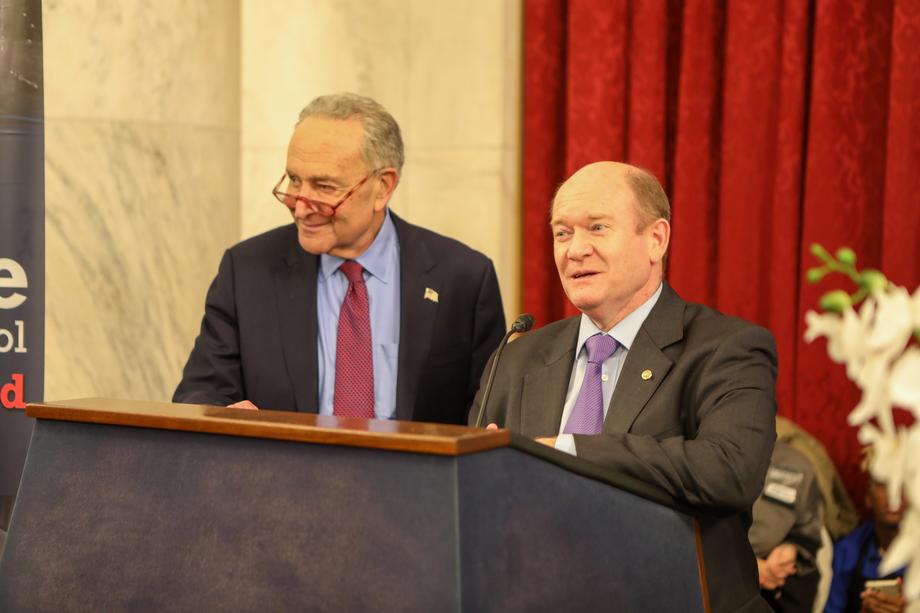
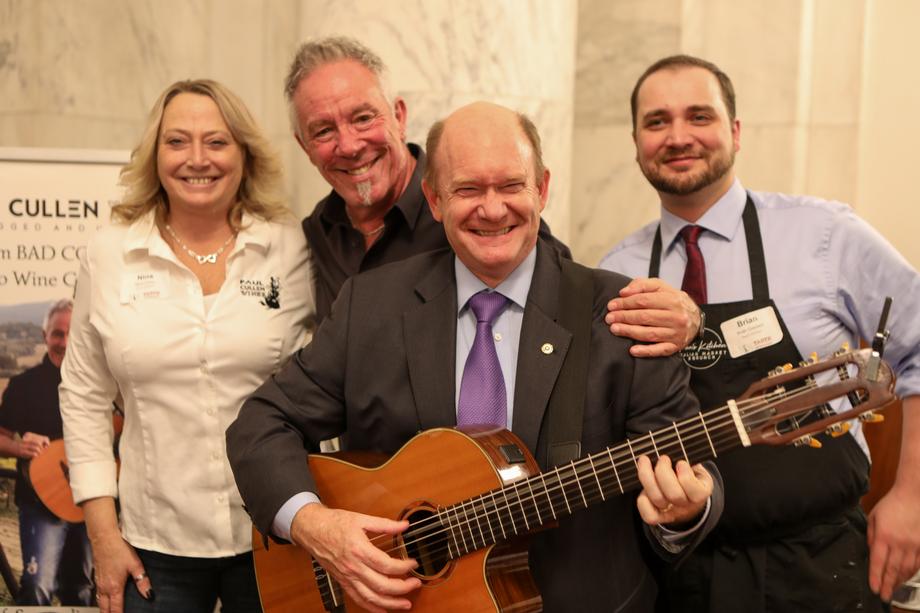
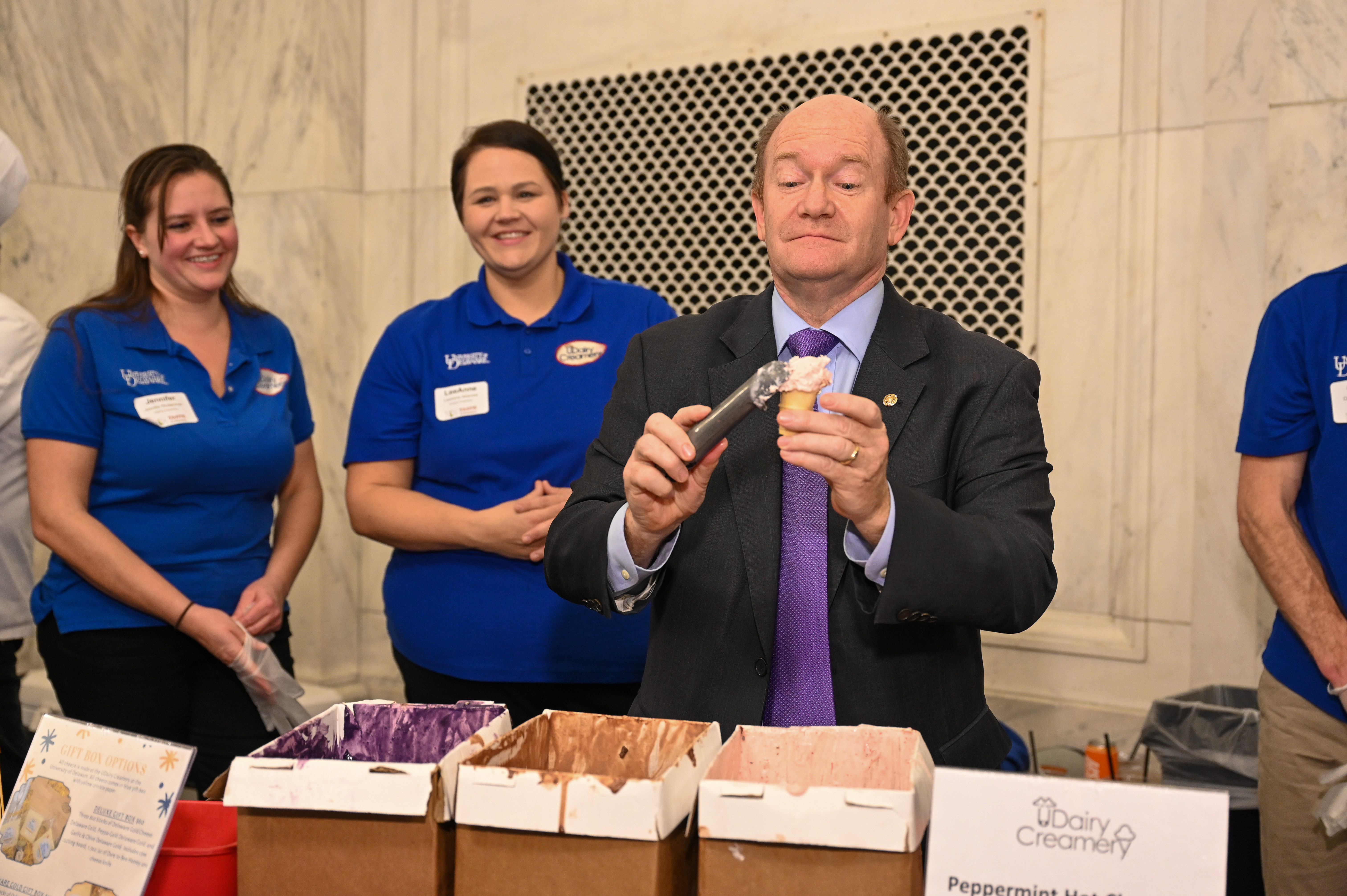
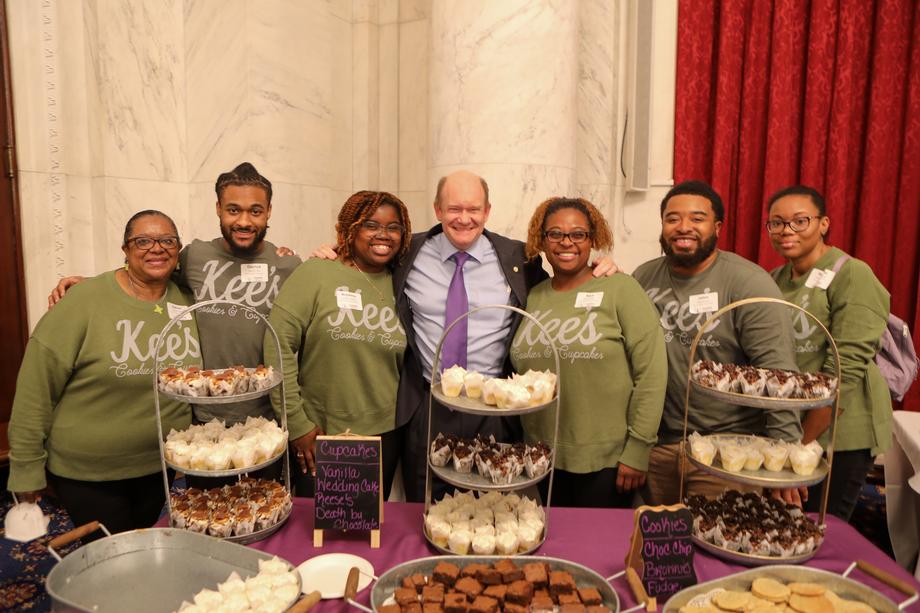
WASHINGTON — U.S. Senator Chris Coons (D-Del.) and the Delaware State Chamber of Commerce hosted the 12th annual Taste of Delaware yesterday at the Kennedy Caucus Room in the U.S. Capitol. The annual event, which was open to the public, featured food and drinks from over two dozen establishments from the First State, highlighting local businesses in Delaware’s agricultural and hospitality sectors.

The Taste of Delaware, held this week in honor of Delaware’s ratification of the U.S. Constitution on December 7, 1787, showcased some of the First State’s best flavors from destinations such as BBC Tavern and Grill (Greenville), Dogfish Head Brewery (Milton), Double Spiral Chocolate (Ardentown), Home Grown Cafe (Newark), Kee’s Cookies & Cupcakes (Clayton), The Starboardrestaurant (Dewey Beach), Nassau Valley Vineyards (Lewes), and Waggies by Maggie & Friends (Wilmington).

 RP2_6934

For more photos from the event, please click here.


###

Senators Coons, Cardin introduce bill to support small businesses with mentoring and assistance

WASHINGTON – U.S. Senators Chris Coons (D-Del.) and Ben Cardin (D-Md.), today introduced the SCORE for Small Business Act, legislation that would reauthorize and improve the SCORE program to help with the annual in-person mentoring, online training, and local training workshops SCORE provides to small businesses. Senator Cardin is chairman, and Senator Coons is a member, of the U.S. Senate Committee on Small Business and Entrepreneurship.

“Delaware’s small businesses drive the First State’s economy, and federal programs like SCORE help them grow, thrive, and create good-paying jobs,” said Senator Coons. “Despite the pandemic and global supply chain disruptions, business owners and workers have worked with the Small Business Administration’s (SBA) SCORE program and its thousands of volunteers to plan, launch, and expand their businesses. This bill would reauthorize this important program with more funding and make improvements so it continues to provide crucial guidance to small businesses across the country.”

“The SCORE program is one of SBA’s impactful entrepreneurial development programs, providing mentors and training opportunities for 145,838 unique clients, and helping start more than 3,000 new businesses in 2021 alone,” said Chairman Cardin. “Yet, SCORE has not received the place in statute that it deserves. This bill is essential to providing the oversight needed to keep this program running smoothly, and serving our entrepreneurs in Maryland, and beyond. I am proud to cosponsor the SCORE for Small Business Act of 2022, with my friend and fellow committee member, Senator Coons.”

“On behalf of SCORE’s 10,000 volunteer mentors, we greatly appreciate the Small Business Committee’s support in reauthorizing the SCORE program at an $18 million appropriation. This reauthorization provides enthusiastic recognition of the significant positive impact SCORE has had on American small businesses, and serves as a testament to SCORE’s strong culture of compliance and good stewardship of the federal dollar,” said SCORE.

The SBA currently provides funds to SCORE to provide in-person mentoring, online training, and nearly 9,000 local training workshops annually for small businesses. SCORE’s more than 250 chapters are located throughout the entire United States and Puerto Rico. SCORE partners with more than 10,000 volunteer counselors, who are working or retired business owners, executives, and corporate leaders, to provide training assistance to small businesses at no charge or low cost.

The SCORE for Small Business Act would reauthorize the SCORE program and officially change the name from the Service Corps of Retired Executives (SCORE) to the SCORE program. This bill would also expand SCORE’s online counseling services to further support entrepreneurs. The bill establishes accounting standards for SCORE, requires a documented compensation policy for SCORE employees, institutes whistleblower protections, and mandates that SCORE provides three annual policy reports to Congress for oversight.

In September, Senator Coons introduced legislation to help small businesses hire new employees and support aspiring entrepreneurs with the Supporting Small Business Career and Technical Education Act. In the same month, he also introduced legislation to ensure small businesses have access to low-cost, fixed-rate, long-term loans with the 504 Loan Availability Act.

###

PHOTOS: Senator Coons hosts annual Taste of Delaware at U.S. Capitol

WASHINGTON — U.S. Senator Chris Coons (D-Del.) and the Delaware State Chamber of Commerce hosted the 11th annual Taste of Delaware yesterday at the Kennedy Caucus Room in the United States Capitol. The annual event, which was open to the public, featured food and drinks from over two dozen establishments from the First State, highlighting local businesses in Delaware’s agricultural and hospitality sectors.


The Taste of Delaware, held this week in honor of Delaware’s ratification of the Constitution on December 7, 1787, showcased some of the First State’s best flavors from destinations such as BBC Tavern (Wilmington), Dogfish Head (Milton), Double Spiral Chocolate (Ardentown), Home Grown Café (Newark), Kee’s Cookies & Cupcakes (Clayton), The Starboard (Dewey Beach), Nassau Valley Vineyards (Lewes), and Waggies (Wilmington).

RP2_6934

Click here for photos from the visit.

ICYMI: Senators Coons, Portman call for action on trade this year in new op-ed: “The time is ripe for bipartisan progress right now”

WASHINGTON – In case you missed it, U.S. Senator Chris Coons (D-Del.) and U.S. Senator Rob Portman (R-Ohio) published an op-ed in The Hill last week that outlines a new bipartisan trade proposal and calls on Congress to pass it before the end of the year. While Congress has taken significant bipartisan strides this Congress, members have been unable to make progress on trade policy. Passing several policies that have historically drawn broad bipartisan support will strengthen American competitiveness and support American workers.


The Hill: A bipartisan trade proposal to support our economy

Over the past two years, Congress has delivered bipartisan results to invest in American competitiveness and strengthen our communities.

Last year, Congress passed the bipartisan Infrastructure Investment and Jobs Act to rebuild American roads and bridges, invest in American manufacturing, and expand internet access in underserved areas. And just a few months ago, Congress passed the Chips and Science Act to bring more semiconductor manufacturing back to the United States and invest in basic science and technology research. These key acts demonstrated that we can solve some of our biggest challenges by working across the aisle.

However, this Congress has been unable to reach agreement on one important topic: international trade. The cost of inaction has been high.

China has moved swiftly to expand its trading relationships in the Indo-Pacific with its Regional Comprehensive Economic Partnership trade agreement, and U.S. allies have moved forward without us in implementing their own version of the Trans-Pacific Partnership. Twenty years ago, the United States was the top trading partner for most countries in the world. Today, a map of trade flows would show the United States eclipsed by China as almost every country’s top trading partner.

Faced with this reality, both the House and the Senate have passed some trade legislation, but Congress has sent nothing to the president’s desk. The consequences of failing to open new markets for U.S. exporters, help workers hurt by trade, fight unfair trade practices, and reauthorize expiring trade benefit programs all adds up to two things: fewer good jobs for American workers and weakened U.S. influence around the world.

That’s why we’re outlining a bipartisan trade proposal that Congress should pass this month.

The full op-ed is available here

###

Senator Coons and colleagues introduce bill to reauthorize and improve the Small Business Development Center program

WASHINGTON – U.S. Senator Chris Coons (D-Del.) and six of his colleagues introduced the Small Business Development Centers Improvement Act, legislation that would reauthorize and improve the U.S. Small Business Administration’s (SBA) Small Business Development Center (SBDC) program. 

“I am thankful for the invaluable assistance that Small Business Development Centers have provided to Delaware’s more than 88,000 small businesses and countless similar companies across the country,” said Senator Coons. “After seeing firsthand the difficulties Delaware’s small businesses have faced since the COVID-19 pandemic, and the resilience of their workers, I’m more committed than ever to ensuring these businesses have the support they need from Congress to thrive. By reauthorizing and improving the SBDC program, the Small Business Development Centers Improvement Act will strengthen the local businesses that sustain and grow our communities.”

In addition to Senator Coons, the legislation was cosponsored by U.S. Senate Committee on Small Business and Entrepreneurship Chair Ben Cardin (D-Md.) as well as U.S. Senators Cory Booker (D-N.J.), Mazie Hirono (D-Hawaii), Edward Markey (D-Mass.), Jacky Rosen (D-Nev.), and Jeanne Shaheen (D-N.H.).

“The Small Business Development Centers program is a large piece of the SBA’s entrepreneurial development ecosystem. SBDCs support our small business owners through a myriad of challenges and help small businesses grow,” said Senator Cardin. “It is essential that we give SBDCs our full support. I am proud to work with my colleagues on the Small Business Committee to introduce this critical legislation, empowering our SBDCs and the entrepreneurs they guide along the way.”

“Reauthorization and freshening of the national SBDC program are essential to sustain SBDC services to small businesses especially challenged from the pandemic, higher costs, and workforce and supply chain shortages,” said Michael Bowman, State Director ofDelaware’s SBDC program.

In September, Senator Coons introduced legislation to help small businesses hire new employees and support aspiring entrepreneurs with the Supporting Small Business Career and Technical Education Act. In the same month, Senator Coons introduced another bill to ensure small businesses have access to low-cost, fixed-rate, long-term loans with the 504 Loan Availability Act.

Since the program’s inception almost four decades ago, SBDCs in Delaware have created over 4,230 new jobs and 1,400 new businesses. Since 2010, SBDCs have raised $267 million in capital, as well. Nationwide, the SBDC network is comprised of 62 lead centers and nearly 1,000 outreach centers. The centers deliver professional business advice and training focused on strategic planning, business development, financial planning, and cash flow management to small business owners. SBDCs are uniquely effective in that they are closely integrated with local communities and familiar with their unique challenges. Notably, a number of the lead centers are located at Minority Serving Institutions, including HBCUs and Hispanic Serving Institutions. The SBDC program is SBA’s largest resource partner within the entrepreneurial development programs.

###

Senator Coons applauds passage of the National Homeless Children and Youth Awareness Month resolution

WASHINGTON – U.S. Senator Chris Coons (D-Del.) celebrated the passage of the bipartisan Senate resolution recognizing November 2022 as “National Homeless Children and Youth Awareness Month.”

“No child should go without a safe place to sleep, eat, and grow, but there are children across the country struggling to find a home in the wake of the COVID-19 pandemic,” said Senator Coons. “My bipartisan resolution designating last month as National Homeless Children and Youth Awareness Month will help bring awareness to this crisis and push those of us here in Congress and across the country to extend a helping hand to vulnerable and at-risk youth and end the homelessness crisis.”

In addition to Senators Joe Manchin (D-W.Va.) and Susan Collins (R-Maine), additional cosponsors include Senators Maria Cantwell (D-Wash.), Mazie Hirono (D-Hawaii), Dianne Feinstein (D-Calif.), Jack Reed (D-R.I.), Amy Klobuchar (D-Minn.), Richard Blumenthal (D-Conn.), Maggie Hassan (D-N.H.), Ron Wyden (D-Ore.), Chris Van Hollen (D-Md.), Gary Peters (D-Mich.), and Lisa Murkowski (R-Alaska).

This resolution is supported by SchoolHouse Connection, the First Focus Campaign for Children, the National Network for Youth, the American Federation of Teachers, the National Alliance to End Homelessness, and the National Association of School Psychologists.

The text of the resolution is available here.

###