Related Issues

Related Issues

Senator Coons statement on executive order authorizing sanctions on Sudanese belligerents

WASHINGTON – U.S. Senator Chris Coons (D-Del.) released the following statement after President Biden issued an executive order authorizing sanctions on the belligerents in the conflict in Sudan:

“I commend President Biden for this decisive step to hold accountable those in both the Sudanese military and the Rapid Support Forces who threaten peace in Sudan and who commit human rights violations. Through modernized sanctions, we can target the individuals responsible and their network of companies, family members, and facilitators while limiting the impact on ordinary citizens. 

“The Sudanese people bravely ousted longtime dictator Omar al-Bashir in 2019 and they want and deserve a democratic, accountable government. I urge General Burhan of the Sudan Armed Forces and General Hemedti of the Rapid Support Forces to honor ceasefires, negotiate a lasting truce, and plan for a transition to a civilian-led government that reflects the will of the Sudanese people.”

Senator Coons is Chair of the Senate State and Foreign Operations Appropriations Subcommittee (SFOPS) and a member of the Senate Foreign Relations Committee.


###

Senator Coons, colleagues introduce bipartisan Kids Online Safety Act to protect children from online risks

WASHINGTON – U.S. Senator Chris Coons (D-Del.) introduced the bipartisan Kids Online Safety Act alongside Senators Richard Blumenthal (D-Conn.) and Marsha Blackburn (R-Tenn.) to protect children on social media platforms.                     

“Social media platforms provide tremendous value to society by connecting the world and boosting economic growth, but without proper safeguards, our children are too often exposed to objectionable, harmful, or outright dangerous content,” said Senator Coons. “We need more transparency and information about the impact these platforms have on our children, but we can start with the commonsense steps contained in this bill to ensure that platforms do their part to protect minors who use their services.”

The Kids Online Safety Act provides young people and parents with the tools, safeguards, and transparency they need to help protect against dangerous online content. The legislation requires independent audits by experts and academic researchers to ensure that social media platforms are taking meaningful steps to address risks to kids.

Senator Coons has been a longstanding advocate for transparency from social media platforms. Last year, he introduced the bipartisan Platform Accountability and Transparency Act (PATA), which would allow qualified researchers access to platform data to better understand the impact social media companies have on society.

In addition to Senators Coons, Blumenthal, and Blackburn, the bill was cosponsored by Senators Shelley Moore Capito (R-W.Va.), Ben Ray Luján (D-N.M.), Bill Cassidy (R-La.), Tammy Baldwin (D-Wis.), Joni Ernst (R-Iowa), Amy Klobuchar (D-Minn.), Steve Daines (R-Mont.), Marco Rubio (R-Fla.), John Hickenlooper (D-Colo.), Dan Sullivan (R-Alaska), Chris Murphy (D-Conn.), Todd Young (R-Ind.), Chuck Grassley (R-Iowa), Brian Schatz (D-Hawaii), Lindsey Graham (R-S.C.), Mark Warner (D-Va.), Roger Marshall (R-Kan.), Peter Welch (D-Vt.), Cindy Hyde-Smith (R-Miss.), Maggie Hassan (D-N.H.), Markwayne Mullin (R-Okla.), Dick Durbin (D-Ill.), Jim Risch (R-Idaho), Sheldon Whitehouse (D-R.I.), and Katie Britt (R-Ala.).

The Kids Online Safety Act is supported by hundreds of advocacy and technology groups, including Common Sense Media, the American Psychological Association, American Academy of Pediatrics, American Compass, Eating Disorders Coalition, Fairplay, Mental Health America, and Digital Progress Institute. 

The Kids Online Safety Act: 

  • Requires that social media platforms provide minors with options to protect their information, disable addictive product features, and opt out of algorithmic recommendations. Platforms would be required to enable the strongest settings by default.
  • Gives parents new controls to help support their children and identify harmful behaviors, and provides parents and children with a dedicated channel to report harms to kids to the platform. 
  • Creates a responsibility for social media platforms to prevent and mitigate harms to minors, such as promotion of suicide, eating disorders, substance abuse, sexual exploitation, and unlawful products for minors (e.g., gambling and alcohol).
  • Requires social media platforms to perform an annual independent audit that assesses the risks to minors, their compliance with this legislation, and whether the platform is taking meaningful steps to prevent those harms.  
  • Provides academic and public interest organizations with access to critical data sets from social media platforms to foster research regarding harms to the safety and well-being of minors. 


The one-page summary of the bill is available here. The section-by-section summary is available here. The text of the bill is available here.


### 

VIDEO: Senator Coons chairs State and Foreign Operations Appropriations Subcommittee hearing on strengthening international conservation assistance

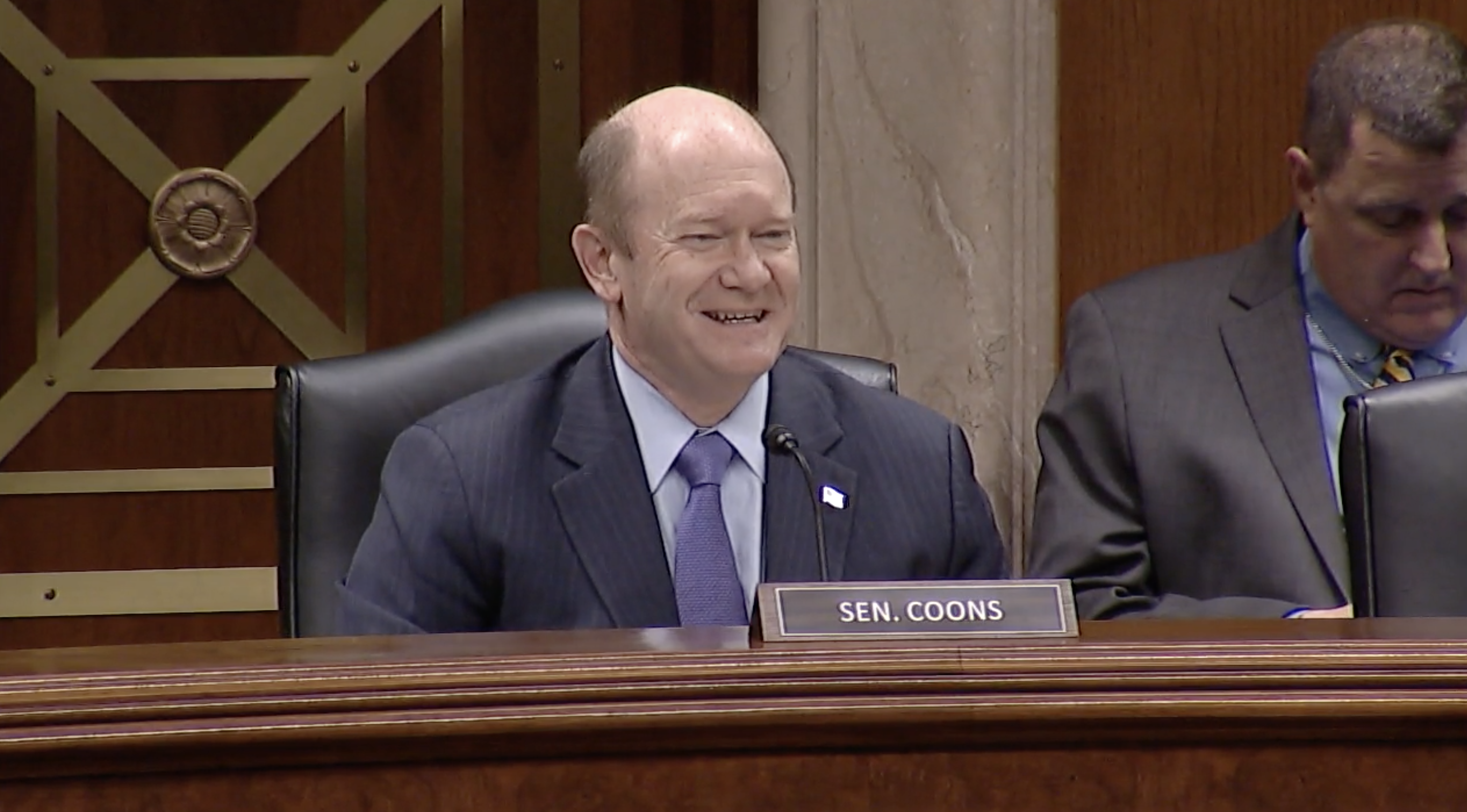
WASHINGTON – U.S. Senator Chris Coons (D-Del.), Chair of the Senate Appropriations Subcommittee on State and Foreign Operations (SFOPS), held a hearing today on “Advancing Security and Prosperity Through International Conservation” to discuss the importance of strengthening U.S. foreign assistance for conservation. U.S. Agency for International Development (USAID) Deputy Assistant Administrator and Chief Climate Officer Gillian Caldwell, African Wildlife Foundation President and CEO Kaddu Sebunya, and Bezos Earth Fund President and CEO Dr. Andrew Steer testified. 

At the hearing, Senator Coons discussed the importance of the government’s role in supporting international conservation while emphasizing the need to improve collaboration with the private sector, as proposed in his bipartisan bill, the U.S. Foundation for International Conservation Act. The bill, which he introduced with SFOPS Ranking Member Lindsey Graham (R-S.C.), would establish a foundation to support local communities around the world through public-private partnerships focused on effectively managing critical and conserved areas, providing long-term benefits for the planet, economic and human development, and security. 

Senator Coons is also a member of the Senate Foreign Relations Committee.

Screen Shot 2023-05-02 at 1

Full audio and video available here.

Senator Chris Coons: I think this is a critical topic: critical for the United States’ place in the world, critical for the relationship between the private sector and philanthropy and government. Those who have worked on, read about, or visited conservation programs, know what progress on conservation means for indigenous communities, for efforts to curb wildlife trafficking and illicit financing, to improve security, and for the benefit of livelihoods across the globe, including here in the United States. That is why there is robust, bipartisan, and bicameral support for that. Like many members on this committee, I’ve had the opportunity to visit protected and conserved spaces around the world, from Kenya and Mozambique and Rwanda, to Namibia, Colombia, and Ecuador. I have done them in [partnership] with my colleagues, in [partnership] with nonprofit organizations, and I’ve seen remarkable and impressive examples of what conservation that is human-centered, that is done in close coordination with indigenous communities, and that is well-planned and well-accounted for, can accomplish. We are losing the Earth’s most vital spaces, the most remarkable parts of Creation, at an alarming rate because of logging, rapid human population expansion, the demand for agricultural space, for charcoal, [from] wildfires, because of a changing climate. This is in part because the vast majority of gazetted parks, of notionally protected spaces, are underfunded – leaving lands at risk of degradation and wildlife at risk from poaching. Poaching – which as I’ve demonstrated in hearings now many years ago to lay the groundwork for the END Wildlife Trafficking Act – funds armed groups and global criminal networks that threaten national security, both here and in many countries around the world. USAID and the U.S. Fish and Wildlife Service have long been critical partners in addressing conservation challenges, for which Senator Graham and I have worked to increase and sustain funding through this subcommittee over many years. We also recognize governments cannot possibly address this problem alone. I’m encouraged [that] over recent years, we’ve seen significant and growing commitments from philanthropic and private-sector actors to support transnational conservation.

I’m looking forward to hearing first about how USAID has applied lessons learned from its long history working on conservation, and how we can strengthen such efforts, including in partnership with the private sector. Senator Graham and I, along with a bipartisan and bicameral group of my colleagues, have proposed legislation to leverage these philanthropic commitments: the U.S. Foundation for International Conservation Act. This legislation would fund new public-private partnerships for the long-term management of protected and conserved areas, catalyzing substantial additional private investment with a sustained, ongoing annual amount of additional public financing. We’ll discuss that legislation today, and other steps we can be taking to advance our global conservation goals, in more detail.


###

Senators Coons, Rubio reintroduce bipartisan legislation to accelerate commercialization of technology by small businesses

WASHINGTON – U.S. Senators Chris Coons (D-Del.) and Marco Rubio (R-Fla.) reintroduced legislation to help small businesses commercialize and scale up production of their technologies. The Research Advancing to Market Production (RAMP) for Innovators Act would support American innovation by expediting the application processes for two federal small business technology programs, making small business federal grantees eligible for fast-tracked U.S. Patent and Trademark Office (PTO) services, and improving technical and business assistance. Senator Coons is a member of the Senate Small Business and Entrepreneurship Committee. A companion bill was introduced in the House by Congresswoman Chrissy Houlahan (D-Pa.) and Congressman Troy Balderson (R-Ohio).


“The RAMP for Innovators Act will drive job growth and strengthen economic security for states like Delaware whose economies are built upon the innovation, creativity, and cutting-edge research of small businesses,” said Senator Coons. “As a member of the Senate Small Business and Entrepreneurship Committee, I am glad to reintroduce this bipartisan legislation that makes it easier for small businesses and startups to access the technical and business support to commercialize their brilliant ideas and keep America competitive and secure in the 21st century.”

“The pandemic highlighted America’s supply chain vulnerabilities and our overreliance on countries like China. It is more important than ever that we harness the strength and ingenuity of small businesses across the country to scale up our domestic manufacturing and innovation. This legislation would help startups and other small business innovators access federal research and development dollars, protect their intellectual property, and commercialize,” said Senator Rubio.

“We have amazing small businesses across our commonwealth and country, but without some support from the federal government, some of these businesses may struggle to thrive and survive,” said Congresswoman Houlahan. “We must continue to provide essential support to our innovative entrepreneurs to ensure they can succeed. The RAMP for Innovators Act will provide our small business owners access to resources to implement and commercialize new ideas, as well as faster access to capital and better protection of their intellectual property. As an entrepreneur myself, I know there are many challenges to operationalizing a great idea to becoming a salable and marketable product, so I’m proud to lead on this bipartisan, bicameral legislation to support small business owners.” 

“America has long been the world’s leader in research and development of new tech innovations. The vulnerabilities of supply chain disruptions and overreliance on foreign producers has led to a renewed bipartisan commitment to reclaiming our role in production, too,” said Congressman Balderson. “I am proud to join my colleagues, at this critical moment for our country, to reintroduce the RAMP for Innovators Act, which ensures our best and brightest minds in the tech sector have the resources necessary to bring new concepts to market and in turn create jobs and begin production here in America.”


The RAMP for Innovators Act builds on the success of two well-regarded, competitive federal programs for developing small business innovation: the Small Business Innovation Research (SBIR) and the Small Business Technology Transfer (STTR) programs. The two programs are managed by the U.S. Small Business Administration and are often called “America’s seed fund.”

The RAMP for Innovators Act would:

  • Accelerate the evaluation timeline for SBIR/STTR applications and consider technology commercialization potential in grant decisions;
  • Expand the allowable uses of grant funds, including bringing new products or services to market through production, distribution, marketing, sales, or other means;
  • Reduce the average time from research project to marketable product by streamlining the application process;
  • Provide agencies with a fast-track option for qualified projects that demonstrate commercial potential;
  • Provide reliable technical assistance and support to grantees to bring their new products or services to market across all agencies; and
  • Provide accelerated patent pipelines for SBIR/STTR grantees.

Throughout his time in office, Senator Coons has championed high-tech small businesses and innovative entrepreneurs across Delaware. Last month, he introduced the Supporting Small Business Career and Technical Education Act to strengthen the supply of skilled trade workers across the United States and connect them to high-demand, good-paying jobs. In December, he introduced the SCORE for Small Business Act to reauthorize and improve the SCORE program to provide small businesses with mentoring, training, and local workshops.

This bill has been endorsed by the Information Technology and Innovation Foundation (ITIF), the Small Business Technology Council, the University City Science Center, and the Delaware Small Business Development Center.

“ITIF supports RAMP for Innovators, the Research Advancing to Market Production for Innovators Act, which will further bolster the commercialization potential of SBIR/STTR programs through improvements such as making commercialization potential a stronger consideration in project selection, clarifying that all awardees may use a share of Phase I and II funds for commercially oriented activities, and supporting the ability of innovators to secure intellectual property rights underpinning their inventions through stronger linkages with the PTO,” said Dr. Rob Atkinson, President of ITIF. 

“The University City Science Center heartily endorses the Research Advancing to Market Production for Innovators Act introduced by Senators Coons and Rubio and Representatives Houlahan and Balderson. This legislation would codify language that has already been signed into law to ensure that commercialization is central to the goals of SBIR and STTR. The RAMP for Innovators Act fulfills the mission of the 2016 SBIR/STTR recommendations from the National Advisory Council on Innovation and Entrepreneurship (NACIE) at the Department of Commerce. I was honored to serve as a member of NACIE during this time and believe these recommendations are necessary to fulfill our commercialization needs in this country,”said Tiffany Wilson, CEO of the University City Science Center. 

“The RAMP for Innovators Act will further strengthen the commercialization opportunities from SBIR and STTR, and will enact several key changes to help small businesses better transition their technologies to the marketplace,” said Jere Glover, Executive Director of the Small Business Technology Council. 

Bill text is available here. Full list of support is available here. A one-pager is available here.


###
Senator Coons celebrates workforce reinforcement with New Castle County Vo Tech Signing Day

vo tech signingimage002

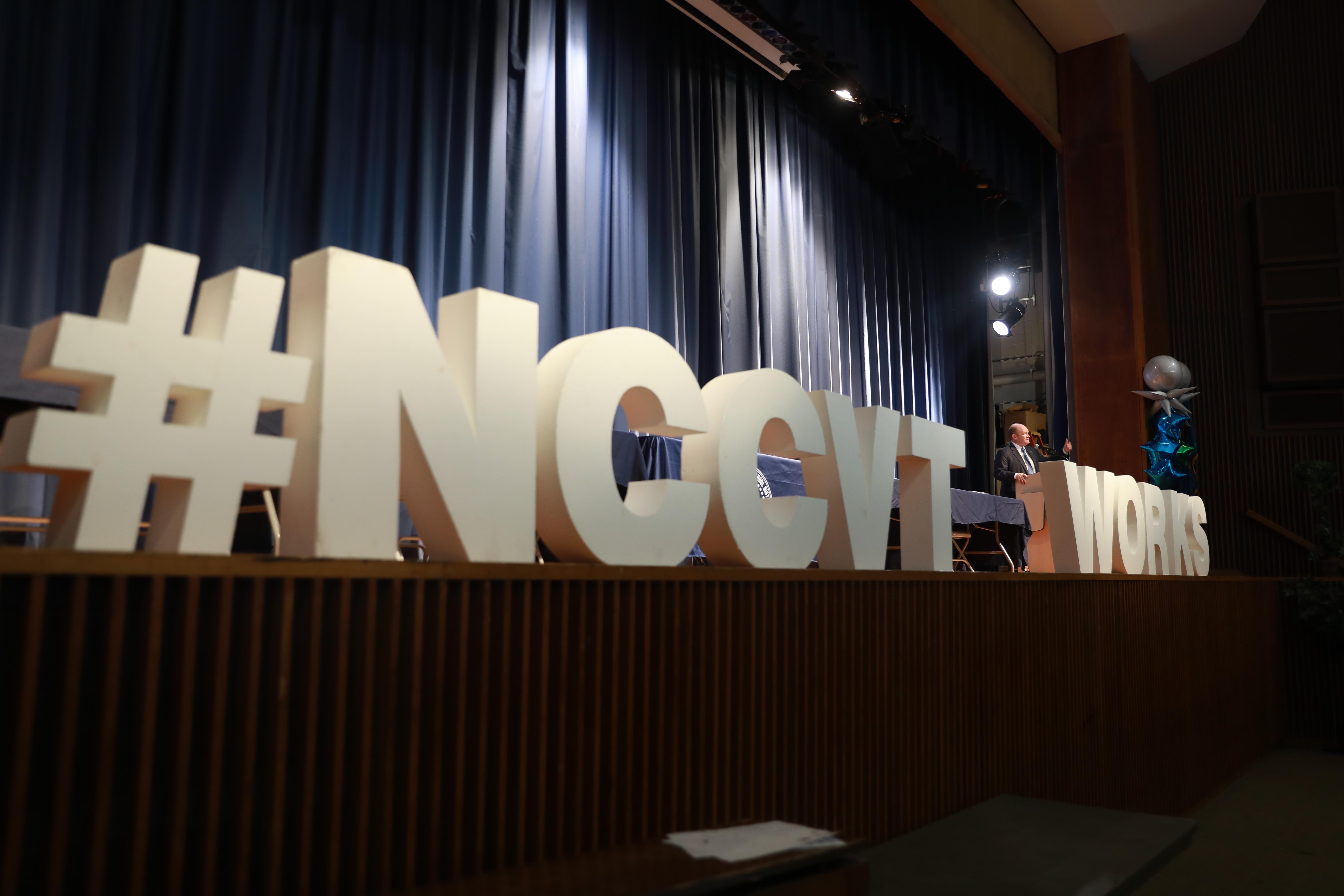
WILMINGTON, Del. – U.S. Senator Chris Coons (D-Del.) celebrated the annual New Castle County Vo-Tech Signing Day at Delcastle Technical High School today to highlight apprenticeship programs, vo-tech education and the reinforcement of Delaware’s workforce. Around 200 young men and women attended and signed letters of intent to join industries across the state, including businesses and organizations like MDavis, Nowland and Associates, Preferred Electric, Nickle, Nemours, and ChristianaCare.  

“I was thrilled to celebrate another Vo-Tech Signing Day at Delcastle High School as young Delawareans take the next steps in their future careers,” said Senator Coons. “You don’t need a college degree to secure a good-paying job, and many of the students I met with today will go on to meet critical needs in industries across the state with or without a four-year degree. Apprenticeships and vocational programs are critical to Delaware’s economy, and I look forward to fighting for additional training programs so we can develop the First State’s next generation of workers.”

“Our primary mission in New Castle County Vo Tech is to equip students with the 21st century skills they will need in order to be successful,” said Superintendent Joe Johns. “We do this through world-class career and technical programs combined with rigorous academic curricula. The students who signed job offers today have excelled in both their CTE and their academic classes, which has given them the opportunity to participate in cooperative employment during their senior year and ultimately has led to job offers to continue in those positions. We could not be more proud of their success.”

Senator Coons has repeatedly fought for workforce development in the Senate, including leading a resolution to honor September as National Workforce Development Month that passed the Senate last fall. He has previously led legislation to expand registered apprenticeships to new job sectors. He is a member of the U.S Senate Committee on Small Business and Entrepreneurship.  

For photos, speaker clips, and B-roll of today’s event, follow this link.

Senator Coons statement on Senator Cardin retirement

WASHINGTON – U.S. Senator Chris Coons (D-Del.) released the following statement today after Senator Ben Cardin (D-Md.) announced he would retire at the end of his current term:

“Senator Cardin is one of the most seasoned and skilled legislators in Congress, and I have long valued working with him on a range of issues affecting Delmarva, the country, and people around the globe. He will leave behind an impressive legacy, including his work to strengthen human rights, transparency, and democracy internationally, as well as the historic legislation he authored as Chairman of the Small Business Committee to provide vital relief to small businesses during the pandemic. Marylanders will remember his tireless advocacy for so many important issues, but Delawareans in particular have valued and benefited from everything he has done to fight climate change and help restore the Chesapeake Bay.

“As a colleague, friend, and resident of a neighboring state, I will miss Senator Cardin’s presence in the Senate. I look forward to continuing to work closely with him over the rest of this Congress, and I wish him and Myrna all the best.”

Senator Coons is a member of the Small Business and Entrepreneurship Committee and the Senate Committee on Foreign Relations.

###

Senators Carper, Coons address Delaware Bar at District Court Judge Williams investiture ceremony

WILMINGTON, Del. – U.S. Senators Tom Carper and Chris Coons (both D-Del.) today spoke in Wilmington at the investiture ceremony of Judge Greg Williams of the U.S. District Court for the District of Delaware following the start of his service on the federal bench in August 2022.

“Judge Greg Williams is an outstanding lawyer, judge, and father. It was an honor to recommend him to the President for this role,” said Senator Carper. “His decades of experience, combined with his expertise on complex intellectual property and corporate law issues, make him the perfect fit for this role. As the only judge of color serving on the U.S. District Court for the District of Delaware, today’s celebration marks an important moment for our state and reminds us why it is critical to confirm upstanding judges like Judge Williams to our nation’s courts.”

“The District Court of Delaware is one of the busiest courts in the nation, and it’s fortunate to have someone with Greg’s experience and legal acumen joining the bench,” said Senator Coons. “I’m looking forward to him bringing the depth of his experience with the law, including his years as President of the Delaware State Bar Association, to improve jurisprudence in Delaware for years to come.”

Williams is the only judge of color serving on the U.S. District Court for the District of Delaware, and the second African American judge to ever serve on that court. He was nominated for the judicial vacancy created when Judge Leonard Stark was confirmed to the U.S. Court of Appeals for the Federal Circuit. Williams was confirmed as a District Court Judge for Delaware on July 21, 2022. Prior to his confirmation, he practiced in the Wilmington office of Fox Rothschild LLP. He joined the firm in 1995 as an associate and was elevated to partner in 2003. Williams served as a special master in complex civil cases for the District of Delaware from 2020 to 2022. From 1986 to 1992, Williams served in the U.S. Army Reserve. He received his J.D. from Villanova University School of Law in 1995 and both his B.A. and B.S. from Millersville University of Pennsylvania in 1990.


###


Senator Coons, Judiciary Democrats ask Chief Justice Roberts for information regarding Supreme Court ethics ahead of hearing

WASHINGTON – U.S. Senator Chris Coons (D-Del.) joined all Senate Judiciary Committee Democrats on a letter to U.S. Supreme Court Chief Justice John Roberts seeking additional information on the “Statement on Ethics Principles and Practices” the Chief Justice attached in a letter to Chair Dick Durbin (D-Ill.) in which he declined the Judiciary Committee’s invitation to testify before the committee on May 2 at a public hearing regarding Supreme Court ethics reform.

“On April 25, you sent a letter to the Senate Judiciary Committee declining an invitation to appear, or to designate a Justice to appear, in front of the Senate Judiciary Committee to discuss the Supreme Court’s approach to ethics matters,” the Senators wrote. “It is noteworthy that no Justice will speak to the American people after numerous revelations have called the Court’s ethical standards into question, even though sitting Justices have testified before Senate or House Committees on at least 92 occasions since 1960.”

The Senators’ letter continues, “Your letter states that ‘[i]n regard to the Court’s approach to ethics matters, I attach a Statement of Ethics Principles and Practices to which all of the current Members of the Supreme Court subscribe.’ The statement of principles raises more questions than it resolves, and we request that you respond to several key questions. Your answers will inform the Committee’s work on legislation that seeks to ensure that the ethical obligations and practices of the Justices are at least on par with those that govern the rest of the federal judiciary and the federal government generally.”

The questions in the Senators’ letter ask: (1) on what date the justices subscribed to this statement and whether the justices had subscribed to any previous statement of ethics principles; (2) whether the court requires unanimity among the justices in order to adopt resolutions to follow ethics regulations; (3) whether the justices receive guidance on which authorities to consult on ethical issues and whether this consultation is documented; (4) whether justices currently face any consequence for errors or omissions in the filing of their financial disclosure reports; and (5) whether under the statement there is any process for the public to file complaints that a justice has failed to abide by the principles in the statement and any penalty imposed on a justice for failure to abide by the principles. The Senators requested a response by May 1, in advance of the May 2 hearing on legislation to reform Supreme Court ethics.

According to the Congressional Research Service, since 1960, Supreme Court justices have appeared before Congress to testify in at least 92 hearings, addressing such issues as the constitutional role of judges, judicial security, annual appropriations for the courts, and judicial compensation. 

On April 10, Senate Judiciary Committee Democratic colleagues sent a letter to the Chief Justice urging him to take swift action to address reported conduct by Supreme Court justices that is inconsistent with the ethical standards the American people expect of public servants. The letter noted that as far back as 2012, Judiciary Committee Democrats had written the Chief Justice urging that the court adopt a resolution binding the justices to the same Code of Conduct that binds all other federal judges. The letter advised that the committee would hold an upcoming hearing, and that if the court doesn’t resolve this issue on its own, the committee will consider legislation to resolve it.

The Senate Judiciary Committee received a response letter from the Secretary of the Judicial Conference of the United States that stated that the Senators’ April 10 letter was referred to the Judicial Conference and forwarded to the Judicial Conference Committee on Financial Disclosure.  

The full text of today’s letter is available here and below:


April 27, 2023


Dear Chief Justice Roberts:


On April 25, you sent a letter to the Senate Judiciary Committee declining an invitation to appear, or to designate a Justice to appear, in front of the Senate Judiciary Committee to discuss the Supreme Court’s approach to ethics matters. It is noteworthy that no Justice will speak to the American people after numerous revelations have called the Court’s ethical standards into question, even though sitting Justices have testified before Senate or House Committees on at least 92 occasions since 1960.

Your letter states that “[i]n regard to the Court’s approach to ethics matters, I attach a Statement of Ethics Principles and Practices to which all of the current Members of the Supreme Court subscribe.” The statement of principles raises more questions than it resolves, and we request that you respond to several key questions. Your answers will inform the Committee’s work on legislation that seeks to ensure that the ethical obligations and practices of the Justices are at least on par with those that govern the rest of the federal judiciary and the federal government generally. We request that you provide these answers by May 1, so that they may be discussed during the Committee’s hearing the following day.

  1. On what date did the Justices subscribe to the Statement on Ethics Principles and Practices that you attached to your letter, and had the Justices subscribed to any previous statement of ethics principles and practices before that date? If so, please provide any such statement.


  1. The Statement on Ethics Principles and Practices notes that “[i]n 1991, Members of the Court voluntarily adopted a resolution to follow the substance of the Judicial Conference Regulations.” Does the Court currently require unanimity among the Justices in order to adopt a resolution to follow the substance of ethics regulations?


  1. The Statement on Ethics Principles and Practices provides that “Justices, like other federal judges, consult a wide variety of authorities to address specific ethical issues.” What guidance do Justices receive on which authorities to consult, and how is this consultation process and any final decision on a particular matter documented?


  1. The Statement on Ethics Principles and Practices provides that “[a]llegations of errors or omissions in the filing of financial disclosure reports are referred by the Secretary of the Judicial Conference to the Committee on Financial Disclosure. The Committee may send the filer a letter of inquiry, providing an opportunity for the filer to respond as appropriate.” What is the consequence, if any, for a sitting Justice who does not respond as appropriate to such a letter of inquiry? 


  1. Has there ever been any censure, reprimand, admonition, sanction, or other penalty imposed on a Justice for failure to abide by any of the principles and practices now contained in the Statement on Ethics Principles and Practices? If so, what types of penalties have been, or may be, imposed? Is there a process by which the public may file, and the Supreme Court may receive, complaints that a Justice has failed to abide by these principles?


Thank you for your prompt attention to these questions. We look forward to your responses as we work to craft legislation that will help ensure public confidence in the Court’s approach to ethical obligations. 


Sincerely,

[All Democratic members of the Senate Judiciary Committee]


###


Senators Coons, Risch, Booker, Scott introduce resolution condemning Eswatini’s human rights record

WASHINGTON – U.S. Senators Chris Coons (D-Del.), James Risch (R-Idaho), Cory Booker (D-N.J.), and Tim Scott (R-S.C.) introduced a resolution today that condemns the human rights record of the government of Eswatini and the killing of Eswatini human rights activist Thulani Maseko in January. Today’s resolution urges Secretary of State Antony Blinken and Secretary of the Treasury Janet Yellen to consider targeted sanctions against any individuals or entities committing gross human rights violations in Eswatini. Additionally, it calls on the government of Eswatini to conduct a transparent and thorough investigation into the assassination of Thulani Maseko.

Eswatini is one of the world’s last absolute monarchies and is currently ruled by King Mswati III. Eswatini’s government remains repressive, and human rights defenders in Eswatini still face repression and persecution today. On January 21, 2023, Thulani Maseko, a prominent human rights lawyer in Eswatini, was shot and killed by an unknown gunman. Eswatini authorities have failed to announce progress on an independent investigation to identify those responsible for this crime and bring them to justice. Advocates believe Maseko was killed by pro-government forces because of his agitation for human rights.

“Thulani Maseko was a champion of social justice and human rights in Eswatini, one of the world’s last absolute monarchies. I strongly condemn Thulani’s brutal killing and the Eswatini government’s failure to undertake a full, transparent, and impartial criminal investigation into his assassination,” said Senator Coons. “I join my colleagues in introducing a bipartisan resolution condemning the human rights record of the government of the Kingdom of Eswatini and the murder of Maseko on January 21.”

“The introduction of this bipartisan resolution is an important signal from Congress that we have not forgotten the assassination of Thulani Maseko and are aware of the dire human rights situation in Eswatini under King Mswati III,” said Senator Risch. “The United States must continue to call for an independent and credible investigation into Maseko’s murder and accountability for those responsible.”

“Human rights defenders in Eswatini and countries around the world have faced repression and persecution for many years, and we must speak out when those human rights defenders are under threat,” said Senator Booker. “In addition to bringing attention to the unresolved death of Eswatini human rights lawyer Thulani Maseko, this resolution underscores the deterioration of human rights in one of the world’s last absolute monarchies.”

“‘Speak up for those who cannot speak for themselves’ is a constant reminder in Scripture for the role of any public servant,” said Senator Scott. “That is why I join my colleagues in expressing deep concern over the worsening cycle of political violence and suppression of free speech in Eswatini. Transparency and accountability must be restored with respect to public officials complicit in extrajudicial killings, torture, and other egregious human rights violations.”

Senator Coons is Chair of the Appropriations Subcommittee on State and Foreign Operations (SFOPS), a member of the Senate Foreign Relations Committee, and Co-Chair of the Senate Human Rights Caucus.

The text of the resolution is available here.


###

Senator Coons statement on Republic of Korea President Yoon Suk Yeol’s address to Congress

WASHINGTON – U.S. Senator Chris Coons (D-Del.) released the following statement today after Republic of Korea President Yoon Suk Yeol addressed a joint meeting of U.S. Congress: 

“President Yoon Suk Yeol’s address to Congress underscored the importance of the U.S.-South Korea alliance, which serves as a foundation for security in East Asia. As President Yoon said, our close economic ties and shared democratic values are more important than ever at a time of heightened global conflict and regional tension.

“In the 70 years since the signing of the Korean Armistice Agreement, the U.S.-South Korea relationship has only grown closer, and our commitment to South Korea is as strong as ever. President Biden’s recently announced measures to deter North Korean aggression, which include the docking of a nuclear-armed submarine in South Korea for the first time in 40 years, demonstrate the serious and robust leadership required to promote peace and stability on the Korean Peninsula.”

Senator Coons is Chair of the Appropriations Subcommittee on State and Foreign Operations (SFOPS) and a member of the Senate Foreign Relations Committee.