Related Issues

Related Issues

Let’s double down on PPP and save America’s endangered small businesses

Along the Eastern Shore beaches that span our home states of Maryland and Delaware, the summer season – usually a boon to our economy – is a shadow of its normal self.

Business owners in our beach towns typically endure losses for as many as 10 months of the year, then staff up for a seasonal frenzy that, hopefully, ekes out enough profit to make it to the next year. For the iconic surf shops, ice cream parlors, and pizza places that line the boardwalks of Rehoboth Beach, Del. and Ocean City, Md., though, the COVID-19 pandemic has changed all of that.

Federal aid through the Paycheck Protection Program (PPP) and other initiatives enacted by Congress has flowed to small businesses like these, but it has been too little for many. Thankfully, we were able to extend PPP for another five weeks, but many businesses simply are facing the reality they may not survive, and those on the brink tend to have little cash reserves or access to credit. Across America, these vulnerable small businesses are also disproportionately women-, veteran-, or minority-owned.

That’s why we’re working to pass legislation that does two things: First, make PPP funds available to eligible businesses through at least the end of this year, and second, authorize a second round of forgivable loans to the businesses most severely impacted by the pandemic.  

We want to double down on PPP because, despite its bumpy beginning, it has clearly worked and staved off millions of business closures and job losses. Because of the work of some 5,500 banks and community financial institutions, small businesses across America were able to access badly needed cash they’re now using to pay or rehire workers and stay afloat. Now, with recent changes passed by Congress, businesses have additional flexibility in how they use those funds, enabling more to have their loans forgiven. Most importantly – the money American small businesses need has already been passed by Congress; because the PPP program still has $130 billion in unspent funds, the program can handle a second, targeted round of lending, which we’re calling the Prioritized Paycheck Protection Program, or P4.

The P4 loan would be available to businesses with fewer than 100 employees that experienced a quarterly revenue loss of 50% or more, relative to the same quarter in 2019. The amount of the loan could be just as large as was allowed for the first round of PPP lending. To make sure that the very smallest employers receive their share of support, our bill reserves either $25 billion, or 20% of the program’s funding, for businesses with 10 or fewer workers.

Without aggressive new support for endangered businesses, this flagship relief program will fail to match the nature of this crisis.

More than half of workers in the arts, entertainment, and recreation industry lost their jobs between February and April, and nearly half of those in accommodation and food services lost their jobs. Compare these numbers to those of the finance and insurance industry, which shed only 0.5% of its jobs in the same period, and it’s clear that business relief should actually be scaled based on need.

Some of our Senate colleagues have envisioned new small business relief programs altogether, but the reality is that the most endangered small businesses need help now and standing up new federal program takes time. Consider that the Main Street Lending Program, PPP’s cousin set up by the Federal Reserve to aid midsize businesses, is still getting off the ground.

The federal government has provided hundreds of billions of dollars to help American businesses get through this crisis, but there’s more work left to do. By simply repurposing money already passed by Congress for another round of targeted aid to small businesses, we can save thousands of endangered small businesses, the jobs they provide, and the American Main Streets and boardwalks they make possible.
Let’s honor Juneteenth by finally taking on systemic racism

Over the past month, millions of Americans have spoken out and marched in protest over the brutal killing of George Floyd at the hands of a Minneapolis police officer. In every state across our nation, Americans have joined together to not only demand an end to police brutality against Black and brown Americans, but to finally address systemic racism.

Today is Juneteenth, our nation’s annual day to mark and celebrate the end of slavery, but this year, we’re more conscious than ever that slavery’s legacy remains imprinted in our culture and our laws. This year, we’re reminded that racial discrimination and injustice still exist and still impact the lives of people of color in real and discernible ways.

We believe that our country is ready to finally address systemic racism, so policing is far from the only issue that we need to take on. We need to take bold action in Washington and Dover to improve police accountability and transparency, but we also have to open our eyes to the ways that structural racism and discrimination touch many issues we face.

Look no further than the economic and public health crises our country is still in the midst of. While no one has been spared the effects of the COVID-19 pandemic, it is increasingly clear that the pandemic’s significant health and economic impacts are disproportionately affecting communities of color. Let’s be clear: the virus doesn’t discriminate against people of color. Instead, the pandemic has simply shone a light on just how much discriminatory public policies have done to put communities of color at greater risk and weaken critical safety net programs for all Americans.  From a health perspective, we’ve seen clearly that Americans of color are being infected by COVID-19 at a significantly higher rate than white Americans. At the same time, we’ve also seen that testing is less accessible for these communities, despite the fact that many essential workers, from grocery store clerks to frontline health care workers, are people of color.

The facts are similarly grave from an economic standpoint. While unemployment is high for Americans of every racial background, the unemployment rates for Black Americans and Latinos are even higher. Minority-owned small businesses have also received less aid from government programs, including the popular Paycheck Protection Program (PPP).

Over the years, our health system has made it difficult for communities of color to access the health care they deserve. Decade after decade, we’ve seen efforts to chip away at workers’ rights and, nearly every year, more cuts are proposed to education, community development, and job training programs. Housing policies have made it particularly difficult for families of color to achieve home ownership and establish and grow their wealth. All of that has combined to stack the odds against generations of underserved communities – often communities of color. Combine all of those policies over decades and it’s no wonder Black and brown communities are suffering worse than white communities during this pandemic.

That’s why we need to act – at the federal, state, and local levels – to ensure that the massive investments we’re making in our economy and our communities are also addressing inequality. With every law that we pass, we need to be clear-eyed about how communities of color in particular are specifically impacted.

From a public health standpoint, we need a nationwide focus on ensuring that communities of color and at-risk employees from a wide range of industries have access to free testing so that they can do their jobs safely and protect their families. Our state has made impressive progress in rapidly expanding testing so that we can reopen safely, and it’s critical that these efforts continue to reach the communities hardest hit by this pandemic. The COVID-19 Racial and Ethnic Disparities Task Force Act in Congress provides an important template for ensuring that our pandemic response efforts address inequality head on.

From an economic perspective, we also need to ensure that we’re not only passing major economic relief packages, but that we’re also doing the hard work of delivering those resources to the families, communities, and businesses who need them most. We can do that by extending enhanced unemployment and appropriating more funding for nutrition programs so those who are out of work through no fault of their own can still buy groceries and pay their bills. Congress also must provide robust relief to state and local governments in order to stave off mass layoffs of public sector workers, who are relatively more likely to be Black men and women.

Finally, we now know that the initial Paycheck Protection Program (PPP) benefited far too many big corporations and too few small businesses, including many in underserved communities. In response, we need to direct additional relief to minority-owned businesses by enabling the smallest, most vulnerable businesses to access a second forgivable PPP loan. We should also provide additional funding to Community Development Financial Institutions (CDFIs), including those in Wilmington, Claymont, Dover and Seaford that are uniquely positioned to target minority- and women-owned businesses. If these institutions are further empowered as part of the crisis response, they can prevent countless business closures across our state.

As our country begins a long overdue, nationwide conversation about the ways communities of color are treated by law enforcement, we must also look at the larger systems of structural racism that impact education, job prospects, housing, health care, and every other part of life for Americans of color.

If one thing is clear from this past month, it’s that every piece of public policy must be viewed in a different, new light. It’s not enough for our laws and our budgets to be race-neutral; we have to find ways to be anti-racist in Dover, Washington, and across the country. This Juneteenth, we pledge to do just that.

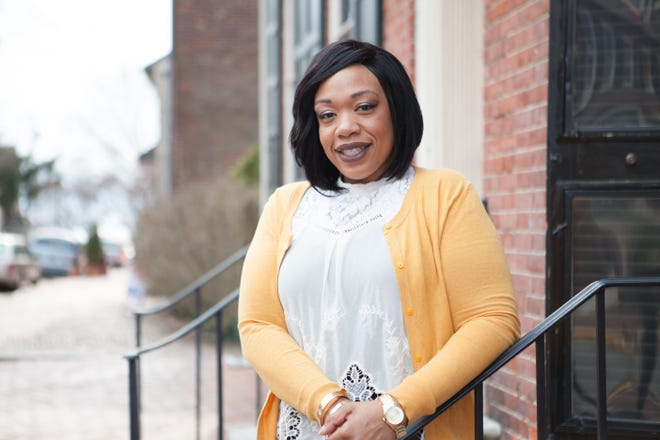
Chris Coons is a U.S. senator from Delaware. Melissa Minor-Brown is a state representative. 

Kristol, Coons: Republicans should reject Trump’s divisive approach to pandemic

One of us is a Democratic senator, who, though certainly willing to seek common ground across the aisle, has been a loyal Democrat all his adult life. The other voted Republican in every presidential election of his adult lifetime until 2016, and came to Washington to serve in the Reagan administration.

But we agree on this: We both want this nation to deal with the coronavirus as well as possible. We both want an economic recovery as soon as possible. And we both see proposals in Congress that would set back these goals.

Too many members of Congress, following the lead of President Donald Trump, continue to engage in coronavirus denialism. They also rush to embrace short-sighted and counterproductive policies that are particularly dangerous in the midst of a global pandemic. Today, these lawmakers seem to believe that by simply wishing for the country to be “open for business,” but without any real plans or safeguards, that all will go well. It won’t. We’ll lose tens of thousands of more Americans to the virus, and we won’t get the economy going again.

In the last week, President Trump and Senate Majority Leader Mitch McConnell have seemed to balk at providing financial assistance to states — though it is the states who have shown real leadership in fighting COVID-19, even as their revenues evaporate.

It gets worse. McConnell, upon announcing the Senate’s return this month, said that giving businesses immunity from lawsuits would be his priority, perhaps a condition for the states to receive aid. At the same time, some Republican governors have said employees who are wary of returning to work once businesses reopen, fearing for their health and even their lives, will lose access to unemployment benefits. In short, the position of today’s Republican Party seems to be that employers should get a waiver of liability if their workplace turns out to be unsafe, but employees should lose unemployment benefits if they won’t return to that unsafe workplace.

Workers would be left vulnerable

In other words: No liability at all for businesses, absolute liability for workers. This is unfair and, indeed, offensive.  And we would say, as a Democrat who’s been an advocate for the legitimate interests of businessmen and women in his state, and as a Republican concerned for the future of democratic capitalism, this is the worst possible message about capitalism to send to young people, or to anyone, in America. No wonder the polls show support for democratic capitalism falling. 

Rise above divisive rhetoric

And unfortunately, the list goes on. Republicans don’t want to provide funding to the postal service because Trump is obsessed with Jeff Bezos, the founder of Amazon (despite the fact that the Postal Service has profited significantly from Amazon’s business). And they do not want to provide funding for safe and secure elections because they fear (with no evidence) that making it easier to vote absentee or by mail will help the other party. Again, if you want to discredit the American democracy in the eyes of our fellow citizens, this is the way to do it.

We urge responsible Republicans to rise above the divisive rhetoric of Donald Trump and the cynical political maneuvering of Mitch McConnell, and join with Democrats in advancing legislation in this crisis that’s good for our country. Let’s get through this crisis responsibly, and then the two of us can get back to arguing again!

Chris Coons, a Democrat, is a U.S. senator from Delaware. William Kristol, former editor of The Weekly Standard, is director of Defending Democracy Together.

###

We need clear federal strategy to distribute equipment to fight COVID-19

Over the last several weeks, I’ve talked with Delawareans up and down our state. Families who aren’t certain when the next paycheck will come. Small business owners struggling to stay afloat. Nonprofits straining to meet the needs of the communities they serve.

And neighbors who, like Annie and I, miss spending time with older family members, gathering to worship and feeling part of a community.

Some of the most difficult conversations I’ve had, though, have been with health care workers and first responders who are serving on the front lines of this crisis without all the equipment they need, from ventilators for patients to masks and other types of personal protective equipment.

The situation is dire. That’s why I worked with Sen. Tom Carper and Rep. Lisa Blunt Rochester and together we fought to include $150 billion for our health care system and health care workers in the $2 trillion coronavirus relief package the Senate passed unanimously last month.

Delaware leaders like Governor Carney, A.J. Schall, director of the Delaware Emergency Management Agency, and so many others are doing an outstanding job getting critically needed supplies and equipment to our state, but more is needed.

This issue is far from unique to Delaware. Across the country, states, communities and health care workers are still scrambling for basic resources. What we need is a clear, coordinated federal strategy to produce and distribute desperately needed medical equipment in Delaware and communities everywhere.

According to a recent internal government report, the U.S. medical system is under unprecedented strain. Thermometers are in short supply, preventing hospitals from being able to screen staff members and patients for COVID-19. Staff is being forced to procure masks and gloves from auto part shops and home supply stores amid shortages, and the lack of clear federal guidance has caused confusion and fear.

To make matters worse, states, communities and health care centers are often forced to compete with one another to get equipment.  In many instances, including here in Delaware, the private sector has stepped up to help fill the void, which has made a real difference and saved lives.

But no business should be deciding on their own where to send desperately needed personal protective equipment. The public and private sectors need to be working together under a clear, federal strategy based on science and public health needs, not market forces.

We have to do better. That’s why, two weeks ago, I joined Carper and a bipartisan group of my colleagues in calling on the Trump Administration to set a clear, nationwide strategy for delivering protective equipment, resources, and more.

This week, I’m working with Republicans such as Sen. Susan Collins (R-Maine) to get critical equipment to first responders and Democrats such as Sen. Maggie Hassan (D-N.H.) to stop price gouging of medical equipment by scam artists looking to make money from this crisis.  

In this trying and difficult time, I’ve been inspired by how Delawareans have come together – even from a distance – to take care of one another.

Our state of neighbors shines through in the Newark mom who rallied more than 800 friends on Facebook to sew handmade masks, in Richard Piendak and Dave Tiberi who started Donate Delaware to collect masks, gloves and other equipment for hospitals and first responders, in the teachers who are working with parents to help their children learn virtually, and in the grocery store clerks, sanitation personnel, delivery drivers, custodians and other unsung heroes.

It shows too in businesses such as Dog Fish Head and Painted Stave Distillery that are stepping up to make hand sanitizer. It shows in Bloom Energy, which is refurbishing hundreds of critically needed ventilators, and in the creative partnership of ChristianaCare, the University of Delaware’s National Institute for Innovation in Manufacturing Biopharmaceuticals, Incyte and Roche.

As supply chains for critical testing materials were overwhelmed, I helped bring these institutions together to discuss the critical needs here in Delaware. Together, they worked to establish a local production process for some of the critical materials in short supply. As a result, our testing capacity is expanding meaningfully.

Of course, protective equipment isn’t the only thing our state and our country need right now. I fought to include funding in the CARES Act to help our small businesses pay their employees and their bills, expand unemployment insurance and provide direct payments. But it’s clear that Congress will need to provide additional relief to families and businesses through a fourth COVID-19 response package. 

In the weeks and months ahead, I will continue to do everything in my power to help our state and our country weather this storm. I encourage you to visit my coronavirus response webpage at coons-staging.creativengine.com for up-to-date resources and information.

Here in Delaware, we’re proud to call ourselves a “state of neighbors.” We are all in this together, so we need to do everything we can to protect and support each other, and we will get through this together. 

###

Amid coronavirus uncertainties, don’t put voter health at risk in fall election: Senators

Americans just witnessed how coronavirus is impacting the voting process in real time in Wisconsin. Facing a massive shortage of poll workers, growing health risks and widespread disagreements among local lawmakers, the governor made an 11th-hour attempt to cancel in-person voting and reschedule the election, which the state’s Assembly speaker and Senate majority leader called unconstitutional and the Wisconsin Supreme Court blocked. Sixteen other states have already decided to postpone or alter their presidential primaries.

With the vast majority of states issuing stay-at-home orders and hundreds of thousands of Americans falling ill to this aggressive virus, Republican and Democratic election officials across the country are faced with a once-in-a-lifetime responsibility — to carry out full and fair elections during a pandemic. Many are already responding to increased requests for mailed ballots, early voting and online voter registration. Yet state and local officials, who are responsible for safeguarding our democracy, are telling us that they lack the necessary resources to meet this demand.

If the COVID-19 pandemic has taught us anything, it is that preparation and early action are central to a competent response. The time to chart a course for a safe, secure, accessible election is now. If states don’t start to make changes to their election systems within the next few weeks, millions of Americans will be forced to choose between their health and their right to vote come November.

We believe that no American should ever have to make that choice. That’s why we’ve been fighting in the Senate to get three things done so that no American will have to do so: Expand no-excuse vote by mail to every state; expand early voting to at least 20 days in every state so that voters who vote in person, including voters with disabilities, can do so safely; and expand online voter registration.

As our Republican colleagues have pointed out in recent days, it will be up to the states to carry out the elections. But the federal government must provide states with the necessary funding to make those expansions possible. We serve on the two committees in the Senate responsible for appropriating funds and authorizing legislation for elections and represent the state (Oregon) that has led the way in instituting widespread vote by mail, so we know it takes resources to make the changes needed to meet the challenge we face.

That’s not a Democratic position or a Republican position. It’s a fact. States will need to be ready to print, process and receive millions of mailed ballots. They will need systems in place to accommodate greater demand for online voter registration. They will need to recruit and train new poll workers to run the election under these new circumstances — while older Americans, who have historically shouldered a disproportionate share of the burden of working the polls on Election Day, are the most at risk. They will need to ensure that every ballot is properly counted.

Experts estimate that these initiatives will cost roughly $2 billion. That’s what we called for in the third coronavirus relief package, but the final bill only included $400 million. We are hearing from a chorus of state and local elections officials from across the country confirming what we already knew to be true: That’s not enough.

We have faced challenges like this before, and we have met them. The United States held elections even during the Civil War and World War II. In every single U.S. election, military members, diplomats and development professionals overseas vote safely and securely by mail — not to mention that President Donald Trump and first lady Melania Trump voted by absentee ballot in the Florida primary last month and in the 2018 midterm elections.

We can do this, but we have to act now to ensure that every American has access to the ballot box this fall, no matter what the public health situation is on Nov. 3. That’s why the next federal relief package must include sufficient funding and direction to states to expand vote by mail, early voting and online voter registration. Republicans and Democrats should be able to work together to make this happen. The very integrity of our democracy requires that we get this right.

###

America’s diplomats deserve our respect

Our Foreign and Civil Service patriots at the State Department are working the world over to protect the United States, advance our interests, and aid our allies and partners. They need and deserve leaders at home who – like them – are willing to do what is right, tell the truth, and put their country first, no matter who is in the White House.

Earlier this year, however, many of these individuals received the opposite treatment. Public servants with firsthand knowledge of the administration’s actions regarding Ukraine refused to participate in activities they considered wrong, and, in the face of the president’s efforts to silence them, testified about that wrongdoing to Congress.

These individuals volunteered to serve their country. Their testimony was not driven by partisan ideology, but by their sworn oath to defend democracy and uphold the Constitution of the United States. They stepped forward at great personal and professional risk because, as former Ambassador Marie Yovanovitch said recently, it was “what our conscience called us to do” and “what the gift of U.S. citizenship requires us to do.”

In the weeks following the impeachment trial, newly emboldened by his acquittal by the United States Senate, President Trump set out to retaliate against those public servants who dared to do the right thing – who did their jobs and put duty to their country over loyalty to the president at a time when precious few are willing to do the same.

It is on us to defend and advocate for these professionals going forward. Now more than ever, we need to defend the truth-tellers and the institutions that protect dissent because they are integral to democracy.

We need to thank and defend public servants like Ambassador Yovanovitch, who served our country with dignity in the Foreign Service for 34 years, advancing U.S. interests and fighting corruption throughout Russia and the former Soviet Union. In the face of a malicious smear campaign waged by the president and his allies, she showed professionalism, courage, and patriotism.

We need to thank and defend individuals like former Ambassador Bill Taylor, who throughout his service in Vietnam and in both Republican and Democratic administrations, faithfully put his country first, never to be swayed by those seeking personal gain at the expense of the United States.

We need to thank and defend brave individuals like Lt. Col. Alexander Vindman, a Purple Heart recipient who – along with his brother – was unceremoniously escorted out of the White House after participating in the impeachment hearings. During his testimony, Lt. Col. Vindman reassured his father that he had made the right decision in moving his family to the U.S. from the Soviet Union 40 years ago. “Do not worry,” he said. “I will be fine for telling the truth.” Lt. Col. Vindman believed that because, as he testified, “Here, right matters.”

It does matter, it has always mattered, and we need to make sure it matters again.

George Kent, Jennifer Williams, and David Holmes are brave American diplomats who also came forward during the impeachment process to do what is right. They, along with over 15,000 other Foreign Service Officers, work each day at the State Department and around the world to keep us safe and keep America the great nation that it is.

These men and women keep a watchful eye on global hot spots, frequently serving alongside U.S. troops in extremely dangerous places. They negotiate nuclear arms reduction agreements, advocate for free and open commercial markets for U.S. goods and services, and monitor foreign elections in support of democratic freedoms across the globe.

It is America’s diplomats who monitor and manage ever-shifting threats, who ensure that the United States has a constant and steady worldwide presence, including to the farthest reaches of the globe. When trouble and unrest are brewing around the world, our dedicated Foreign Service officers keep watch, respond, and, working in concert with the Civil Service officers back home, ensure U.S. policy keeps pace with global challenges.

We owe them a debt of gratitude. Not just now, but moving forward, we have a responsibility to stand up for these men and women who stand up for us around the world – even, and especially when, that means standing up for them here at home.

###

Coons and Fitzpatrick: It’s time for bipartisan support in combating climate change and rebuilding infrastructure

As a Republican from Pennsylvania and a Democrat from Delaware, we have more in common than you might expect. Aside from a shared devotion to the Philadelphia Eagles, we both believe that Congress can and must do more to combat climate change and rebuild our crumbling infrastructure.
These two issues go hand in hand and have the potential to shape our communities and our country for decades. Climate change is already costing our economy through increased flooding, more severe storms, and devastating droughts. Delaware’s and Pennsylvania’s 1st Congressional District are about 40 miles apart, but they both border the Delaware River and are home to communities, including Levittown and Wilmington, that are at significant risk of damaging floods in the near future.

Extreme weather is also impacting the efficiency and safety of our ports, roads, and other infrastructure, which are already in need of repair. In Pennsylvania, our bridges rank as some of the worst in the country. Every one of us has blown or damaged a tire on our roads due to the growing number of potholes. Flooding and hurricanes are hitting our communities in both Pennsylvania and Delaware more often, inundating our roads, homes, and businesses. The Delaware Department of Transportation has estimated that it will cost nearly $1.5 billion to sustain the state’s most vulnerable roads and bridges in the coming years.

We can and should tackle both problems. That’s why we have each introduced legislation proposing a price on carbon to curb harmful emissions that are causing climate change and to invest in infrastructure here at home. HR 4520 would impose a tax on the greenhouse gas emissions of fossil fuels. S 2284 would impose a carbon fee on the use, sale, or transfer of certain fossil fuels and fluorinated gases that emit greenhouse gases.

Business leaders, economists, and a growing number of Republicans and Democrats agree that placing a price on carbon is the most efficient, market-based approach to fighting climate change while growing the economy and creating jobs. We’re convinced that a carbon price will level the economic playing field in the energy sector, power market-driven innovation, and lead to the deployment of technologies that will reduce or eliminate emissions of greenhouse gases.

We’ve both introduced legislation to use revenues from carbon fees paid by polluters to make substantial, much-needed investments in infrastructure in our region and across the country, which is more important than ever at a time when discussion around a national infrastructure package has ground to a halt.

Building a more sustainable infrastructure will create and support jobs across a wide range of sectors — from trades professionals to construct and maintain our clean energy infrastructure, to scientists and engineers to design new technologies.

The bottom line is that we don’t need to choose between clean energy and economic growth, or between combating climate change and creating jobs. We can and should do both.

Seven in 10 Americans are concerned about climate change, more than ever before, and an overwhelming majority of young Americans, regardless of their political affiliation, support policies that reduce carbon emissions. American businesses, from large oil and power companies to small manufacturers and service providers, have united to call on Congress to enact a federal carbon price.

Momentum is building on both sides of the aisle for practical, bipartisan solutions to combat climate change. As a Republican and a Democrat, we both know the time to act is now. We know that while we’re at it, we can create new jobs, build a 21st-century infrastructure, and bring our two political parties together to finally get something done.

Trump’s expanded travel ban is a grave foreign policy mistake

President Trump and his administration often justify their national security policies by posing a false choice to the American people: that we can either keep America safe or preserve our fundamental values.

That was Trump’s core message in January 2017 when he banned travel to the United States by people from seven Muslim-majority countries, and it’s the message we heard today — three years later — when the president announced that he’s expanding the ban to immigrants from six more countries: Eritrea, Kyrgyzstan, Myanmar, Nigeria, Sudan and Tanzania.

The truth, though, is that this policy does not make us safer; in fact, it does the opposite. It does not help us fight terrorism, combat extremism or secure democracy around the world. It has senselessly separated thousands of U.S. citizens from their families. It reinforces Trump’s message that we should fear refugees and our immigrant neighbors, and it fuels already growing division and intolerance here at home.

The United States is strongest when we are a welcoming country capable of attracting talented people from all over the world. We’re safer when we do, too. That’s why dozens of national security experts oppose the current ban and why I have strongly opposed it since Trump proposed it during the 2016 campaign.

Targeting people from countries where, in many cases, democracy is just taking root also makes it even more difficult to promote democratic values, encourage economic development and attract talented students who aspire to study in the United States.

Take Nigeria, for example: It has the largest economy and largest population in Africa, and Nigerians represent the largest African diaspora group in the United States, a group that includes doctors, lawyers and professionals across the United States. Nigeria is a multiethnic, multifaith democracy in a region where we have fought long and hard to ensure tolerance and pluralism take root. Nigeria has partnered with the United States on the Global Coalition against terrorism, particularly against Boko Haram, which has killed almost 38,000 people since 2011 and has displaced another 2.5 million. Why, then, would we choose to weaken our ties and our influence with Nigeria?

Just last week, the top court at the United Nations ruled that Myanmar must take steps to prevent further genocide against the Muslim Rohingya minority there. Instead of building on that positive ruling and welcoming more Rohingya refugees to our nation, the Trump administration has chosen, with its expanded ban, to push Myanmar’s government even further into China’s sphere of influence at the worst possible time.

Finally, Kyrgyzstan, a former Soviet republic, has been able to step out from under the thumb of Russia, and, since its independence in 1991, has made great headway in developing its own democratic institutions. Why, as Russia’s regional aggression intensifies, would we make it harder for Kyrgyzstan to protect its independence and nurture its young democracy?

This policy has been rightly criticized as an abandonment of U.S. values that tears apart American families, but these examples show that it is also a grave foreign policy mistake. Though most Americans might never know it, the president’s decisions are causing real harm to people all over the world.

In Congress, I’m leading an effort to reverse this senseless policy through the NO BAN Act, which I introduced with Rep. Judy Chu (D-Calif.) to repeal the president’s Muslim ban and prevent a future discriminatory ban from happening again. We’re optimistic this bill can pass the House this year, and I’m determined to force a vote on it in the Senate.

The United States has been a beacon of hope and freedom to the world for generations because we’ve built our foreign policy and immigration policies on our values, not on fear. Now is not the time to change that.

Climate change: The time to act is now

As the lowest-lying state in the country, Delaware – and Sussex County, in particular – is on the front lines of dealing with climate change, and as Delaware farmers, local business leaders and homeowners will tell you, the effects of climate change don’t discriminate between Republicans, Independents and Democrats.  Climate change impacts all of us – so we should all be working together to address it. 
That’s not the way folks in Washington approach most issues, but in Sussex County, I’ve found that people know problems are best solved with cooperation, and that’s the approach I’m trying to take to address climate change in the U.S. Senate.
Last fall, I founded the bipartisan Senate Climate Solutions Caucus with Republican Sen. Mike Braun from Indiana.  The idea behind it is simple: We both know that climate change is real and that it’s already impacting every state in the country, so it’s time for Republicans and Democrats to work together and do something about it.
It turns out, we’re not alone in thinking that, and already, members of both parties have decided to join us.
In the coming months, we’re going to be working together with a focus on bipartisan solutions we can agree on, vote on and enact.  Every idea is fair game, everything is on the table, and we are off to a good start.
This isn’t a new issue for me, though.  Since I was first elected to the Senate, addressing climate change has been important to me, and I think there are several commonsense steps we can take right now to make a difference.
For starters, we can enhance our ability to generate clean and consistent power. Republican Sen. Martha McSally and I introduced the Nuclear Energy Renewal Act to support nuclear power sources and cut harmful emissions.  We can take simple steps to make our federal buildings more energy efficient and save taxpayer dollars in the process, which is the goal of my bipartisan bill with Senator Cory Gardner from Colorado.  This effort simultaneously supports local jobs and invests in a more sustainable future. 
Another proposal is the Financing Our Energy Future Act that I’m working on with Republican Sen. Jerry Moran from Kansas, which would give clean energy projects access to a tax advantage currently available only to oil, gas and coal projects.  This bill would level the playing field for renewable energy sources and is currently supported by eight Republicans and an equal number of Democrats. 
These are bills we can pass right now in the Senate to promote energy efficiency, support jobs, and help mitigate the effects of climate change.
From rising sea levels eroding our coastlines and skyrocketing flood insurance prices that threaten homeowners and businesses to serious impacts on Sussex County’s agricultural industries, climate change is something we’re already dealing with.
The bottom line is this: We can’t wait any longer to address climate change, and we can – and should – do it in a bipartisan way.
Increasingly severe and unpredictable weather has created real challenges for our farmers, who are already strained by low commodity prices and ongoing trade disputes.  Changing weather patterns and rising sea levels also pose serious threats to our homes, local businesses and transportation infrastructure.  Thousands of properties in Southern Delaware are highly susceptible to chronic flooding in the near future, many of which are many miles from our coastline.  
Addressing climate change doesn’t have to be another partisan political battle.  I view it as an opportunity for us to show what we’re capable of by working together, finding solutions, and getting things done.  We can do it, but the time to act is now.

Restoring and strengthening the US patent system

Going all the way back to our founding, America has always been a nation of innovators. That’s why the Founders, more than 200 years ago, created strong intellectual property laws that grant limited exclusivity – through patents – to reward inventors and encourage them to share their discoveries with the public.
Today, patents drive research and development, as well as the investments necessary to bring new products to market. Without them, many groundbreaking innovations – particularly those from independent inventors and startups – would never see the light of day. We all depend on these new technologies to save lives, protect our country, and fuel the most robust and innovative economy on the planet.
Over the last decade, though, our patent system has fallen into crisis.
Recent legislative and judicial changes intended to protect innovators and entrepreneurs by deterring frivolous lawsuits have handicapped those very creators the patent system was designed to protect. Of course, abuse of the patent system should never be tolerated, but inventors should know that if someone infringes their patent – steals their invention – a court will stop them. Sadly, that is no longer the case.
We’ve also reached the point where patents – despite being examined and approved by the U.S. Patent and Trademark Office – are subject to repeated challenges at any time, by anyone. The new administrative proceedings to resolve these challenges were supposed to be faster, cheaper, and more efficient than the court system, but they don’t apply the same standards as courts. As a result, it’s nearly impossible to determine whether any patent is fully valid and enforceable, as the courts and administrative judges can – and often do – hand down conflicting decisions.
Put simply, the tail is wagging the dog. Instead of protecting and incentivizing innovation, our patent system is hindering it. We’ve lost the proper balance between providing an opportunity to challenge improvidently granted patents and providing certainty to patent owners who should be spending their resources delivering ideas to market.
The effects are particularly troubling for small, independent inventors and startups. Increasingly, we’re seeing investors getting cold feet at the prospect of never-ending patent litigation, and resource-intensive technology startups fold as a result.
We need to restore the protections the Founders established to ensure that inventors can secure funding to develop their next big idea – not only in Silicon Valley, but also on Main Street, in university labs, and on garage workbenches. As a Republican from Ohio and a Democrat from Delaware, we know this is not a partisan issue. Fixing this crisis and restoring balance has been a shared top priority of ours in Congress.
Recently, at a Senate IP Subcommittee public hearing, witnesses testified to the struggles of patent owners reflecting the views of startups to large companies and academia. They echoed what we already knew: U.S. patents have become too difficult to enforce and too unreliable to justify critical investments in emerging technologies. That means that the next great idea is likely to go unfunded or undeveloped in our country, unless we have a stronger patent system.
A representative from a technology company in Delaware explained the frustration felt by companies who struggle to make research investment decisions because of the increasingly difficult and uncertain process of enforcing patent property rights.
An academic explained the impacts of “efficient infringement” – a strategy where some companies now find it less costly to infringe someone else’s patents and then fight in court, rather than to negotiate licensing fees up front. Translation: companies are choosing to steal from other patent owners rather than pay fair market value for those innovations. Worse yet, this litigation risk can sink the hopes of that startup that can’t afford to wage lengthy legal campaigns after already facing a “gauntlet” of 12 years in development and spending 100 million dollars just to bring a medical device to market, as explained by one entrepreneur.
Clearly, something needs to change. We have legislation in place to do just that.
Our STRONGER Patents Act would restore much needed balance to the U.S. patent system and predictability for American innovators and entrepreneurs. It would ensure that innovators can focus on research and development rather than wasting resources re-litigating patents that have already survived multiple rounds of scrutiny. It would require courts to recognize the property rights established by our Founders while also empowering the Federal Trade Commission to crack down on frivolous infringement claims.
We’ve been working on this legislation for a few years, and the recent hearing provided an opportunity to hear valuable feedback. Witnesses shed light on the fact that not all startups are affected equally and emphasized the importance of considering all perspectives as we move forward. They also identified areas for possible clarification. For example, it should be clear that courts can and should consider the public interest when considering injunction requests. We are committed to improving this legislation to support American inventors and startups, and we appreciate all the feedback we’ve received.
Innovation has fueled our nation’s success for over two hundred years, but its strength lies in balance. Patent owners share their life’s work – in public for all to see – in exchange for the limited exclusive right to their inventions. The time has come to restore that balance, ensure that exclusive protection, and finally reclaim the title for the U.S. as the gold standard for intellectual property protection, just as the Founders intended.