Related Issues

Related Issues

Sen. Coons bill to help first responders cope with stresses of serving communities in moments of crisis passes Senate

WASHINGTON – Bipartisan legislation introduced by U.S. Senator Chris Coons (D-Del.) to help police, fire, emergency medical and 911 personnel cope with the stresses of responding to crisis situations passed out of the Senate unanimously this week. If enacted, the Fighting Post-Traumatic Stress Disorder Act of 2022 (S.4007) will help establish mental health programs for America’s first responders who often face long-term effects from providing life-saving services in moments of crisis.  Sen. Coons introduced the bill with Ranking Member of the Senate Judiciary Committee Chuck Grassley (R-Iowa).  Senator Coons is a member of the Senate Judiciary Committee and co-Chair of the Senate Law Enforcement Caucus with Senator Roy Blunt (R-Mo.).

“As a co-Chair of the Senate Law Enforcement Caucus, I know how important it is to give the men and women who keep us safe the resources they need, especially those who have been scarred by their sacrifices,” said Senator Coons. “Developing new programs for law enforcement officers suffering from PTSD will help us have the backs of the brave individuals who protect us every day. I’m delighted that the Senate passed this bill unanimously, and I hope the House will quickly take it up and pass it on to President Biden for his signature.”

“In times of crisis, we count on first responders and dispatchers to deliver life-saving aid – often at their own exposure to tremendous risk,” said Senator Grassley. “Beyond the physical scars, this essential service can also take a mental and emotional toll. This bill takes an essential step toward ensuring that the brave individuals who respond in critical situations have access to mental health services needed to manage stress, stay healthy and continue to serve our communities.”

Police officers, firefighters, emergency medical technicians and 911 dispatchers routinely encounter high-stress situations, putting them at risk of developing post-traumatic stress disorder (PTSD), which increases the risk of suicide. The Fighting Post-Traumatic Stress Disorder Act would require the Justice Department to issue a report proposing  evidence-based treatment programs for first responders across the country, similar to services available to military personnel who develop PTSD or acute stress disorders. The bill requires the Justice Department to consult with stakeholders, including public safety officer organizations in developing the program, which would be available to serve first responders in communities of all sizes across the country.

The Fighting Post-Traumatic Stress Disorder Act is supported by the Federal Law Enforcement Officers Association, the International Association of Fire Chiefs, the Major Cities Chiefs Association, the Major County Sheriffs of America, the National Alliance on Mental Illness and the Sergeants Benevolent Association NYPD.

Text of the Fighting Post-Traumatic Stress Disorder Act is available HERE

###

Sen. Coons on Senate vote to add Sweden and Finland to NATO

WASHINGTON – U.S. Senator Chris Coons (D-Del.) released the following statement after the Senate voted to ratify the treaty to add Sweden and Finland to NATO. 

“For years, we have asked European nations to step up their commitments to protect against the global threats we face together. Today, we voted for Finland and Sweden to do just that as they join the NATO alliance and bring more power and strength to our collective defense.”

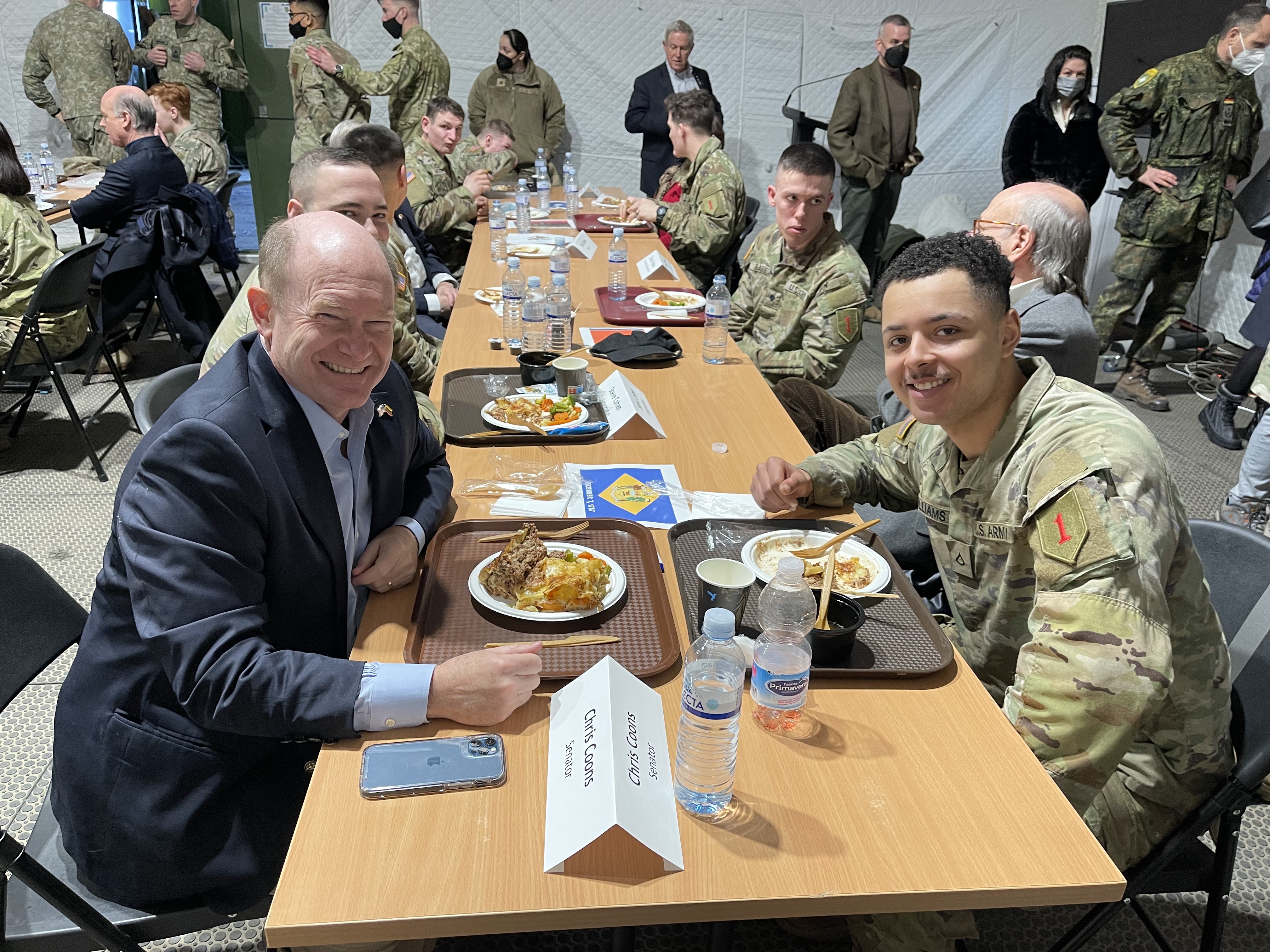
“This February, days before Vladimir Putin invaded Ukraine, I traveled to Eastern Europe as part of a bipartisan congressional delegation. While in Lithuania, we visited NATO troops at Camp Herkus where I shared a meal with Private First Class Elijah Williams, a soldier and Delaware native stationed there. Meeting American soldiers like Pfc. Williams reminds me every day of the stakes of Russia’s invasion and the American lives being put at risk by Putin’s war. =

“With strong economies and experienced militaries, Sweden and Finland will strengthen the NATO alliance. In so doing, they will not only make America safer but will also make it less likely that the countless Delawareans like Pfc. Williams serving overseas will be pulled into this fight. I am proud to join my colleagues and vote to welcome these vital new partners to a NATO alliance that is stronger and more unified as ever.” 

Senator Coons, a member of the U.S. Senate NATO Observer Group and the Senate Foreign Relations Committee, spoke on the floor of the Senate earlier this summer in support of this measure, and joined colleagues in a visit to Sweden, Finland, and the NATO summit in Madrid in June. 


IMG_1635

Senator Coons with Pfc. Williams at Camp Herkus in February.


###


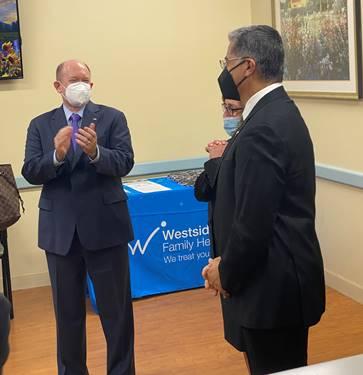
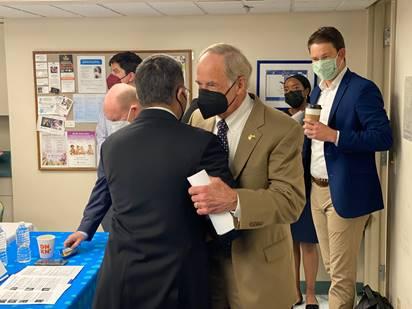
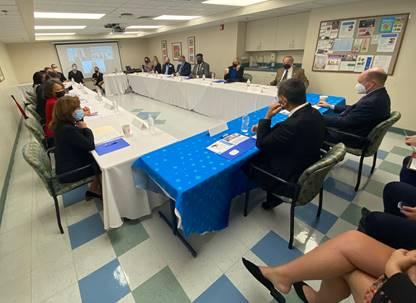
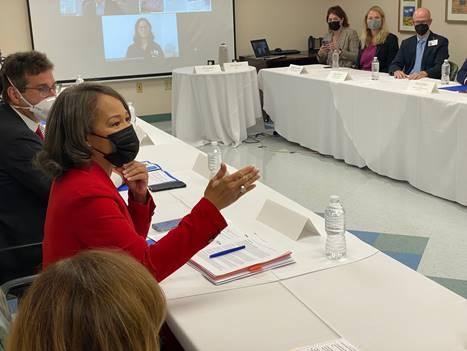
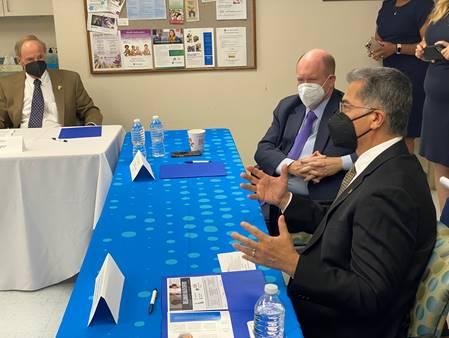
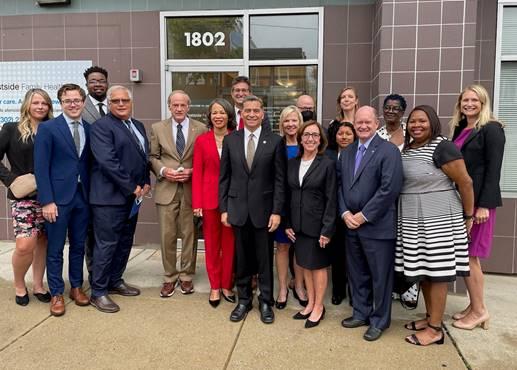
PHOTO RELEASE: HHS Secretary Becerra, Delaware congressional delegation praise value of national service-funded health care workers at Westside Health

WILMINGTON, Del.—Secretary of the Department of Health and Human Services (HHS) Xavier Becerra, U.S. Senators Tom Carper and Chris Coons (both D-Del.), and U.S. Representative Lisa Blunt Rochester (D-Del.) today met with national service and health system leaders creating innovative new pathways to nonclinical health care jobs through partnerships with National Health Corps—Delaware and Public Allies, both AmeriCorps programs, at Westside Family Healthcare.

The National Health Corps—Delaware and Public Allies have both partnered with Westside to place corps members providing critical nonclinical health services of the kind eligible for funding through Public Health AmeriCorps, a joint effort between AmeriCorps and the Centers for Disease Control and Prevention to support the development and training of public health leaders nationwide. The program received a $400 million investment from the CDC as part of the American Rescue Plan.

Big investments from American Rescue Plan have helped connect future health leaders from Public Health AmeriCorps to health centers like Westside. Community health centers are critical, so anything we can do to make sure they’re better staffed – we want to do.” said Sec. Becerra.

“Westside Family Healthcare is on the forefront of innovating health care delivery and is a model for other communities across the country that provide care regardless of the ability to pay. Westside is a point of pride in our community, and I was delighted that Secretary Becerra was able to see that first-hand today,” said U.S. Senator Tom Carper. “I am proud to have played a small part in this partnership, made possible through the American Rescue Plan, to help bring more staff and resources to the front lines and provide quality, affordable care to Delawareans.” 

“Public Health AmeriCorps allows Americans to serve communities in Delaware and across the country, whether by responding to a global pandemic or teaching about nutrition and other healthy habits to address chronic illnesses,” said Senator Coons. “They help organizations like Westside Health address crucial gaps in our communities that reduce public health disparities and provide lifesaving services to those who need it. I’m glad we could show Secretary Becerra the crucial work happening at Westside today, and I’m thankful for the investment HHS is making in Public Health AmeriCorps that will allow similar programs across the country to thrive.”

“As the former Delaware Secretary of Labor, one of my top priorities throughout the pandemic, and in its wake, was ensuring that our health care workforce was robust and well-trained,” said Rep. Blunt Rochester. “That’s why I was thrilled to welcome Secretary Becerra to Delaware today to see the fruits of those labors in the form of the National Health Corps that we helped create through the American Rescue Plan. The Corps has been instrumental in Delaware’s response to COVID and will continue to ensure that we’re ready and resilient facing the health challenges ahead.”


Men in suits talking to each otherDescription automatically generated with medium confidence


A group of men talkingDescription automatically generated with low confidence


A group of people sitting around a tableDescription automatically generated with medium confidence

A picture containing text, person, indoor, peopleDescription automatically generated


Men in suits sitting at a tableDescription automatically generated with low confidence


A group of people posing for a photoDescription automatically generated


###

Video Statement: Senator Coons on Reconciliation Agreement: “This is a big, big deal”

WASHINGTON—U.S. Senator Chris Coons (D-Del.) released the following recorded statement today reacting to the news that Senators Joe Manchin (D-W.V.) and Chuck Schumer (D-N.Y.) had reached a deal on the Inflation Reduction Act – a reconciliation bill to tackle climate, prescription drugs, inflation, deficit reduction, and other issues. A full transcript is below: 


image001.png


WATCH HERE.


Senator Coons: “Health care, prescription drugs, the deficit, and climate: that’s a big deal.

“We’ve just announced a framework here in the Senate that will tackle all four of these big issues. I get lots of calls from Delawareans saying they’re concerned or they’re upset about the price they pay at the pump; about the pollution that’s making our climate hotter and hotter, year in and year out; about the deficits we’re running here in Washington; or about how much they’re paying for prescription drugs.

“I just called Joe Manchin, just spoke to Senator Schumer and spoke earlier today to President Biden to congratulate them on coming together around a bold reconciliation package, a legislative deal that I look forward to supporting here in the Senate. The Democratic Caucus in the Senate is going to get this to President Biden’s desk, and I’m excited about the impact it’ll have. It’ll be the biggest deal to combat climate change we’ve ever done. It’ll cut emissions by 40% in the next eight years; it’ll reduce our deficit by $300 billion; it will allow Medicare to negotiate for prescription drug prices for the first time; and it will extend by three years, help [through the Affordable Care Act] for 14 million Americans to afford health care. Folks, this is a big, big deal.”


###

At Senate Foreign Relations hearing, Sen. Coons highlights his legislation to counter economic coercion

WASHINGTON – U.S. Senator Chris Coons (D-Del.), member of the Senate Foreign Relations Committee, participated today in a hearing focused on economic statecraft and discussed his legislation to support allies facing economic coercion. That bill, the Countering Economic Coercion Act of 2022, is also led by Senator Todd Young (R-Ind.), and equips the president with new tools to reduce the impact of economic coercion by strengthening trade and commerce ties with partners on an expedited basis. 

Senator Coons at Senate Foreign Relations Hearing: Thank you very much Chairman Menendez, Ranking Member Risch, and our panel of witnesses. Chairman Menendez, I am very encouraged by your focus on economic coercion, your legislative leadership on this and look forward to working with you closely on it. I think you’ve brought a real focus in the work on this committee to not just studying or thinking about what we need to do strategically and what tools we need, but then delivering those results so that we can strengthen the hand of our partners, diplomats, development professionals, and I’m excited to work with you on your Economic Statecraft in the 21st Century Act. 

I have recently introduced a bill, the Countering Economic Coercion Act, with Senator Young. I view them as complementary and I’m very hopeful that we can work together to move both of these pieces of legislation. We have both seen ways in which Russia, and China, and other states deliberately inflict economic damage, economic harm, on some of our partners and allies and countries that are at an uncertain point. They use economic power to punish or bully or influence sovereign states in our hemisphere and around the world, sometimes through informal pressure, intimidation, or threats, sometimes through formal actions. It harms our national security interests, our economy and undermines international rules. The Chairman’s bill would establish an interagency task force to develop a strategy to counter economic coercion, and I enthusiastically support that, and my bill would provide the President with new tools to offer rapid andI would argueeffective economic support to our partners targeted by economic coercion. For example, many of us have offered our support for Lithuania in recent months. President Biden has voiced support for Lithuania. The bill I’m trying to move forward would add tools to the president’s toolkit to make such support not just in words but in deeds by targeting specific tariff reductions, by expediting decisions on relaxing import restrictions or export restrictions, offering greater flexibility for export financing. 

###


Sen. Coons celebrates Senate passage of CHIPS-Plus bill

WASHINGTON – U.S. Senator Chris Coons (D-Del.) celebrated today’s Senate passage of a bipartisan bill that makes long overdue investments in American manufacturing, innovation, and competitiveness. The package includes several key provisions advanced by Senator Coons that will boost growth, create jobs, and enhance economic security in Delaware and across the country.

“Investing in manufacturing and economic competitiveness will improve our national security, bring down costs on major purchases for working families, and strengthen economic outcomes for years to come,” said Senator Coons. “In addition to incentivizing domestic production of semiconductor chips, this bipartisan package invests in energy security and innovation, plants the seeds for regional technology hubs, and commercializes clean energy technology to create jobs in Delaware and across America. I’m proud to join a bipartisan majority of my colleagues in passing this package and look forward to seeing it swiftly pass the House and go to President Biden’s desk for his signature.”  

The bill also includes key provisions that Senator Coons has championed, including: 

  • Creating a non-profit foundation for the Department of Energy to help channel private-sector investments to commercialize new energy technologies, including next generation batteries and low carbon fuels, as outlined in Senator Coons’ Partnerships for Energy Security and Innovation Act. 
  • Establishing a Regional Technology Hubs program, based on Senator Coons’ Innovation Centers Acceleration Act, to expand research, innovation, and the tech economy to more cities across America. This legislation will allow American research in biomedical technology, advanced manufacturing, and other crucial sectors to thrive while also ensuring the gains from these jobs are no longer concentrated in a vanishingly small number of metropolitan areas.
  • Growing the Manufacturing USA program to broaden the frontiers of advanced manufacturing in Delaware and across the United States. One of the nation’s 14 Manufacturing USA Institutes, the National Institute for Innovation in Manufacturing Pharmaceuticals (NIIMBL), is based in Newark, Delaware.
  • The Energizing Technology Transfer Act, which Senator Coons introduced, that will bring clean energy technologies developed at DOE and its 17 DOE-led national labs to the market to help provide reliable access to clean energy for the future.
  • Launching a pilot program to make long-term investments in persistently distressed communities that can be used for infrastructure investment, workforce development, small business assistance, and other investments to help communities rebuild. The provision is from Senator Coons’ RECOMPETE Act, which was introduced last July.


###

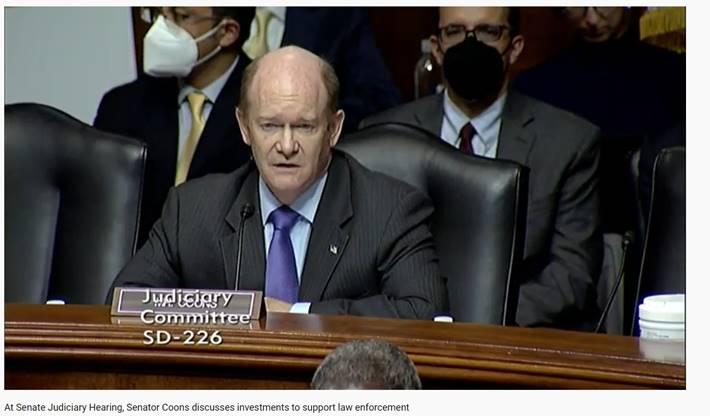
[VIDEO] Senator Coons highlights recent investments by Congress and White House to support law enforcement at hearing

WASHINGTON – Senator Chris Coons (D-Del.) spoke at a Senate Judiciary hearing today about the importance of law enforcement officer safety where he touted legislation delivered by Congress and the Biden White House to fund police departments and protect officers’ physical and mental health.

Participating in the hearing were Chief of Constitutional Policing and Reform for the Chicago Police Department Angel Novalez; Commissioner of the Baltimore Police Department Michael Harrison; Dwight Henninger, Chief of the Vail, Colorado Police Department; Cedar Falls Public Safety Officer Zachary Allen Anderson; Michael Bouchard, Sheriff of Oakland County, Michigan; and President and Executive Director of the National Fallen Officer Foundation Sgt. Demetrick “Tre” Pennie.  

“Whether it’s working together to try and keep dangerous weapons out of the hands of those who would do harm to law enforcement, making sure that we’ve got bulletproof vests for agencies, large and small, that are appropriately fitting [and] state of the art… or investing in mental health, in resources, and training, and support to make sure that officers have the resources they need to continue to serve, or to go on and lead productive lives,” said Senator Coons at the hearing. “There’s a solemn obligation on us not to turn this into a show, but to be serious and deliberate about the work that we do with you.”

In his remarks, Senator Coons highlighted the American Rescue Plan’s $10 billion investment in policing and other public safety efforts.  Senator Coons also discussed President Biden’s recently announced Safer America Plan, which would invest $37 billion in law enforcement and crime prevention, including by helping communities hire and train 100,000 additional police officers.

In addition to being a member of the Senate Judiciary Committee, Senator Coons is co-Chair of the Senate Law Enforcement Caucus.


WATCH HERE
 

Sen. Chris Coons: Thank you, Chairman Durbin, thank you Ranking Member Grassley. Thank you for holding this valuable and this critical hearing, and I want to thank each of our witnesses today who have not just testified, but who have demonstrated, through your lifetime of service and through the actions you’ve taken, what Commissioner Harrison said in his opening: that policing is a calling, and that having the courage and determination to stand up and serve and to continue serving – Officer Anderson, Chief Novalez – after witnessing or being directly harmed in the line of duty, after having the opportunity to understand just how challenging this calling is; I just wanted to open by expressing my gratitude to each one of you individually, and to the men and women you represent with whom you serve, and to the families and fellow officers who are here.

I know that it is more difficult than I can comprehend, to come and to testify about what was a horrific, life-altering day in Cedar Falls, in the line of duty; to see Patrol Sergeant Smith killed and to have to then talk with his widow and his family, to have been wounded yourself, Chief Novalez. And then to have with us Ella’s mother, Elizabeth, and to continue serving and leading an agency that looks to you for leadership in a difficult and dangerous time. 

I had the honor to serve as the County Executive in New Castle County, Delaware. We had 380 sworn officers during most of my time there, and I will never forget one of the hardest days of my life in this body was when Joe Szczerba, someone known personally to me, an 18-year veteran of our force, a talented and warm and – literally one of the best – was killed in the line of duty, responding to a disorderly subject in Penn Acres, and doing what Lieutenant Szczerba – He was a sergeant but was promoted posthumously – what he always did was to, you know, lean in, take matters into his own hands, help solve and track down. He was stabbed in the neck and killed by someone who’s now serving life, but I will never forget that funeral, and his widow Kathy, and what she said. She, at the very end, there were 5,000 people there – law enforcement from all over our nation and thousands of Delawareans – and she looked every one of us in the eye and said, “Do not cry for me. Other women, other people will have decades of marriage to an ordinary person. I had a few brief years with an exceptional man, with a hero.” And you couldn’t hear a pin drop in that room, and our community, Salesianum School – where Lieutenant Szczerba attended – the Newcastle County Police Department, and so many others have every year renewed his memory and continued to invest in the training and the support and the needs of the men and women of law enforcement in Delaware.

I could continue. I went to the funeral for Patrolman Chad Spicer and have had the blessing of knowing his mother and his daughter; Corporal Stephen Ballard, whose widow, Louise Cummings, continues to lead law enforcement efforts in Delaware to respect our state police. Her husband was an exceptional patrolman killed in the line of duty; Corporal Keith Heacook from Del Mar, whose funeral early this year, excuse me, last year, was a simply riveting moment. You have brought to this hearing today the sort of quiet dignity and determination that is so important as we try to come together to address this issue as a nation.

I will tell you that whether it’s working together to try and keep dangerous weapons out of the hands of those who would do harm to law enforcement, making sure that we’ve got bulletproof vests for agencies, large and small, that are appropriately fitting, state of the art; something I’ve worked hard over 12 years with Senator Leahy to make sure we sustain the Bulletproof Vest Partnership, or investing in mental health, in resources, and training, and support to make sure that officers have the resources they need to continue to serve, or to go on and lead productive lives. There’s a solemn obligation on us not to turn this into a show, but to be serious and deliberate about the work that we do with you. I am a Delawarean. I succeeded, on this committee and in the Senate, our president, and I know him personally, and I know that he doesn’t just say thank you for your service. He doesn’t just say that he supports law enforcement. To the debate back and forth about defunding the police, he has put into action – in his budgets and with his priorities – making America safer. The American Rescue Plan delivered over $10 billion for state and local hiring for law enforcement, and the Safer America Plan, just announced, highlights that in his FY23 budget, there’s $37 billion for law enforcement. That includes the funding to hire 100,000 more officers. The agency I was fortunate to have some responsibility for benefited directly from COPS grants many years ago. I hope we will, on a bipartisan basis, provide these resources to you.

I know I’m running short on time, so let me ask two questions, if I could, of Chief Henninger in particular if I might. I work closely with IACP, providing critical advice – PERF and IACP – in leadership and management decisions I had to make as county executive – I’m grateful for the IACP. I’m leading, along with Ranking Member Grassley, a bill that would direct the DOJ to propose programs to better address PTSD and law enforcement. Senator Blunt and I co-lead the law enforcement caucus here in the Senate, and we had an event about this to try and better understand PTSD resources. My impression is that unlike the military – which is also working to address critical issues in terms of soldier suicide –which has a unitary chain of command, we have 18,000 agencies. We have disaggregated resources at the federal, state, and local level. How can we best address the lack of resources, training, and support? Are there models for mental health and law enforcement that you would urge us to invest in?

Chief Dwight Henninger: Thank you, Senator. The question is very broad, and there are things – there’s a lot that needs to be done to solve the mental health-related crisis issues around policing. It goes to the way that officers are treated on a regular basis in the street, and we feel like the fact that we’ve pulled in the military and we’ve pulled in the experts to try to identify the best practices is really moving forward with that, but the mental health check-ins for our officers on a regular basis is really important, and funding that is a difficult thing, as you would know. From a local level, that’s a very expensive proposition, so we feel that those are very important things to the wellness of our officers.


###
Senator Coons on potential Ukrainian grain export deal

WASHINGTON–U.S. Senator Chris Coons (D-Del.) issued the following statement today following reports that Russia, Ukraine, and Turkey will sign a United Nations-proposed deal to allow exports of grain from Ukraine’s Black Sea ports:

“I’m optimistic this deal will provide a critical lifeline to the hundreds of millions of people facing starvation and food insecurity around the world. Russia’s immoral and unprovoked invasion of Ukraine and its blockade of Black Sea ports has caused harm far beyond Ukraine’s borders, and any increase in grain exports will save lives and reduce hunger globally. I’m grateful to Ambassador Thomas-Greenfield, Secretary General Guterres, and President Erdogan for securing this deal, as well as to President Zelenskyy for his willingness to ensure people in all places have access to food. “Despite this progress, the only lasting solution will be for Russia to end its invasion and for Ukraine to regain its territorial sovereignty. The United States, NATO, and the international community must continue to use every tool at our disposal to isolate Putin’s regime, aid the Ukrainians defending their homeland, and hasten the end to this invasion.” 

Senator Coons is a member of the Senate Foreign Relations Committee and Chair of the Appropriations Subcommittee on State, Foreign Operations, and Related Programs (SFOPS).


###

Senators Carper and Coons on confirmation of Greg Williams for District Court for Delaware

WASHINGTON – U.S. Senators Tom Carper and Chris Coons (both D-Del.) released the following statement today after Greg Williams was confirmed to serve as a District Court Judge for Delaware. 

“Greg’s decades of experience as a litigator, his tenure as president of the Delaware State Bar Association, and familiarity with complex intellectual property and corporate law issues will serve him well as a District Court Judge,” said the senators. “Greg will also become the only judge of color actively serving on the U.S. District Court for the District of Delaware, an important step towards making sure that the federal judiciary reflects the great diversity of Delaware and our nation. We applaud President Biden for nominating such a qualified, respected attorney to this important post and thank our Senate colleagues for his bipartisan confirmation.”

Williams will be the only judge of color serving on the U.S. District Court for the District of Delaware, and the second African-American judge to ever serve on that court. He was nominated for the judicial vacancy created when Judge Leonard Stark was confirmed to the United States Court of Appeals for the Federal Circuit. He is a partner in the Wilmington office of Fox Rothschild LLP. He joined the firm in 1995 as an associate and was elevated to partner in 2003. Williams has served as a special master in complex civil cases for the District of Delaware since 2020. From 1986 to 1992, Williams served in the U.S. Army Reserve. He received his J.D. from Villanova University School of Law in 1995 and both his B.A. and B.S. from Millersville University of Pennsylvania in 1990.


###

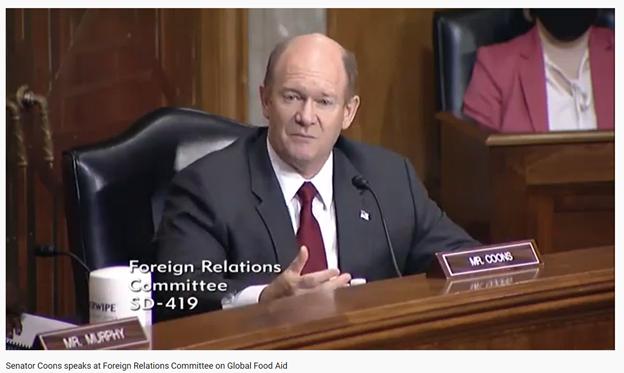
VIDEO: Senator Coons speaks at Foreign Relations hearing about global food crisis: “we have a bitter cocktail coming together of conflict, and COVID, and climate”

WASHINGTON – Senator Chris Coons (D-Del.), a member of the Senate Foreign Relations Committee and Chairman of the Senate Appropriations Subcommittee on State, Foreign Operations and Related Programs (SFOPS), spoke today at a Foreign Relations Committee hearing on the global food crisis, where he questioned USAID Administrator Samantha Power and U.S. Ambassador to the United Nations Linda Thomas-Greenfield about American efforts to work with international partners and allies to address this crisis. See his full remarks below.  


WATCH HERE

https://lh5.googleusercontent.com/gxBwKzwRthkv5ykwchFvldd05xlQS0ChuSQTk3Bs6VLrT5ldNXJWCpP4XLkpNWbCzpB5MC8DmxMbv4RBr8MHp6QBThoqGdVOb_xaAW2Cg-dTS2gVx6AzBBgg4jVFhw4wC01f5Xj4KgxFcnG48vBe3Mo

Sen. Chris Coons: Thank you, Mr. Chairman. I want to thank you and the ranking member of this committee for holding a full committee hearing on this remarkable, grave global crisis in food security, and the attendance here and your engagement as senior administration representatives is important. I thought it was striking at the outset, Ambassador ThomasGreenfield, when you said this is — you’ve never seen a food crisis like this in your career, and I expect that Administrator Power and Mr. Beasley would both agree with you. We first met in Liberia. You’ve been to tough places; you know what food crisis looks like. And it is striking to me that at exactly this moment when we have a bitter cocktail coming together, of conflict, and COVID, and climate, that the United States is stepping up in a massive way. Each of the descriptions Administrator Power just gave of this ally, this ally, this ally was billions from the United States, millions from this allied partner. And one of the things I’m most concerned about is the lack of engagement and presence by the PRC, yes, by our Gulf partners, absolutely, and the ways in which our European partners and allies are providingyes, support for refugees but modest support for the development, the urgent food security and development needs of sub–Saharan African. Administrator Power, thank you for outlining in your speech at CSIS the actions we need to take in response to this food security emergency, and I’m encouraged by the plan for a $1.3 billion surge for the Horn of Africa where you’re about to travel, as well as the $200 million in readytouse therapeutic foods which are used for children in starvation, but I’d be interested in hearing concisely, where you see funding gaps and what more we can do to mobilize the donor community both through the UN and through USAID and I’ll also be asking Mr. Beasley about his particular brand of effective and forceful personal engagement with those who still sit on the sidelines.

Hon. Samantha Power: Thank you. Well, let me just say that I think President Biden took advantage of his trip to the Middle East to engage the Saudis, the Emiratis, the Qataris, I think there’s a lot of room for growth in terms of those contributions and particularly in fulfilling pledges that have been made publicly but not yet delivered upon. And you know, money is fungible for an organization like the World Food Program. And so, if, for example, Gulf countries were to concentrate their resources for example, on Yemen, that would free up resources for other countries to be able to use in the Horn of Africa or in South Sudan and so forth. So too, it has to be said again, that European commitments and contributions inside Ukraine are very important, and it’s very important that the UN appeals for inside Ukraine be met with the same kind of urgency and the same kind of resources as the needs of refugees that passed into Europe have been met with.

Sen. Chris Coons: A number of us are eager to work with you in coordination on pressing our closest allies and partners to meet their commitments and to be a part of this global moment. I’m struck, Ambassador, by the anger, frankly, the breadth and depth of anger in the developing world, at what many of our long-standing partners, particularly in sub-Saharan Africa, see as an abandonment of their public health and humanitarian and hunger needs, in the face of what has been year after year after year of drought. I’d be interested in your thoughts on both what we can most do to help with opening up the Black Sea portsI met with the Secretary General recently, I’m encouraged that the UN is at the table, and I frankly think we should focus on this like it is the Berlin Airlift, that it could be an opportunity to show the UN’s engagement and relevance at a critical momentbut I’m also wondering, where you see the UN going. We are behind in our commitments; we are billions of dollars behind in our dues, obligations, our commitments to the UN, although we are billions ahead in our contributions and support to UNICEF and UNHCR and World Food Program. How does it hurt our standing at the UN, when we are billions behind in our commitments?

Hon. Linda ThomasGreenfield: Thank you so much for the question, Senator, because that is really the crux of the challenge that I face in New York every single day as we are put in a position of having to compete with our adversaries on being able to influence the UN action, putting staff who are capable, in the United Nations. We’re reminded publicly and attempted to shame but we don’t feel shame that we are — that we have such a large debt, such large arrears in the United Nations. So, we really do have to address that issue, if we’re able, if we’re going to be able to compete

Sen. Chris Coons: Does that create an opening for countries like China and Russia to influence the UN system despite our significant leadership in our contributions?

Hon. Linda ThomasGreenfield:  Every gap that we leave is an opening for the Chinese. They flow into every open space that we leave. So that means staffing in the UN, means funding for junior professional offices. These are young people like we have around in this room, who we’d like to see working at the United Nations and the way they get in is through a professional program that’s funded by their government. The Chinese have more than 400, if not more, of those young people inside the United Nations. We can’t compete.

Sen. Chris Coons: As we work on the SFOPS appropriations bill this year we will keep both of those things in mind. I’m mindful I’m out of time and many of my colleagues have gone over. I’ll just conclude by saying if I can, Administrator Power, I am interested in hearing from you about our investment in food storage to help the Ukrainians but frankly, also globally, and in programming, you’re launching around food waste. We don’t have any extra food to waste in this world. And then last, I want to continue engaging with you, Ambassador, on the SDRs, on the IMF, and the ways in which international financial institutions can help stabilize some of the countries we’re most concerned about. But if the Chinese keep piling on the debt and we don’t fund the Development Finance Corporation as our alternative that is more transparent and more sustainable, we will continue to go in the wrong direction in the developing world. Thank you, Mr. Chairman. 


###