Related Issues

Related Issues

Senator Coons’ legislation to address global malnutrition passes Senate, heads to President Biden

WASHINGTON — U.S. Senator Chris Coons (D-Del.) celebrated the passage of his bipartisan bill to bolster federal efforts and increase coordination to address global malnutrition. The Global Malnutrition Prevention and Treatment Act, which will authorize the United States Agency for International Development (USAID) to scale up programs and activities to prevent and treat malnutrition globally, passed the Senate last night on a voice vote. After previously passing the House on a strong bipartisan vote, the bill now heads to President Biden for his signature. In addition to Senator Coons, who is a member of the Senate Foreign Relations Committee and the Chairman of the Senate Appropriations Subcommittee on State, Foreign Operations, and Related Programs (SFOPS), U.S. Senators Roger Wicker (R-Miss.), Tim Kaine (D-Va.), and John Boozman (R-Ark.) also led the bill. The bill was led in the House of Representatives by Foreign Affairs Committee Chairman Gregory Meeks (D-N.Y.) and Ranking Member Mike McCaul (R-Texas).

“The Senate’s passage of the Global Malnutrition Prevention and Treatment Act demonstrates our bipartisan commitment to address malnutrition that leads to the suffering of millions of children across the globe,” said Senator Coons. “As the world recovers from COVID-19 and deals with escalating military conflicts, this bill will help the U.S. lead by example to improve the health of children, mothers, and families around the world. I am delighted that the Senate passed this bill unanimously and look forward to President Biden swiftly signing this bill into law.” 

“Malnutrition affects millions throughout the world, and it takes a heavy toll on children and expecting mothers,” Senator Wicker said. “The targeted reforms included in the Global Malnutrition Prevention and Treatment Act will increase our ability to address this growing challenge and save lives.” 

“The pandemic and Russia’s war on Ukraine have exacerbated global food insecurity, and the United States’ leadership is crucial to the reduction of world hunger,” said Senator Kaine. “The Senate’s unanimous passage of our bipartisan Global Malnutrition Prevention and Treatment Act will help keep starvation at bay for children and families in need across the globe. I urge President Biden to sign this bill into law as quickly as possible.”

“Passage of this legislation is an important and necessary step to fight global malnutrition and improve coordination with our partners around the world,” Senator Boozman said. “I urge the president to quickly sign this bill into law so we can get help to the children and families who need it most.”

The Global Malnutrition Prevention and Treatment Act:

  • Authorizes the USAID administrator to scale up the prevention and treatment of global malnutrition and coordinate with relevant public and private partners on these efforts;
  • Directs the USAID administrator to select priority countries that would receive prioritized nutrition assistance;
  • Establishes the Nutrition Leadership Council to coordinate USAID’s efforts on preventing and treating malnutrition, with representatives from relevant inter- and intra-agency offices;
  • Directs the USAID to develop and submit an implementation plan to prevent and treat global malnutrition; and
  • Requires the USAID to submit an annual report to Congress on the progress made toward preventing and treating global malnutrition.

The bill is endorsed by 1,000 Days, Action Against Hunger, Alliance to End Hunger, Bread for the World, CARE, Farm Journal Foundation, Food for the Hungry, Global Health Council, HarvestPlus, Hellen Keller International, InterAction, ONE Campaign, RESULTS, Save the Children, UNICEF USA, and World Vision US.

The full text of the bill is available here.

Sen. Coons celebrates ratification of Kigali Amendment to Montreal Protocol

WASHINGTON – U.S. Senator Chris Coons (D-Del.), co-chair of the Climate Solutions Caucus, voted today to ratify the Kigali Amendment to the Montreal Protocol. The amendment phases down the use of powerful greenhouse gasses called hydrofluorocarbons (HFCs) and aligns with existing bipartisan law.

“It’s a great day for the planet, for American manufacturers, and for Delaware,” said Senator Coons. “Paring down hydrofluorocarbons is one of the single most impactful steps we can take. Not only will it help us avoid 0.5 degrees Celsius in warming, but it will also create thousands of new jobs in manufacturing the next generation of heating, ventilation, and refrigeration products – including in Delaware, where Chemours created a refrigerant with low global warming potential known as Opteon. I’m proud to see a vast majority of my colleagues support this effort to protect our planet and secure America’s place as a global leader in key manufacturing industries, and I’m grateful to Senators Carper and Kennedy for their leadership to get this done.”

Earlier this year, Senator Coons led a letter with several fellow members of the Senate Climate Solutions Caucus to urge ratification of the Kigali Amendment. Today’s vote will safeguard U.S. export access in other countries that have ratified the Kigali Amendment and help ramp up U.S. production of alternatives to HFCs. It is estimated that implementation of the Kigali Amendment will add 33,000 new jobs and $1.2 billion in direct output to the U.S. economy, while also generating a 25 percent increase in exports of American-made refrigerators, air conditioners, and other products.

###

Bill from Senators Coons, Rubio Reauthorizing the United States Commission on International Religious Freedom to Become Law

WASHINGTON – U.S. Senators Chris Coons (D-Del.), member of the Senate Foreign Relations Committee, and Marco Rubio (R-Fla.) today praised the House of Representatives for passing the United States Commission on International Religious Freedom Reauthorization Act of 2022, which reauthorizes the United States Commission on International Religious Freedom (USCIRF) through fiscal year 2024. The bill now heads to President Joe Biden’s desk to be signed into law. Senators Bob Menendez (D-N.J.), Jim Risch (R-Idaho), Dick Durbin (D-Ill.), and James Lankford (R-Okla.) are also original cosponsors.

Created by the International Religious Freedom Act of 1998, the USCIRF is a bipartisan commission that monitors and reports on religious freedom internationally. The commission’s authorization would expire on September 30, 2022 unless reauthorized.

“I’m proud to have worked to protect international religious freedom by passing the USCIRF reauthorization in the Senate on a bipartisan basis, and I’m glad that our House colleagues have finally passed and sent the bill to President Biden for his signature,” said Senator Coons. “Around the world, communities like the Rohingya in Burma, Christians in Nigeria, and Uyghurs in China face horrific attacks because they practice their human right to freedom of religion. The United States is built on the founding value of religious freedom, and we must continue to work with our international partners to ensure the global community enjoys the same opportunity to peacefully worship.”

“I’m grateful the House has voted to reauthorize USCIRF’s mission and reaffirm the importance of religious freedom everywhere. USCIRF does phenomenal work defending this sacred right around the globe, but its authorization will expire in just a matter of days. President Biden must sign our bill immediately,” said Senator Rubio. 

“The House passage of our USCIRF reauthorization bill is an important step in ensuring the United States can properly promote religious freedom around the globe and investigate violations, including the persecution of Yazidis, Baha’is, Christians, and others in the Middle East, genocide of Uyghurs in China, and attacks on Jehovah’s Witnesses in Russia. I hope the president will sign this legislation into law quickly,” said Senator Risch.

“The United States has a long tradition of promoting religious freedom abroad, and this Commission is dedicated to advising Congress and the Executive Branch about how to successfully ensure religious freedom is protected and that religion is not exploited to justify human rights abuses. As the global refugee crisis worsens, the United States must do more to address the scourge of religious persecution, including holding perpetrators accountable and providing a safe haven to refugees. It’s heartening to see Congress come together on this pressing issue to ensure that the Commission can effectively fulfill its mission,” said Senator Durbin.

“USCIRF does invaluable work to help our nation protect and promote the unalienable human right of religious freedom for all people of every faith around the world. I’m glad to see the House finally pass my bill to reauthorize this commission,” said Senator Lankford.


Senator Coons Statement on Meeting with Colombian President Gustavo Petro

WASHINGTON — U.S. Senator Chris Coons (D-Del.), a member of the Senate Foreign Relations Committee and Chairman of the Senate Appropriations Subcommittee on State and Foreign Operations, issued the following statement after meeting with Colombian President Gustavo Petro: 

“Yesterday, I met with President Gustavo Petro on the sidelines of the U.N. General Assembly to reaffirm the strong partnership between the U.S. and Colombia and discuss ways to continue our work together. During our meeting, President Petro presented his plans for bringing peace to Colombia and protecting the Amazon. I was encouraged by his focus on rural development, conservation efforts, and addressing the climate crisis, and I look forward to working with his government on these shared priorities.”

###

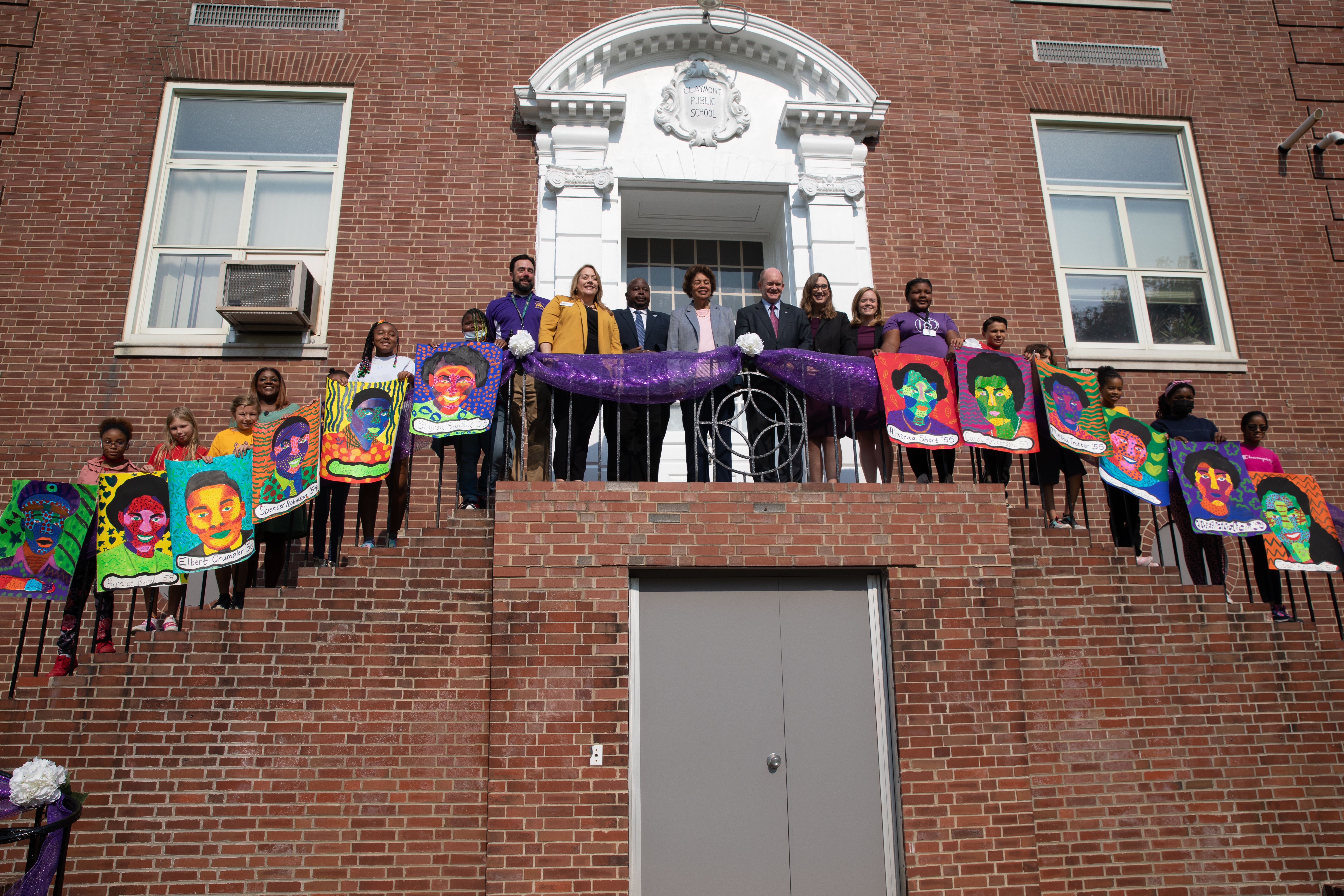
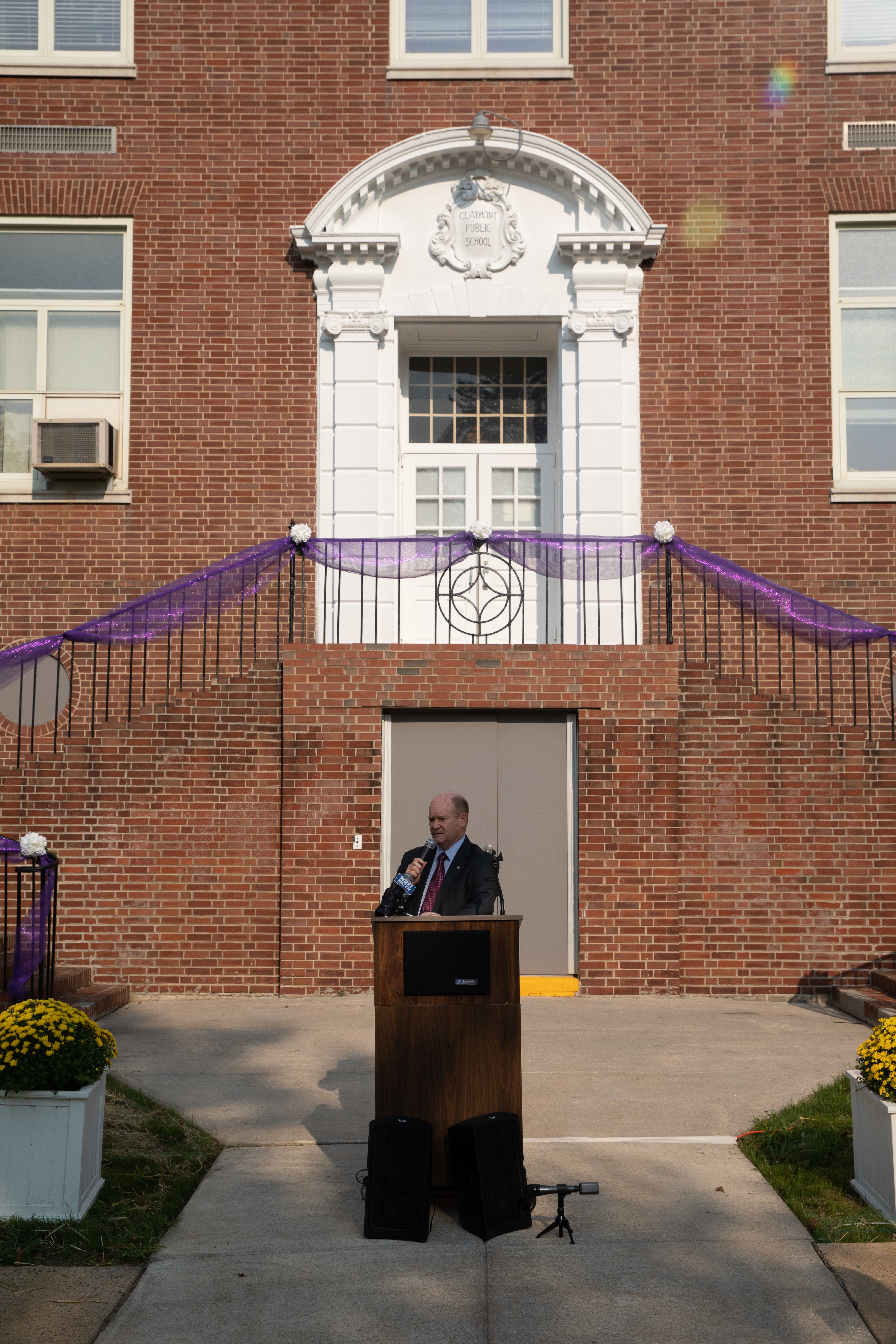
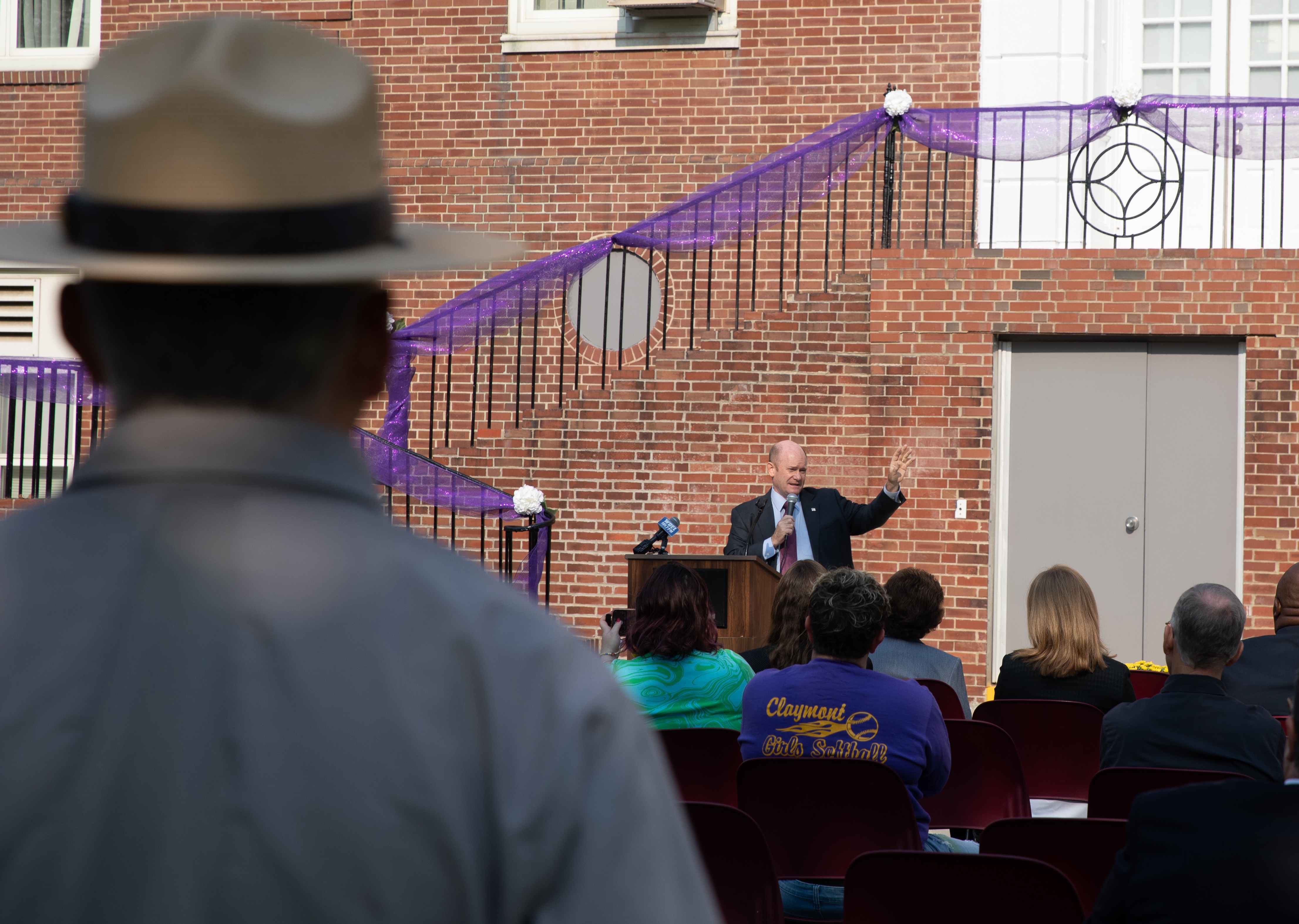
[PHOTOS] Sen. Coons speaks at 70th anniversary celebration of desegregation of Claymont High School

CLAYMONT, Del. – U.S. Senator Chris Coons (D-Del.) spoke today at a celebration of the 70th anniversary of Claymont High School’s desegregation in defiance of state officials. The school’s actions would ultimately lead to a Delaware court case that would become part of Brown v. Board of Education at the U.S. Supreme Court. 

“There’s a simple lesson for our elementary school students: people will divide us if we let them; people will deny us history if we let them. There is a beautiful chapter of American history right here,” said Senator Coons. “If we choose to embrace each other, live together, see each other as citizens who belong in our community regardless of perspective or worldview, if we would open our hearts to each other, we will have a stronger, more vibrant, more just, more democratic society. That begins by knowing our history, and with the platform of that history, we can continue to make change together.” 

For more photos of today’s event, click here.

image005image003image004image006

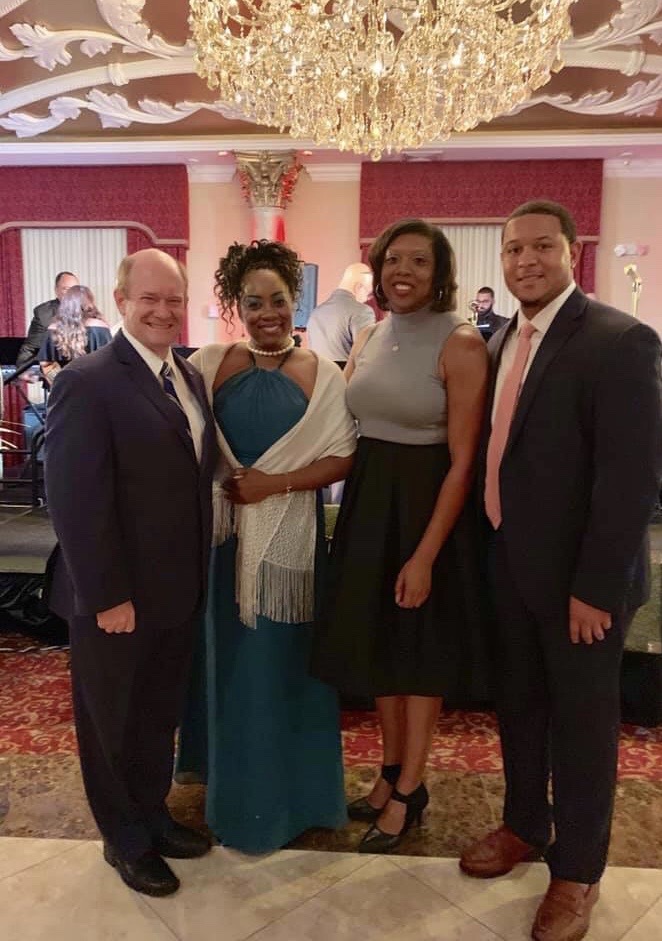
Sen. Coons on the passing of Rysheema Dixon

WILMINGTON, Del. – U.S. Senator Chris Coons (D-Del.) issued the following statement today on the passing of former Wilmington City Councilwoman and community activist Rysheema Dixon:

“I was incredibly saddened to learn of the sudden passing of Rysheema Dixon. A boundary breaker, she was the first Black woman to fill the role as an At-Large City Council member. She was founder and CEO of her own company, RD Innovative Solutions, which operated summer programs for city youth. She was passionate about lifting up the people of this city, from fostering other entrepreneurs to introducing consent-focused lessons in our schools. My staff and I both knew her well, and strongly admired her. She was far too young to be lost, and her passing will have a ripple effect far beyond just this community.”

image002

[VIDEO] Senator Coons Chairs Judiciary Subcommittee Hearing on Protecting Americans’ Private Information from Hostile Foreign Powers

WASHINGTON — Today, U.S. Senator Chris Coons (D-Del.), Chair of the Judiciary Subcommittee on Privacy, Technology, and the Law, chaired a hearing focused on hostile foreign powers’ access to Americans’ data. Senator Coons welcomed leading researchers on cybersecurity policy and national security law to discuss the threat of foreign adversaries’ collection and use of American citizens’ data. The full hearing can be seen here.

Senator Coons chaired this Subcommittee hearing a day after participating in the full Senate Judiciary Committee hearing to explore a whistleblower complaint that alleged foreign intelligence agencies target social media platforms to mine information from inside the companies.

Video and transcript of Senator Coons’ opening remarks are available below:    

WATCH HERE.

Senator Coons: This hearing will come to order. I’d like to thank all of our witnesses for participating today and offer my apologies. The Foreign Relations Committee was engaged in a challenging and important markup of legislation relating to the State Department and to our policy regarding Taiwan, and I want to specifically thank Ranking Member Sasse and his staff for working with us on a constructive, consensual basis around putting together this hearing, the agenda, and the witnesses.

This is a critical topic and I’m looking forward to a productive conversation today. We’re going to explore how American citizens’ private personal data are being accessed, collected, and used by our foreign adversaries. We know that hostile foreign intelligence services continue to work to gather sensitive information about each and every one of us. They collect information about to whom we speak, the places we visit, the news we consume, the products we buy, and a great deal more, and they do this because the insights buried in that data can be used against us. It can be used to either pressure or blackmail people in positions of responsibility and power, and with access to critical national security information. It can be used to gain strategic insights into social or economic trends. It can be used to sharpen and refine misinformation or disinformation, campaigns that other nations have engaged in to sow discord and to weaken our democracy. There’s no shortage of ways foreign adversaries can gather and compile this sensitive personal information.

Yesterday, the full committee had a hearing with Twitter whistleblower, “Mudge,” Peiter Zatko, and he testified that foreign intelligence agencies have targeted social media platforms to mine information from inside those companies. Now, there’s also been a public reporting about a steady stream of hacking and ransomware attacks. It seems we have heard over and over about wide-scale data breaches. We also know applications and software that are controlled by foreign nations presents its own risk with American users being directly targeted— providing their data to companies who are incorporated in or located in adversarial nations, and there’s other sources of less prominent data leakage through a vast system of data brokers that buy and repackage and sell data from tens of millions of Americans and resell it to the highest bidder.

We have very little insight into these transactions. Almost no understanding of how they are happening, who’s on the receiving end, and no limitations in it. So, my view, in order to get our hands around this data flow to our adversaries, we have to understand its sources so we can move towards more appropriate controls, and we have to be clear-eyed about the scope and depth and reach of this problem and that no single solution will be readily available. We have to approach this holistically and not just simply as a nation playing whack-a-mole every time there is a new emergent app or device or avenue for data leakage. So, we also have to respect our core values, our democratic values, and make sure that we’re serving our nation’s competitive interests. So, Congress should consider how any proposed intervention will also impact fundamental freedoms: freedom of speech and association and the free flow of data that benefits our country and our companies.

So, there’s no shortage of potential solutions. I will discuss some of them today. I know the Ranking Member and his staff have been working on a proposal to assume our government doesn’t enter into contracts jeopardizing U.S. citizens’ data. I look forward to working with him on that proposal and to find other paths towards some common regulatory proposal. We’ve assembled an all-star panel of witnesses with a wide range of views today, and I’m grateful for Senator Sasse’s close cooperation in getting this hearing moving forward, and I’ll now defer to my Ranking Member.”


###

[VIDEO] Senator Coons Questions Twitter Whistleblower about Social Media Security Failures at Judiciary Committee

WASHINGTON — U.S. Senator Chris Coons (D-Del.) questioned data security expert and former head of security at Twitter, Peiter “Mudge” Zatko, at a full Senate Judiciary Committee hearing to assess allegations of widespread security failures at Twitter. Senator Coons questioned Zatko on his disclosures about Twitter’s security vulnerabilities, foreign infiltration, and misrepresentations to regulatory agencies. Senator Coons also highlighted his bill, the Platform Accountability and Transparency Act, which would provide researchers with access to internal platform data to conduct research on the impact that major social media platforms have on our lives. Senator Coons is the Chairman of the Committee’s Subcommittee on Privacy, Technology, and the Law, and he will hold a subcommittee hearing tomorrow on protecting Americans’ private data and information from hostile foreign powers.

Video and transcript of Senator Coons’ opening remarks and questioning is available below:    

WATCH HERE.

Senator Coons: Thank you Chairman Durbin, Ranking Member Grassley. And thank you, Mr. Zatko, thank you Mudge, for coming forward. This is yet another eye-opening moment for our public, for our nation, and for this committee. We know that social media and new communications technologies have empowered people across the world to connect and share information at an unprecedented scale, but we also know that concentrating all this information, all these resources, in just a few hands, comes with great risks. So your whistleblower complaint contains really striking allegations, which shed light on several key realities, and I wanted to focus on those. The first, as you’ve stated in a number of exchanges with my colleagues, is that the public lacks any credible way to assess whether and how major platforms and technology companies are protecting or prioritizing user privacy. And I want to talk for a bit about a bill that I’ve got, that Senator Klobuchar also mentioned, that would help strengthen some of that transparency. And then the second, which I’ll get to later, is that these platforms are a target for foreign actors, something where a subcommittee I chair is having a dedicated hearing tomorrow afternoon. You commissioned an independent report regarding Twitter’s platform integrity, and their ability to combat misinformation, disinformation, and that report found, and I’m quoting, “Twitter’s consistently behind the curve in acting against disinformation and misinformation threats, and that Twitter doesn’t have the ability to measure the impact of its work to protect site integrity.” What I’ve concluded from your testimony today is that Twitter lacked the ability to measure the effects of interventions it implemented because of decisions by management and because of the lack of a credible regulatory oversight agency and penalties. Is that correct? Do I understand your testimony correctly?

Mudge: Yes, sir. The inability internally came from 10 years of security and engineering debt that just kept accruing.

Senator Coons: Your complaint also details how Twitter’s executive team was concerned that the report that you’ve commissioned would be damaging if it got out and that they worked to intentionally remove or modify information that might be especially embarrassing for Twitter. Is that correct?

Mudge: Yes, sir. I found that very disturbing. The company that I hired with the knowledge of the other executives and the head of site integrity, which did not report to me, that this independent organization was going to analyze and do gap analysis. The company reached out to me and said, “Hey, Mudge, Twitter is jumping in and making us open a separate contract, and telling us not to provide you the results to your own work. This does not feel right to us. What’s going on?”

Senator Coons: So, a lot of the information that both regulators and Congress relies on when considering how to regulate social media companies comes from the companies themselves;as I think you’ve put it before, they’re essentially grading their own homework. So the conclusion we ought to reach is the information we receive isn’t trustworthy from some social media platforms?

Mudge: Yes. sir. That’s what I experienced.

Senator Coons: So, I’ve released a bill with Senator Portman. Senator Klobuchar referenced it earlier; we are looking for additional Republican co-sponsors. It’s called the Platform Accountability and Transparency Act; it would allow external researchers to look at exactly these kinds of problems to better understand and analyze the algorithms that drive social media and some of their practices. Would empowering researchers and mandating better disclosure help hold companies more accountable and cause them to invest more resources in site integrity?

Mudge: Yes, sir. In fact, I think one of the things that we learned from that study, and what I am hopefully shedding light on in my lawful disclosures, is just how much of a gap there is between Twitter and some of Twitter’s peers, and even learning that sort of discrepancy would help understand and raise the level of hygiene for these organizations in their ability to perform their tasks, and the ability for us to accept what they’re saying as to whether it could possibly be true or not.

Senator Coons: This also opens up enormous national security risks. As you testified earlier, there’s roughly half of Twitter’s employees that had unnecessary access to vast amounts of sensitive user data. As Senator Kennedy was asking you earlier, [you] just gave us a quick sense of what information Twitter might have about Senator Grassley, or about any of us on this committee. It is deeper and broader, and I suspect if you’d gone further, it then unlocks a whole profile that can give really dramatic insight into members of law enforcement, members of the military, Members of Congress and their families, their travel, their preferences, their actions, their consumer activities, and all of that has some real consequences. You wrote in your complaint, the Indian government “forced” Twitter to hire Indian government agents, who then had direct and unsupervised access to data and a former Twitter employee was convicted last August of working as an agent of the Saudi kingdom. How common do you think it is for foreign entities, for hostile agencies, to successfully install sympathetic actors at Twitter, and why might they do so?

Mudge: Well, there’s any number of reasons, you know, there are many reasons why you would do so. In particular, not just to identify people of interest or track groups of interest, but also to maybe look at whether or not Twitter has identified your agents or your information operations — what other governments has Twitter possibly identified. And remember, you know, outside of the ability to access large amounts of data on the engineering side, you would want to know what Twitter’s plan is, as far as whether they will cede to your demands for control of information within their environments or not, in order to change different types of political pressures such as strong arming, and as we saw, that that country was even threatening to put Twitter employees in jail if Twitter didn’t change particular activities on the platform.

Senator Coons: With 80% of Twitter’s users outside the United States and with Twitter having a deep access and resources to critical leaders in our country and other countries, I think this is genuinely concerning. Tomorrow afternoon, the subcommittee I chair, the Subcommittee on Privacy, Technology, and the Law, Senator Sasse and I will be holding a hearing on how to further understand the depth to which hostile actors and adversaries are going to obtain American citizens’ data and that’ll expand on a lot of the topics we’ve pursued today. I hope members of the committee will attend. I want to thank you for your testimony, and Mr. Chairman, for the chance to participate in today’s hearing.


###

Senators Coons, Shaheen, Collins to Introduce Resolution Posthumously Honoring Queen Elizabeth II

WASHINGTON – U.S. Senator Chris Coons (D-Del.), member of the Senate Foreign Relations Committee, joined Senator Jeanne Shaheen (D-N.H.) and Senator Susan Collins (R-Maine) in introducing a Senate resolution honoring Her Royal Majesty Queen Elizabeth II following her passing last week. The resolution pays tribute to the Queen’s historic legacy and her 70-year reign, expresses condolences to her family as well as the citizens of the United Kingdom and the Commonwealth, and reaffirms U.S. commitment to its close alliance with the United Kingdom. 

“Queen Elizabeth II’s reign as monarch – the longest ever in British history – oversaw profound changes in British society and around the world. She was an experienced stateswoman who understood the importance of the relationship between the United Kingdom and the United States and deepened those ties based on our shared history and values throughout her 70 years on the throne,” said Senator Coons. “I extend my sympathies to the members of the Royal Family, and all of the British people, on the passing of their sovereign. Her grace will be missed in the United Kingdom and across the world.”

“I remember watching Queen Elizabeth’s coronation as a child as the world bore witness to a 25-year old woman inheriting the colossal responsibility of providing strength and fortitude to her country in the shadow of World War II. She shouldered that responsibility with a unique balance of tenacity and grace for more than seventy years,” said Senator Shaheen. “As we look back at her historic reign, the U.S. Senate offers this resolution to honor Her Majesty Queen Elizabeth II and her legacy that is etched into our collective global history. She was a steadfast leader to the people of the United Kingdom during the most tumultuous of times, from wars to humanitarian crises, economic turmoil and much more. She advised fifteen Prime Ministers and participated in diplomatic activities with countless representatives around the world. And throughout her reign, she furthered the close and important U.S.-U.K. relationship, which continues to be pivotal today as we face down global security challenges together, as partners. Our resolution pays homage to her service to the U.K. and the global community that she helped shape for seven decades. My thoughts are with her family, citizens of the U.K. and all those mourning her passing.”

“For 70 years, Queen Elizabeth II has been a source of strength and stability for one of America’s greatest allies,” said Senator Collins. “Her historic reign was defined by her dignity, character, and devotion to duty. She will be deeply missed, but her faithful service and leadership will be long remembered.”

The resolution can be read in full here.

The resolution is currently cosponsored by Senate Majority Leader Schumer (D-N.Y.), Senate Minority Leader McConnell (R-Ky.) and U.S. Senators Durbin (D-Ill.), Warner (D-Va.), Van Hollen (D-Md.), Cornyn (R-Texas), Murray (D-Wash.), Hagerty (R-Tenn.), Leahy (D-Vt.), Padilla (D-Calif.), Feinstein (D-Calif.), Warnock (D-Ga.), Menendez (D-N.J.), Risch (R-Ind.), Stabenow (D-Mich.), Lujan (D-N.M.), Rubio (R-Fla.), Hickenlooper (D-Colo.), Cardin (D-Md.), Baldwin (D-Wis.), Cortez Masto (D-Nev.), Hassan (D-N.H.), Capito (R-W.Va.), Fischer (R-Neb.), Heinrich (D-N.M.), Booker (D-N.J.), Murphy (D-Conn.), Kaine (D-Va.), Klobuchar (D-Minn.), Blumenthal (D-Conn.), Smith (D-Minn.), Bennet (D-Colo.), Moran (R-Kan.), Reed (D-R.I.), Merkley (D-Ore.), Cassidy (R-La.), Marshall (R-Kan.), Graham (R-S.C.), Shelby (R-Ala.), Blunt (R-Mo.), Crapo (R-Ind.), Portman (R-Ohio), Hawley (R-Mo.), Wicker (R-Miss.) Blackburn (R-Tenn.), Johnson (R-Wis.) and Cramer (R-N.D.).


###

Senators Coons, Cassidy, Schumer, and Shaheen introduce resolution to recognize 9/11 as a national day of service

WASHINGTON – U.S. Senators Chris Coons (D-Del.) and Bill Cassidy (R-La.), co-chairs of the National Service Congressional Caucus, introduced a resolution today recognizing September 11 as a National Day of Service and Remembrance and encouraging the American public to volunteer in a charitable service of their choosing on or around the anniversary of the 9/11 attacks. They were joined by Senators Jack Reed (D-R.I.), Jeanne Shaheen (D-N.H.), Chuck Schumer (D-N.Y.), Chris Van Hollen (D-Md.), Angus King (D-Maine), and Susan Collins (R-Maine).

Following calls by families of those killed in the attacks of September 11, 2001, Congress first established September 11 as a National Day of Service and Remembrance in 2009, in tribute to the 9/11 victims, first responders, recovery workers, volunteers, and members of the U.S. military who rose in service in defense of our nation. This year, as co-chairs of the National Service Congressional Caucus, Senators Coons and Cassidy are calling on their colleagues in the Senate to reaffirm that commitment and honor the heroes who answered the call to service in response to attacks in New York City, at the Pentagon, and near Shanksville, Pennsylvania. 

“Nearly 21 years ago, our country went through a tragedy that claimed the lives of nearly 3,000 people, including a dozen Delawareans,” said Senator Coons. “On that day, however, we saw the best of the American spirit – countless Americans who risked their own lives for their fellow men and women, often for no reason other than that it was the right thing to do. Our commitment to volunteering on 9/11 reminds us that no matter the physical damage done that day, the American dream of building a more perfect union endures. As a nation, we work together and stand as one to remember those we lost.”

“Americans will never forget the tragedy of the attack, the heroism of the first responders and our service members, and the unity of the American people,” said Dr. Cassidy. “We honor those we have lost with service of our own and by remaining ever vigilant of future threats.”

“Every September 11th, we grieve the 2,977 lives taken too soon and we remember the sacrifice and bravery of American heroes who sprang into action that day. We also honor the selfless service and sacrifice of the thousands of U.S. service members, diplomats, and intelligence professionals who have worked tirelessly to keep our country safe in the years since that fateful day. I’m joining this bipartisan resolution to honor our first responders and brave civilians who heeded the call to action to save lives and keep our country strong,” said Senator Shaheen. “They represent the best of the American spirit, and this resolution is a testament to their courage and to our shared commitment to never forget what happened on September 11, 2001.”


###