Related Issues

Related Issues

Senators Coons, colleagues introduce bipartisan legislation to help Americans plan for retirement

WASHINGTON – U.S. Senators Chris Coons (D-Del.), Bill Cassidy (R-La.), Tim Kaine (D-Va.), and Susan Collins (RMaine) introduced legislation to help Americans better plan for retirement by ensuring they have the information they need to make informed decisions regarding when to claim Social Security benefits. This legislation would change the terminology used by the Social Security Administration (SSA) to better reflect how Social Security works. The legislation would also require the SSA to mail paper Social Security statements — which detail how much a person has paid into Social Security and Medicare — more frequently as future beneficiaries age.

“As American workers prepare for retirement, it’s crucial that they have as much information as possible to ensure they can maximize the Social Security benefits that they’ve earned. Through simple language changes, we can make it easier for countless Americans to claim Social Security at the best time and get the most out of their retirement income. Bipartisan legislation that improves Social Security is possible, and I encourage the Senate to take up and swiftly pass this commonsense bill,” said Senator Coons.

“Americans have earned their Social Security and should have the best financial information available when they retire,” said Senator Cassidy. “Our bill ensures Americans planning for retirement get the most out of their benefit.”

“The retirement timeline that’s right for one Virginian could look very different from the perfect plan for another,” said Senator Kaine. “That’s why it couldn’t be more important that the information families need to make the decisions that are best for them is accessible and clear. This bipartisan bill would help us make strides in increasing access to that critical information, and I will continue to push the Social Security Administration to find other ways to make it easier for Americans to make informed decisions about their financial futures.”

“Ensuring that more people are better prepared financially for retirement has consistently been one of my priorities,” said Senator Collins. “Our bipartisan legislation would help improve retirement security by providing more details and transparent information to enable hardworking Americans to better plan for retirement and make decisions about when to claim the Social Security benefits they have earned.”

One of the key financial decisions facing older Americans is when to claim Social Security retirement benefits. Social Security benefits are available to Americans who are as young as age 62, but those who choose to claim their benefits later receive higher monthly payments, with the maximum benefits available to those who claim at age 70 or older. Most people do not claim benefits at the age that would maximize their income in retirement. By doing so, they forgo a significant amount of retirement income. To provide additional clarity for Americans deciding when to claim their benefits, this legislation changes the Social Security Administration’s (SSA) terminology from “early eligibility age,” “full retirement age,” and “delayed retirement credits” to “minimum benefit age,” “standard benefit age,” and “maximum benefit age” to better reflect Social Security’s claiming design and how the program works. The legislation also requires the SSA to mail Social Security statements every five years to individuals with Social Security accounts between the ages of 25 and 54, every two years for those between the ages of 55 and 59, and annually for those 60 and above.

Senators Coons, Cassidy, Kaine, and Collins also sent a letter to the SSA urging them to develop an action plan to help individuals make more informed claiming decisions.

“[W]e believe SSA should take more proactive measures to provide Americans with the tools and resources to determine how best to set themselves and their families up for financial security in retirement,” wrote the Senators.

Read the full letter here.


###

On World Wildlife Day, Senators Coons and Graham, congressional conservation leaders reintroduce bill creating new U.S. Foundation for International Conservation

WASHINGTON – U.S. Senators Chris Coons (D-Del.) and Lindsey Graham (R-S.C.) reintroduced bipartisan, bicameral legislation to create a U.S. Foundation for International Conservation today, in commemoration of World Wildlife Day and the 50th anniversary of the signing of the Convention on International Trade in Endangered Species (CITES). The U.S. Foundation for International Conservation would fund public-private partnerships to support local communities around the world in effectively managing protected and conserved areas. Senators Coons and Graham are the Chair and Ranking Member, respectively, of the Senate State, Foreign Operations, and Related Programs Appropriations Subcommittee. Senator Coons is also a member of the Senate Foreign Relations Committee.

“We are at a critical moment for financing the conservation of biodiversity and the lands and waters that sustain our planet’s health. The U.S. Foundation for International Conservation will help meet these challenges by leveraging private funding for solutions that are driven by the local communities who live and work around protected areas – in turn, providing stability and stability to these areas,” said Senator Coons. “As we celebrate the 50th anniversary of the signing of CITES, we must also recognize that we can do more to prevent the illegal wildlife trade by effectively managing protected and conserved areas. I look forward to working with my colleagues to quickly advance this important legislation.” 

“The creation of the Foundation for International Conservation is a win-win in that the bill leverages private capital while supporting the long-term protection of critical landscapes around the world,” said Senator Graham. “Investments in conservation lead to food security and regional stability. I am proud to work with my colleagues and stakeholders to position the United States as a leader in international conservation.”

According to the World Wildlife Fund, the world currently faces significant risks because of global biodiversity loss. Monitored wildlife populations declined by nearly 70% on average between 1970 and 2018. Protected and conserved areas play an important role in protecting wildlife and vital ecosystems, but they are often underfunded. The U.S. Foundation for International Conservation Act (S. 618) would address this issue by leveraging investments from the private and philanthropic sectors to fund as much as $2 billion for protected areas around the world, and the communities surrounding them, over the next decade. The new foundation would make awards for conservation efforts that are cost-matched, have support and engagement from host countries and local populations, create economic opportunities, and demonstrate plans to transfer management skills to local institutions.

The bill is cosponsored by Senators John Boozman (R-Ark.), Sheldon Whitehouse (D-R.I.), Martin Heinrich (D-N.M.), and Thom Tillis (R-N.C.). Senators Coons, Boozman, Heinrich, and Tillis are Co-Chairs of the International Conservation Caucus. The bicameral bill is being led in the House of Representatives by Representatives David Joyce (R-Ohio), Betty McCollum (D-Minn.), Chris Stewart (R-Utah), and Henry Cuellar (D-Texas), the Co-Chairs of the International Conservation Caucus in the House.

“I’m pleased to join my colleagues in introducing bipartisan, bicameral legislation to fund public-private partnerships that support local communities around the world in effectively managing protected and conserved areas,” said Congresswoman Betty McCollum. “Continued U.S. investment in international conservation is essential as we continue to face global challenges like the biodiversity crisis, access to clean water, climate resilience, and more. The U.S. Foundation for International Conservation Act will help protect wildlife and vital ecosystems while supporting local populations.”

“I am proud to join my colleagues from the House and Senate to introduce the U.S. Foundation for International Conservation Act, which will help attract private funding for long-term conservation projects around the world,” said Congressman David Joyce. “These projects will not only help preserve important biodiversity but will also lift up communities and help support our nation’s security.”

The text of the bill is available here.

“Conserving nature requires sustained investment. Currently, only a small fraction of all available global climate finance is aimed at protecting nature, and billions of dollars in private capital for nature-based investments are sidelined by uncertainty and risk. Public-private partnerships can unlock needed finance for conservation projects around the world, bolstering climate security, food and water security, and economic and national security. Passing this legislation would be a major win for wildlife, human development, climate, and the United States — and will inspire other countries to take action as the world comes together to implement the Kunming-Montreal Global Biodiversity Framework,” said Dr. M. Sanjayan, CEO, Conservation International.

“Protecting nature on the scale required means mobilizing significant resources from both governments and the private sector. Establishing a U.S. Foundation for International Conservation would help by forging new public-private partnerships to conserve critical landscapes and seascapes. In doing so, it would enhance America’s efforts to halt and reverse nature loss and protect resources that millions of people rely upon for their lives and livelihoods. WWF commends the bipartisan group of lawmakers who have introduced this legislation and looks forward to seeing it enacted into law. We will continue to work with Congress and the administration to build and strengthen U.S. government partnerships with countries, communities, and the private sector in support of global conservation,” said Carter Roberts, President and CEO, World Wildlife Fund (WWF).

“This act is a critical step toward promoting long-term, effective conservation strategies for lands and waters across the planet. It is also a commitment to our international partners that the United States is ready to do its part. As this proposed legislation highlights, partnering with local communities to implement on-the-ground work that will conserve and restore nature is an essential component of ensuring long-term benefits that promote economic growth and improve quality of life. As the world grapples with how to address its climate and biodiversity crises, we look forward to seeing Senators Coons and Graham and the Co-Chairs of the Senate and House International Conservation Caucuses accomplish their goal of creating a U.S. Foundation for International Conservation and thank them for their leadership,” said Jennifer Morris, CEO, The Nature Conservancy.

“The U.S. Foundation for International Conservation Act is a critical U.S. instrument in solving the conservation financing puzzle in developing countries. This legislation will help galvanize the required investment that enhances governance and management effectiveness in protected and conserved areas. At the same time, it will catalyze the direct involvement of Indigenous Peoples, local communities, women, and youth. The COVID-19 crisis resulted in the loss of revenue, exposed vulnerabilities to economic shocks, and illuminated the underlying financing and resourcing challenges facing protected and conserved areas in Africa and around the world,” said Edwin Tambara, Director, Global Leadership, African Wildlife Foundation.

“The U.S. Foundation for International Conservation Act would help the U.S. lead in funding durable conservation for developing countries that engages all stewards of the environment. The public-private match unleashes resources and enhances commitments to biodiversity that will greatly benefit the global community. This legislation comes at an important moment after nations agreed last December to a global biodiversity framework for the next decade,” said Tom Dillon, Senior Vice President for Environment, The Pew Charitable Trusts.

“International conservation is essential to U.S. strategic interests – from good governance, regional stability, and conflict avoidance to poverty alleviation and food security. It is wonderful to see the leadership of the U.S. Congressional International Conservation Caucus working in a bipartisan manner with the private sector on an innovative new public-private partnership to secure large landscapes for the long-term benefit of people and their communities,” said David H. Barron, Founder, International Conservation Caucus Foundation.

“The Wildlife Conservation Society commends our congressional champions for reintroducing the U.S. Foundation for International Conservation Act for the benefit of people and nature. This is truly a bipartisan initiative that will safeguard wild places and biodiversity by funding effective management of protected and conserved areas. This will ensure that scientists, NGOs, governing bodies, and Indigenous groups have the tools to sustain complex ecosystems across our planet that are vital to life on earth,” said John Calvelli, Executive Vice President for Public Affairs, Wildlife Conservation Society.


###

Senator Coons, Lankford advocate for more charitable giving to America’s nonprofits, houses of worship, religious organizations, and other charities

WASHINGTON – U.S. Senators Chris Coons (D-Del.) and James Lankford (R-Okla.) introduced the Charitable Act to expand and extend the expired universal deduction for charitable giving. Under this new bill, Americans who donate to charities, houses of worship, religious organizations, and other nonprofits of their choice would be able to deduct that donation from their federal taxes, even if they don’t otherwise itemize their deductions.  

Specifically, the bill would make available to taxpayers who do not otherwise itemize their deductions a below-the-line deduction for charitable giving on federal income taxes of up to one-third of the standard deduction (around $4,500 for an individual filer and around $9,000 for married joint filers). The standard deductions for tax year 2023 are $13,850 for individual filers and those married filing separately, and $27,700 for married joint filers.

“In Delaware and across our nation, we’ve always stepped up in extraordinary ways to meet the needs of our communities,” said Senator Coons. “People of all means gave freely to charities, houses of worship, and other nonprofits to the tune of $449 billion last year. I am proud to have worked on the Charitable Act, which will expand and extend the deductions Americans can claim to encourage even more Americans to embrace the civic virtue of charitable giving.”

“Our families, our churches, and other nonprofits are the first and most important safety net for the most vulnerable in our communities,” said Senator Lankford. “Our nonprofits provide our neighborhoods and families with vital job training, compassionate homeless assistance, food in times of crisis, and spiritual counsel during our best and worst days. As Oklahomans and Americans donate their time, money, and resources to our nation’s nonprofits so they can serve people, they should be able to deduct more from their federal taxes as an incentive to financially support nonprofits since these services are often in place of government benefits.”

In addition to Senators Coons and Lankford, the Charitable Act was introduced with Senators Catherine Cortez Masto (D-Nev.), Marco Rubio (R-Fla.), Maggie Hassan (D-N.H.), Raphael Warnock (D-Ga.), Susan Collins (R-Maine), Amy Klobuchar (D-Minn.), Gary Peters (D-Mich.), Tim Scott (R-S.C.), and Jeanne Shaheen (D-N.H.).

The bill is supported by numerous nonprofits, including YMCA, United Way, Goodwill Industries, and the American Heart Association, as well as coalitions of thousands of nonprofits including the Charitable Giving Coalition (175 member organizations), the National Council of Nonprofits (25,000 member organizations), Leadership 18, the Nonprofit Alliance, United Philanthropy Forum, the National Philanthropic Trust, Jewish Federations of North America, Independent Sector, Philanthropy Southwest, the Association of Fundraising Professionals, Council for Advancement and Support of Education, the Faith & Giving Coalition, and Covenant House.

“Every day we see the value and benefit of nonprofit work in lifting up people and helping our communities,” said Sheila Bravo, President and CEO of the Delaware Alliance for Nonprofit Advancement. “We support the Charitable Act, as this bill provides an important reminder and incentive for Americans to give generously. We thank Senator Coons and his colleagues for their leadership and their ongoing efforts to champion nonprofits who step in to provide relief and support community needs in many different ways.”

“The Nonprofit Alliance would like to commend the strong bipartisan leadership of Senators Lankford and Coons on the Charitable Act. This legislation, which will broaden the base of charitable donors, is vital for achieving a vibrant charitable sector beneficial to the entire nation,” said Mark Micali, Vice President, Government Affairs for the Nonprofit Alliance.

Additional quotes of support from stakeholders can be found here.

###

Senators Coons, Cornyn reintroduce legislation to support hydrogen technologies for emissions reductions

WASHINGTON – U.S. Senators Chris Coons (D-Del.) and John Cornyn (R-Texas) today reintroduced their bipartisan Hydrogen Infrastructure Initiative, a package of four bills to support the adoption of hydrogen in energy-intensive sectors. Senators Ben Ray Luján (D-N.M.), Bill Cassidy (R-La.), John Hickenlooper (D-Colo.), Lisa Murkowski (R-Alaska), and Martin Heinrich (D-N.M.) are also cosponsors. 

Hydrogen is a high-energy fuel source that does not emit greenhouse gases at the point of use, allowing it to be used in intense and long duration applications. These traits make it an attractive fuel source, especially for hard-to-abate sectors like shipping and industry. As recent reports from Breakthrough Energy, the International Energy Agency, and Energy Futures Initiative have made clear, hydrogen will play a central role in reducing emissions, particularly in sectors such as marine shipping, iron and steel, and long-haul trucking.

The Hydrogen Infrastructure Initiative is comprised of four pieces of legislation that provide targeted support to high-value end-use applications of hydrogen and the buildout of infrastructure needed to transport, store, and deliver hydrogen. The initiative is focused on providing critical support for energy-intensive sectors for which hydrogen is particularly well-suited, namely maritime, trucking, and heavy industry, as well as the infrastructure that is needed to transport hydrogen from where it is produced to where it can be used and stored. Priority is given to projects that will maximize emissions reductions to deliver the greatest environmental benefits. By lowering cost barriers and first-mover risks, the package enables projects and partnerships that will move the United States closer to meeting the demands of a robust hydrogen economy.


The Hydrogen Infrastructure Initiative includes four bills that will drive hydrogen demand:

  • The Hydrogen for Ports Act would support the demonstration of hydrogen- and ammonia-fueled equipment at ports and in shipping applications. Ports are well-suited to be early adopters of hydrogen fuel, with multimodal transportation applications converging on a single location that can share infrastructure at scale.
  • The Hydrogen for Industry Act would support commercial-scale demonstration projects for end-use industrial applications of hydrogen, including in the production of steel, cement, glass, and chemicals. Industrial processes have specific technical requirements that limit the options for substituting heat sources. Hydrogen can supply reliable, high-temperature heat, offering favorable characteristics for reducing emissions in the industrial sector. Hydrogen can also serve as a feedstock for production of ammonia, methanol, or other bulk chemicals.
  • The Hydrogen for Trucks Act would support the demonstration of heavy-duty fuel cell vehicles and hydrogen fueling stations while collecting critical data to inform future investments in hydrogen trucking infrastructure. The legislation would lower cost barriers and reduce risk for fleet operators interested in adopting hydrogen fuel cell vehicles by providing data and benchmarks, thereby incentivizing private investment and accelerating demonstration and deployment. In addition, the parallel adoption of vehicles and fueling stations will ensure their immediate utilization in the hydrogen economy.
  • The Hydrogen Infrastructure Finance and Innovation Act (HIFIA) would create a pilot financing program to provide grants and flexible, low-interest loans for retrofitted or new hydrogen transport infrastructure projects. This bill also includes a study to address outstanding questions related to technical requirements for transporting and storing hydrogen as well as an assessment of jurisdiction over siting, construction, safety, and regulation for hydrogen transport infrastructure.


“Sustained investments in hydrogen technologies will reduce pollution in our communities, create high-quality jobs, ensure our energy security, and help us meet our climate goals. Delaware is on the cutting edge of hydrogen innovation, manufacturing the membranes, fuel cells, electrolysis stacks, and carbon capture systems foundational to widespread clean hydrogen deployment,” said Senator Coons. “I am proud to reintroduce the Hydrogen Infrastructure Initiative, which shows bipartisan support for hydrogen as a promising, low-carbon fuel source and the jobs and economic activity that will follow, and I urge Congress to bolster U.S. leadership in clean energy solutions by swiftly passing these bills.”

“Hydrogen is a versatile energy source, but we lack the infrastructure to reap its benefits for a wide range of industries,” said Senator Cornyn. “This legislation would help make hydrogen more accessible and cost-effective so businesses and consumers can utilize this reliable energy resource.” 

In the 117th Congress, Senators Coons and Cornyn introduced the Hydrogen Infrastructure Initiative and the Hydrogen for Trucks Act. The bipartisan bills provide incentives for projects with significant economic benefits for Delaware and its workforce.

The Hydrogen Infrastructure Initiative builds on the Infrastructure Investment and Jobs Act, which Senator Coons helped negotiate and pass into law in November 2021. Recent federal investments in hydrogen are already catalyzing projects across the United States. By sustaining generational long-term investments, the Hydrogen Infrastructure Initiative will help meet the high demand for existing hydrogen funds and accelerate adoption of hydrogen in key sectors.

The full initiative is endorsed by RMI, Bipartisan Policy Center (BPC) Action, Clean Air Task Force, ClearPath Action, Third Way, the University of Delaware, Fuel Cell and Hydrogen Energy Association, Information Technology & Innovation Foundation, Industrial Innovation Initiative, U.S. Chamber of Commerce Global Energy Institute, AltaSea, CALSTART, Citizens for Responsible Energy Solutions, Clean Hydrogen Future Coalition, Cummins, Nikola, LanzaTech, Fortescue Future Industries, Air Products, Linde, Air Liquide, Bloom Energy, Chemours, Hy Stor Energy, PDC Machines, ENGIE, and Baker Hughes.

“The Hydrogen Infrastructure Initiative is a bipartisan legislative package that RMI considers an essential addition to U.S. energy policy. The investments target key gaps in U.S. hydrogen policy by enabling needed infrastructure and high-value end uses. By prioritizing hydrogen use in trucking, shipping, and industry, this package could not only reduce emissions but also bolster the energy security of critical sectors in the modern global economy,” said John Coequyt, Director of U.S. Government Affairs, RMI.

“Hydrogen is an essential technology that provides clean fuel and reliable storage opportunities for the energy transition. BPC Action endorses Senators Coons and Cornyn’s bipartisan Hydrogen Infrastructure Initiative, which supports the deployment of end-use and transportation infrastructure for hydrogen – a critical step to enabling our net-zero goals. I am pleased to see members of Congress working together to form innovative bipartisan solutions like this one,” said Michele Stockwell, Executive Director, Bipartisan Policy Center Action.

“Fully decarbonizing the hardest-to-abate sectors of the economy, such as heavy transportation and heavy industry, will require a combination of solutions. Zero-carbon fuels, namely hydrogen and ammonia, are likely to play a key role in reducing and eventually eliminating the greenhouse gas emissions from these sectors. The four bills in the Hydrogen Infrastructure Initiative would help fill gaps left by recent legislation and put these key end-use sectors on the path to decarbonization with hydrogen or hydrogen-based fuels. We have more work to do to make sure that hydrogen is produced with minimal greenhouse gas emissions, that it is used in the sectors that are most likely to need it to decarbonize, and that new infrastructure is safe and effective to avoid any harm to communities. Clean Air Task Force looks forward to continued work with Congress on these important issues,” said Emily Kent, U.S. Director, Zero-Carbon Fuels, Clean Air Task Force.

“As many countries begin to include hydrogen in their decarbonization efforts, a global race to supply clean hydrogen has begun – and America has a tremendous opportunity. Hydrogen has huge potential to connect sectors of the economy to maximize resources in the overall clean energy system. Smart policies like this hydrogen innovation initiative will help deploy necessary infrastructure to accelerate deployment,” said Rich Powell, Chief Executive Officer, ClearPath Action. 

“We’ve run the numbers on what it will take to get the U.S. to net-zero emissions, and a big part of the answer is hydrogen – a tenfold increase over today’s production, primarily going to heavy transport and industrial uses. While the Bipartisan Infrastructure Law and Inflation Reduction Act will help make hydrogen cleaner and cost-effective, the legislation introduced by Senator Coons and Senator Cornyn will ensure it gets deployed quickly to key sectors of the economy. Recent analysis shows this kind of rapid adoption at home will also help American industries and workers compete for a bigger share of the $4 trillion global market for low-carbon hydrogen. Third Way applauds the bill sponsors for enabling American leadership in a clean energy future,” said Ryan Fitzpatrick, Climate and Energy Program Director, Third Way.

“The hydrogen and fuel cell industry is extremely grateful for the leadership demonstrated by Senators Coons and Cornyn in promoting these bills to advance the deployment of hydrogen technologies across heavy-duty trucking, ports, and industry, as well as advancing the development of vital hydrogen pipelines. This is a clear bipartisan recognition that hydrogen will play a critical role in driving decarbonization across the country, while also enhancing our economy by creating thousands of good-paying jobs and driving private investment here in America,” said Frank Wolak, President and Chief Executive Officer, Fuel Cell and Hydrogen Energy Association. 

A one-pager on the initiative can be found here. Additional endorsing quotes can be found here. Bill text is available here (Ports), here (Industry), here (Trucks), and here (HIFIA).


###
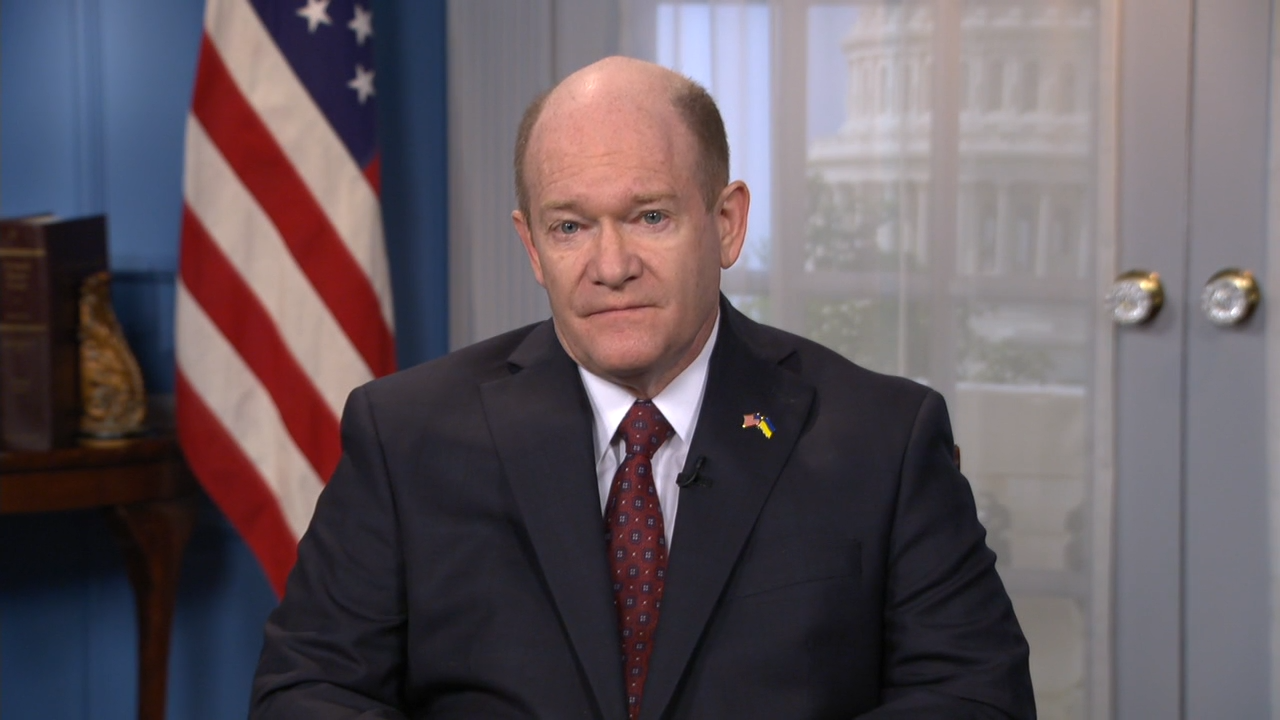
 

Senator Coons statement on nomination of Cindy McCain to lead U.N. World Food Program

WASHINGTON – U.S. Senator Chris Coons (D-Del.) issued the following statement today after the United Nations announced it will nominate Cindy McCain, currently the U.S. Ambassador to the U.N. Agencies for Food and Agriculture, as Executive Director of the U.N. World Food Program (WFP):
 
“There is no one better suited to this role than Cindy, who has worked tirelessly to fight famine and improve the lives of many around the world. Russia’s brutal invasion of Ukraine, the COVID-19 pandemic, and natural disasters have upended agricultural output and created an unprecedented global food crisis with alarming rates of malnutrition. Cindy’s experience with U.N. agencies in Rome will allow her to hit the ground running and deliver relief to millions.
 
“I’m grateful to the outgoing Executive Director, Governor David Beasley, for his strong work at the head of the WFP. A dear friend, Governor Beasley has been one of the most impressive and effective leaders the WFP has had and has secured record amounts of aid to fight hunger globally. I thank him for his service to the people of the world.”
 
Senator Coons is Chair of the Senate Appropriations Subcommittee on State, Foreign Operations, and Related Programs, which funds U.S. humanitarian aid, and a member of the Senate Foreign Relations Committee.

Senator Coons questions Attorney General Garland about efforts to combat violent crime in Delaware

WASHINGTON – U.S. Senator Chris Coons (D-Del.) questioned U.S. Attorney General Merrick Garland yesterday in a Senate Judiciary Committee hearing about how the U.S. Department of Justice can work with state and local law enforcement agencies to tackle crime in Wilmington and across the First State. At the hearing, Senator Coons thanked Attorney General Garland for hundreds of millions from the Biden administration to fund group violence intervention strategies in municipalities like Wilmington, which have helped bring the city’s homicide rate down to a 15-year low. Senator Coons also asked Attorney General Garland about the NICS Denial Notification bill, bipartisan legislation introduced by Senator Coons and signed into law last year that makes it easier for federal law enforcement to alert state and local agencies when an individual tries to buy a firearm and fails a background check. Forty-four thousand denial notifications have already gone to state and local law enforcement since the bill’s implementation in September, Senator Coons noted.


Senator Coons: Thank you, Chairman [Dick] Durbin [D-Ill.]. Thank you, Attorney General Garland, for your leadership of the department, and for testifying here today. I appreciate all you’re doing to restore your office to its critical role in our constitutional order. Violent crime is a concern many members of both parties have raised today in this oversight hearing. I just want to share with you that my hometown of Wilmington, Delaware, which has had a longstanding challenge with violent crime and in particular, murders, saw significant decreases over the last few years. Murders were down 58% in the past year to a 15-year low, shootings were down 30%, robberies were down 20%, and in meeting with the mayor and chief of police recently, when I spoke with them, they credited federal and local law enforcement partnerships, including, in particular, group violence intervention strategies, as being central to their successful efforts. Congress and the Biden administration have together given $200 million to fund these programs for the first time. Why do you think investments in things like violence intervention strategies have been so effective?

Attorney General Garland: So, I appreciate your asking that. I was just in St. Louis and East St. Louis [Illinois] to look into the way in which these violence intervention strategies have been effective. They are part of our whole-of-department approach to violent crime, which involves both law enforcement, and support for state and local law enforcement, and grants to state and local law enforcement, but also grants to communities to prevent the violence in the first place. There are many kinds of these community violence interruption programs and intervention programs. They generally rely on having credible messengers of people whom the community trusts for any number of variety of reasons, who go into the community and try to explain to the community that the police are on their side, that they need to be witnesses, be supportive, and to develop trust between law enforcement and communities. That’s the bottom line of all this.  

Senator Coons: That’s certainly what we’ve seen in Wilmington and frankly, our chief of police just went to St. Louis to be their new chief of police, and I wish him well. I co-lead the Law Enforcement Caucus with Senator [John] Cornyn [R] of Texas. One of the things we’ve recently been talking about is the NICS Denial Notification Act, which Senator Cornyn and I led last year, and the President signed into law. It requires federal law enforcement to notify state and local authorities when someone fails a background check, when they “lie and try” to buy a gun. It’s been in place since September and we’ve already seen 44,000 denial notifications go to local law enforcement. Can you just speak briefly to the value of this information for local law enforcement to prevent dangerous individuals from being able to acquire weapons?

Attorney General Garland: Right. Well, this particular example is really the nub here. Somebody who is not lawfully allowed to get a gun, who goes to try to get one anyway, say, there’s a higher probability that person wants to do something nefarious with that gun, and now, thanks to this legislation, the state and local police will know about that, and will be able to investigate to determine what it was that [that] person was about to do with an unlawful weapon.

Senator Coons: It’s something that the sheriffs and the local chiefs in Delaware have been very excited about, and I look forward to working with you to make sure that it’s fully and promptly implemented.


Senator Coons is a member of the Senate Judiciary Committee and Co-Chair of the Senate Law Enforcement Caucus.

The full remarks and video are available here.


###

Senators Coons, Thune introduce legislation to kick-start trade negotiations with United Kingdom

WASHINGTON – U.S. Senators Chris Coons (D-Del.) and John Thune (R-S.D.) today introduced the Undertaking Negotiations on Investment and Trade for Economic Dynamism (UNITED) Act. Their new bill would authorize the administration to negotiate and conclude a trade agreement with the United Kingdom to open export opportunities for businesses of all sizes, increase the resilience of critical supply chains, and advance economic prosperity for people in both countries. The UNITED Act also requires the administration to work closely with Congress throughout the process to ensure that any agreement advances congressional trade policy priorities. 

“The United Kingdom is one of our largest trading partners and closest allies. A comprehensive free trade agreement with the United Kingdom would advance our country’s strategic and economic interests while creating new economic opportunities for Delaware workers, businesses, and consumers,” said Senator Coons. “This bill demonstrates bipartisan congressional support for restarting negotiations with the U.K., and would pave the way for a trade deal that sets ambitious international standards for our shared priorities on climate, labor protections, digital trade, intellectual property rights, and many other areas.” 

“Now is the time to strengthen our economic and strategic relationship with the United Kingdom in order to create new opportunities for American workers, farmers, ranchers, and businesses,” said Senator Thune. “A comprehensive free trade agreement with the U.K., one of our closest allies, would reduce costs for consumers, improve supply chain resilience, and open new markets for U.S. producers. This bipartisan bill marks an important step toward a strong and hopefully long-standing trade agreement with the world’s fifth-largest economy, and it serves to advance the historic and special relationship between our two countries into the 21st century.”

The bill’s introduction comes shortly after the U.K. and European Union announced a new agreement on post-Brexit trade rules for Northern Ireland. The deal promises to uphold the Good Friday Agreement and advance peace, stability, and prosperity in Northern Ireland.   

The U.S.-Mexico-Canada Agreement (USMCA), which passed the Senate with overwhelming bipartisan support in 2020, set high standards in a number of areas. The UNITED Act encourages the executive branch to build on those standards in negotiations with the U.K. in order to ensure that U.S. workers and companies can compete on a level playing field.

The text of the bill is available here.

Senator Coons, colleagues reintroduce bipartisan legislation to boost law enforcement hiring and retention

WASHINGTON – U.S. Senators Chris Coons (D-Del.), Deb Fischer (R-Neb.), John Cornyn (R-Texas), and Amy Klobuchar (D-Minn.) reintroduced the Recruit and Retain Act to support law enforcement agencies by helping to address workforce challenges and bolster recruitment. Senator Coons is a member of the Senate Judiciary Committee and Co-Chair of the Senate Law Enforcement Caucus.

Among its provisions, the Recruit and Retain Act would allow law enforcement agencies to use the Department of Justice’s Community Oriented Policing Services (COPS) grants to cover hiring costs so that officers can apply to recruitment programs more easily. The bill would help law enforcement agencies across the country that are understaffed or struggling to attract new applicants. Senators Coons and Fischer introduced the Recruit and Retain Act last Congress in November 2022.

Additionally, the bill would create a new program to encourage partnerships between local schools and police departments to foster a stronger hiring pipeline for law enforcement careers.

“As Co-Chair of the Senate Law Enforcement Caucus, I’ve seen how law enforcement agencies in Delaware and across the country are facing real hiring challenges. Congress must ensure that our police departments have the resources to recruit officers who are both qualified and reflect our communities. The Recruit and Retain Act will provide assistance to these understaffed agencies and help build trust between law enforcement and the communities they serve. I’m looking forward to working with my colleagues to pass this bill and send it to the president’s desk,” said Senator Coons.

“Law enforcement is struggling to recruit and retain officers now more than ever. In rural areas, departments are struggling to bring on new officers. Meanwhile, urban areas are struggling to keep officers amid increasing violence and attacks. More and more, federal law enforcement is being pulled in to bridge the gap. But public safety requires robust and professional law enforcement officers and agents serving across our ranks. This legislation will help make that happen. FLEOA proudly supports the Recruit and Retain Act to ensure law enforcement is a desirable career for all Americans with a desire to serve. We applaud Senator Fischer along with Senators Coons, Cornyn, and Klobuchar for leading this necessary effort to enhance community safety,” said Larry Cosme, President, Federal Law Enforcement Officers Association (FLEOA).

“Too many law enforcement agencies across the country are struggling to maintain a fully staffed police force and to recruit the best and brightest candidates to serve in their communities. The bill introduced today by Senators Fischer and Coons will help local law enforcement by expanding the scope of the COPS Hiring Program to allow these funds to be used to reduce application fees and other similar costs for job applicants. We think it can make a real difference,” said Patrick Yoes, National President, Fraternal Order of Police.

“Nearly every MCCA member agency is understaffed, and many are having difficulty recruiting new and retaining current officers. Solutions must address both elements of the issue, as it will take time to expand the universe of individuals interested in a career in law enforcement. The Recruit and Retain Act will help address this challenge by fostering partnerships between law enforcement agencies and educational institutions. The MCCA thanks Senator Fischer, Senator Coons, Senator Cornyn, and Senator Klobuchar for introducing this important piece of legislation,” said Laura Cooper, Executive Director, Major Cities Chiefs Association (MCCA).

“Law enforcement agencies across the country serving urban, rural, big, and small communities are struggling to enlist qualified candidates to help alleviate staffing shortages. Through important changes to the COPS Program, the Recruit and Retain Act would help remove financial obstacles to the law enforcement application process and aid in the recruitment of community police officers through the creation of a Pipeline Partnership Program. It also takes steps towards understanding how the profession found itself in this recruitment and retention crisis so we can get the tools and support we need to reverse it. NAPO thanks Senators Fischer, Coons, Cornyn, and Klobuchar for their continued support of the law enforcement community,” said Bill Johnson, Executive Director, National Association of Police Organizations (NAPO).

“Sheriffs appreciate the Senators’ recognition of the declining ability to hire qualified candidates for local law enforcement agencies. Law enforcement has seen recruitment efforts falter as a result of economic and social policy decline. Additional assistance from the COPS Hiring Program will help in reaching our recruitment and retention goals,” said Sheriff Jim Skinner of Collin County, Texas, and Chairman of the National Sheriffs Association Government Affairs Committee.


Background

The Recruit and Retain Act has received national endorsements from the Federal Law Enforcement Officers Association, Fraternal Order of Police, Major Cities Chiefs Association, Major County Sheriffs Association, National Association of Police Organizations, and National Sheriffs Association.

The bill contains five key initiatives:

Supporting Officer Onboarding

  1. Expands the U.S. Department of Justice’s COPS grants to reduce the financial costs of hiring new law enforcement officers (e.g., background checks, psychological evaluations, etc.).

Reducing Administrative Burdens

  1. Allows up to 2% of grant funding to cover the administrative burden of implementing COPS grants. Many law enforcement agencies have noted that this would offset the paperwork burden associated with COPS grants. 

Authorizing New Pipeline Recruitment Program 

  1. Authorizes the Pipeline Partnership Program within COPS to encourage collaboration between agencies and local elementary schools, secondary schools, and institutions of higher education for students interested in future careers in law enforcement. Qualifying partnership activities would include dedicated programming for students, work-based learning opportunities, project-based learning, mentoring, community liaisons, career or jobs fairs, worksite visits, job shadowing, and skills-based internships.

Providing Better Grant Guidance for Understaffed Agencies

  1. Creates new guidance for COPS hiring grants to clarify the lack of consistent procedures for understaffed agencies. This will ensure more eligible police departments are able to access COPS grants.

Shining a Light on Recruitment and Retention Challenges

  1. Directs a comprehensive study to illuminate recruitment and retention challenges law enforcement agencies face nationwide and document how these trends are impacting public safety.

Click here to read the text of the bill.

###

[VIDEO] Senator Coons statement on one year anniversary of Russia’s full-scale invasion of Ukraine

WASHINGTON – U.S. Senator Chris Coons (D-Del.) released a video statement today commemorating the one-year anniversary of Russia’s escalation of its invasion of Ukraine on February 24, 2022:

thumnbail

“One year ago today, Vladimir Putin sent thousands and thousands of Russian troops across the border into Ukraine in a broad-spectrum, full-scale aggression, launching the largest land war in Europe since the Second World War. At the time, I was in Lithuania on a congressional delegation visiting American and NATO troops. We, just before that, visited U.S. and NATO troops training in Poland and attended a European-wide security conference in Munich, where dozens of European and American leaders met with President Zelenskyy of Ukraine, contemplating the possibility that Russia would, in fact, broadly, further invade Ukraine. As we flew home a year ago today, knowing that missiles and jet fighters were flying in the air just a few hundred miles away, we were thinking about the brave Ukrainian defenders of Kyiv and praying that they would be successful. Demonstrating incredible courage, ingenuity, and agility, Ukrainian troops and civilians held out and fought back against the Russian invaders and defended Kyiv. The battle for Kyiv and later battles for cities like Kharkiv and Kherson will be studied for decades as examples of how an outnumbered but flexible force beat back a more numerous, sophisticated invading force.

“The war in Ukraine still grinds on today in the south and east. It’s important we remember that it really began eight years ago in 2014, when Russia first invaded the Crimea and Donbas. A key lesson from Putin and how he’s conducted aggressive wars in Chechnya and Syria is that he will not give up. He won’t stop attacking civilians. He won’t stop committing war crimes, and we cannot stop either—pushing back against his aggression. I think the strongest chapter of President Biden’s leadership has been uniting NATO and partner nations around the world to show clearly that we will impose sanctions, that we will welcome refugees, that we will provide critical and needed funding for economic and military aid to Ukraine.

“So far, we’ve delivered more than $50 billion, and we here in the Senate have fought hard to appropriate $50 billion more. In November, I traveled with Senator Portman to Poland and to Ukraine. We visited with American troops in Poland and with Ukrainian refugees, and in Kyiv, we had the chance to present President Zelenskyy with the Liberty Medal from our National Constitution Center. We witnessed firsthand the courage and leadership of the Ukrainian people. The bravery that they’ve shown in fighting back against Russian aggression is awe-inspiring, and we got to see directly how our assistance is making a difference in the fight on the front lines and in providing needed aid and support to millions of Ukrainian refugees. More than 40 countries around the world are helping Ukraine, whether by imposing sanctions on Russia, providing critically needed military aid, or welcoming refugees.

“We have to continue to stand by Ukraine. Their fight is our fight. They are on the front lines of freedom, for the world, for this century, and I am determined that we will continue this fight to Ukrainian victory.”  

Senator Coons is Chair of the Senate Appropriations Subcommittee on State and Foreign Operations (SFOPS) and a member of the Senate Foreign Relations Committee.

Full video is available here.


###

Senators Coons joins 33 colleagues urging Biden administration to limit availability of junk health care plans

WASHINGTON – U.S. Senator Chris Coons (D-Del.) joined Senators Tammy Baldwin (D-Wis.), Chris Murphy (D-Conn.), and 31 other colleagues in a letter urging the Department of Health and Human Services to take immediate action to address short-term limited duration insurance (STLDI) plans, commonly known as junk plans, which fail to provide adequate, comprehensive health insurance coverage.

In 2018, in an effort to sabotage the Affordable Care Act (ACA), the Trump administration made junk plans more widely available to consumers. Since then, these plans have continued to expand. Junk plans are not required to adhere to important standards, including prohibitions on discrimination against people with preexisting conditions, coverage for the 10 essential health benefit categories required under the ACA, or annual out-of-pocket maximums.

“Now, more than ever, the Department of Health and Human Services must act. Beginning in April, millions of Americans will likely lose the Medicaid coverage that they have relied upon during the COVID-19 pandemic. We must protect those who will be looking for coverage in the near future, and take steps to ensure that these plans are not allowed to further proliferate,” wrote the Senators. “It is past time for your Department to step up and address the expansion and proliferation of junk plans.”

In February 2022, Senator Coons joined Senators Baldwin and Murphy in a letter to the Biden administration urging it to act quickly to limit STLDI plans. Thanks to the American Rescue Plan and the Inflation Reduction Act, both of which Senator Coons supported, comprehensive coverage through the ACA marketplace is more affordable. Both bills expanded health care tax credits for low- and middle-income Delawareans, lowering health care costs for Delaware families and expanding access to affordable health care for millions of Americans.

In the previous administration, Senator Coons also joined Senator Mark Warner’s (D-Va.) letter to HHS and the Centers for Medicare & Medicaid Services to limit the use of junk plans.

In addition to Senators Coons, Baldwin, and Murphy, the letter was signed by Richard Blumenthal (D-Conn.), Cory Booker (D-N.J.), Sherrod Brown (D-Ohio), Ben Cardin (D-Md.), Bob Casey (D-Pa.), Catherine Cortez Masto (D-Nev.), Tammy Duckworth (D-Ill.), Richard Durbin (D-Ill.), Dianne Feinstein (D-Calif.), Maggie Hassan (D-N.H.), Martin Heinrich (D-N.M.), John Hickenlooper (D-Colo.), Timothy Kaine (D-Va.), Angus King (I-Maine), Amy Klobuchar (D-Minn.), Ben Ray Luján (D-N.M.), Edward Markey (D-Mass.), Robert Menendez (D-N.J.), Jeff Merkley (D-Ore.), Patty Murray (D-Wash.), Alex Padilla (D-Calif.), Gary Peters (D-Mich.), Jack Reed (D-R.I.), Jeanne Shaheen (D-N.H.), Tina Smith (D-Minn.), Debbie Stabenow (D-Mich.), Chris Van Hollen (D-Md.), Mark Warner (D-Va.), Raphael Warnock (D-Ga.), Elizabeth Warren (D-Mass.), and Peter Welch (D-Vt.).

Full text of the letter can be found here.

###